In recent times, the media across India has come in for criticism about the diminishing role it has played in keeping watch on those in power
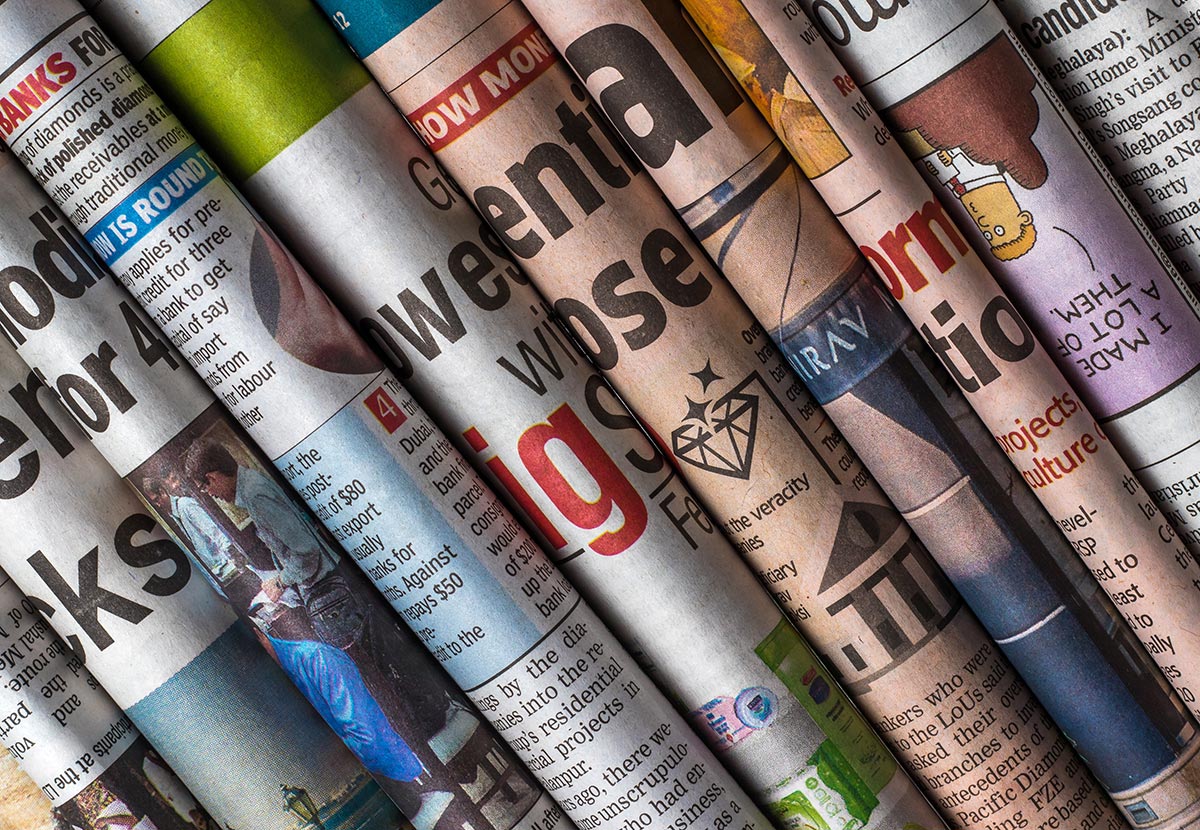
In our younger days, newspapers and magazines were hard to come by. By the 1970s, India had only a limited number of publications to read, and Goa, fewer still. While in high school, the magazine India Today suddenly emerged on the scene. Everyone who was a serious reader appreciated it, and it did seem like a gust of fresh air.
It was only recently that one saw another 'take' on the very same mag, India Today. 'The Caravan', another magazine from New Delhi, has as its December 2022 cover story, a lengthy focus entirely devoted to the magazine which set the agenda for the country for well over a generation now.
The cover story is titled 'Today's Truth: The submission of [the] India Today Group', and is authored by Aathira Konikarra. Its summary gives an insight into what the 23-page tightly-packed long-form journalistic piece is all about.
It reads: "At its birth, during the Emergency, India Today lavished praise on the government of Indira Gandhi. In 2019, Aroon Purie, the founder and chairperson of the India Today Group, lauded Prime Minister Narendra Modi. 'He's a visionary. He's a doer. He's a master communicator.'
"Between the Emergency and what many call Modi's undeclared Emergency, India Today built a brand of journalism that was broadly seen as a positive example in the Indian media, despite the organisation's compromises and cosiness with power. That legacy has now been wrung dry. Aroon Purie has handed control to his daughter Kalli, and some who have worked with both of them put the responsibility on Kalli's shoulders. But the organisation's journalistic slide far predates the handover, and the India Today Group is still fundamentally the house that Aroon built."
The detail with which the younger monthly dissects its elder predecessor, is amazing, insightful and a lesson in what serious journalism can achieve. It's unfortunately that 'The Caravan' does not share its articles freely online, and almost all of its work is paywalled. In our time-restricted world, the magazine expects readers to pay for their digital-or-print subscriptions.
Elsewhere on the pages of its year-end issue, 'The Caravan' also tackles many other media issues. It looks at the "toxic business of OpIndia's anti-journalism" (the rightwing online outlet is slavishly supportive of the government). Another piece looks at 'click and bait' far-right Hindi YouTubers.
Likewise, there are interesting pieces on 'Private Interest Journalism' (how conglomerates corrupted the media landscape), another article titled 'Whistle in the Dark' (on the clash between the alternate website Wire.in and the online giant Meta, formerly Facebook), and a third on 'An Ominous Ring' (relating to the telecom bill and what The Caravan sees as the government's "ominous intent").
The BBC's two-part high profile series on the Gujarat communal ("riots") conflict of 2002 has been making news all over. Both among those who welcome this expose, and others who saw it as a plot by India's former colonial rulers.
In the first part, what the Beeb told us was nothing much what India had not already known. Nonetheless, when the British Broadcasting Corporation says it, it has an impact of its own.
Not for nothing, the government responded with alacrity. Likewise, the knee-jerk responses of government backers via networks like the micro-blogging site Twitter, only show how seriously such issues are taken. Since we often claim to be the "largest democracy on the planet", we should be open to debates and discussions about such contentious issues.
Yet another media splash came in from the little-understood world of economics. The barely-heard of (by us) hindenburgresearch.com came out with a story titled "Adani Group: How The World’s 3rd Richest Man Is Pulling The Largest Con In Corporate History".
That story has made the rounds. Some have attributed motives to the people behind it, and timing of its release. Yet, the group behind it comes with fairly meticulous credentials about its past research. At the same time, the markets took it seriously enough, meaning that this piece of (serious) journalistic work sent the Adani stock tumbling. If what the group says about India's most influential network is even remotely true, this could have serious implications for the nation's economy as a whole.
This brings us to the point, about the role that the media is supposed to play in a parliamentary republic. One that is meant to be run on the basis of a vote for everyone, and every citizen being informed about what's going on.
In recent times, the media across India has come in for criticism about the diminishing role it has played in keeping watch on those in power. It tells us something that scoops and analysis like the above have to come from beyond Indian borders, even while the major news media organisations have mostly toed the government line, if not egged it on.
After the 1975-77 Emergency, the media came in for similar critique. It got off lightly, perhaps, and one could say its role should have been more closely scrutinised.
Then prominent BJP leader LK Advani then made the famous statement that the press "crawled when asked to bend". (This is an intriguing statement in itself. Is he playing down the role of the authors of the Emergency, like Indira Gandhi and her clique? Or, is he pointing to the opportunism within the media, and if this is the case, how is it different when the BJP rules India?)
Somewhere, sometimes, poetic justice shows up at our door. Those who ignore abuses of power will get exposed. If only public memory (again, also shaped by the media) was not so short....