It was heartening to hear that Goa is attempting to change gear from being a tourism revenue-led state to an industry destination
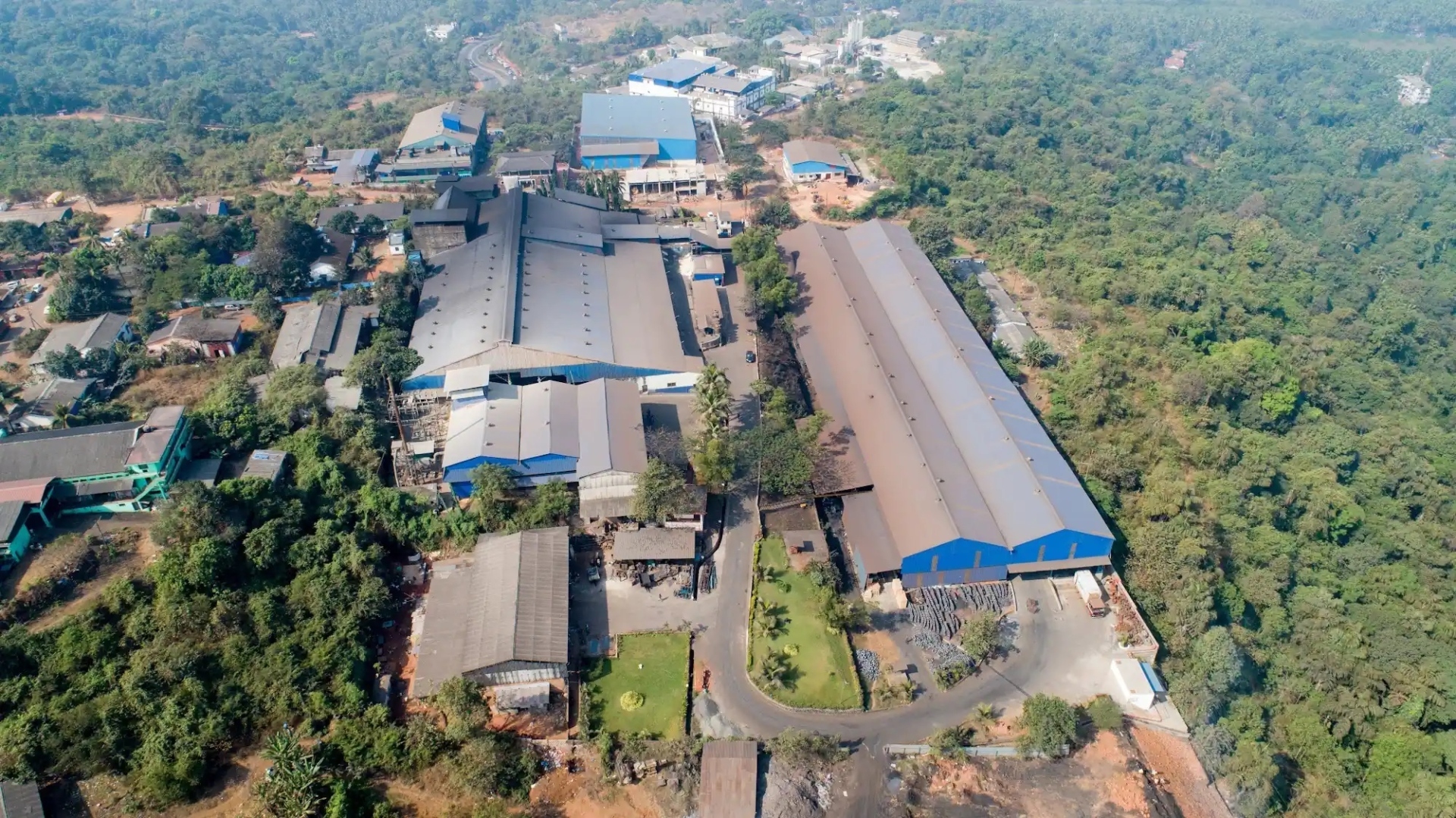
Goa’s continued reliance on tourism despite its sustainability challenges comes as a big surprise for a state that claims to be steeped in investment opportunities.
Although Goa promotes itself as the next investment destination in real estate, IT, pharmaceuticals, nutraceuticals, biotechnology, and manufacturing, the ‘sun, sand, and sea’ model remains the dominant, easiest, and most lucrative one, creating an entrenched reliance on the tourism sector.
Beyond its tourist attractions and beautiful beaches, Goa is now transforming into a prime destination for investment. The presence of the Goa Investment Promotion and Facilitation Board is designed to streamline investment processes and provide ease of doing business.
Beneath its tourist-friendly façade lies a thriving economy that has made it a popular real estate investment destination. The state is already witnessing a real estate boom that is so characteristic of regions influenced by tourism.
The manner in which the picturesque landscape has been transmuted into labyrinths of concrete edifices however speaks for the rapid urbanization characterized by chaotic replacement of natural and scenic environments with dense, artificial, and monotonous structures.
However, the boom, far from being a boon, has had disruptive effects, straining resources and changing the state’s ecological and cultural landscape.
Zuari Agro Chemicals (ZACL) at Zuarinagar, Madras Rubber Factory (MRF) at Ponda, and Ciba-Geigy at Corlim are recognized as the pioneer, large-scale industrial units that formed the backbone of Goa’s post-liberation industrialization in the 1960s and 70s.
Before these, industrial activity was largely restricted to mining and small-scale traditional, or village industries like cashew nut processing. Post-1961, there was a government push to shift the economy from solely mining to manufacturing.
These three companies were the initial anchor units that helped bring related ancillary industries to Goa.
The Foreign Direct Investment (FDI) influx in India during the mid-to-late 90s, catalyzed by the 1991 economic liberalization policies, significantly altered the coastal state’s industrial landscape by allowing multinational corporations (MNCs) to enter sectors previously restricted to domestic players.
The influx brought technology transfer, improved managerial practices, and increased competition, shifting the focus towards higher industrial productivity rather than just labour-intensive, unregistered manufacturing.
Following the economic liberalization and increased FDI inflows in the early 90s, the industrial sector in Goa was supported by a significant tax umbrella, primarily characterized by a combination of central and state-level concessions, encouraging industrial growth.
The state provided various incentives to encourage investment in manufacturing, which, along with tax breaks, caused the manufacturing sector to flourish.
The state’s Gross State Domestic Product (GSDP) experienced a significant growth, particularly in the subsequent decade as a result of these initial incentives.
The lifting of ‘tax umbrellas’ - specifically the removal of central excise exemptions and VAT holidays that existed during the 1993-2002 period, followed by the implementation of GST forced a transition in Goa’s industrial landscape from a tax-incentive driven model to one focused on competitiveness and efficiency.
This shift resulted in slower, more variable growth in the manufacturing sector and necessitated the restructuring of investment promotional plans.
Tourism in Goa began picking up in the late 1960s, driven by the ‘hippie trail’ which discovered the state’s untouched beaches. However, organized, commercial, and mainstream tourism started to see significant, rapid growth, and infrastructure development in the early to mid-1980s, marked by the arrival of charter flights.
The shift towards a ‘five star’ or luxury culture in Goa was a defining transition that took root primarily during the 1980s and 1990s, transforming the state from a laid-back, hippie-friendly destination into a major global tourist hotspot.
This shift, combined with the liberalization of economic policies and a growing appeal for leisure, saw the sector expand from small-scale, local-led hospitality into a massive industry with thousands of upscale hotels and casinos.
By that time however, the initial, rustic tourism driven by locals in the 1970s was increasingly overshadowed by large-scale, corporate, and luxury investments.
Evolving from a quiet coastal region into India’s premier leisure destination, tourism gradually became the cornerstone of Goa’s economy.
The tourism initiatives in Goa have now shifted from traditional sightseeing to immersive, experiential, and regenerative models, focusing on hinterland exploration, local culture, and sustainability.
Through campaigns like ‘Feels Like Goa’ and initiatives such as the ‘Goa Beyond Beaches’ scheme, visitors can engage in rural life, heritage trails, and eco-tourism, reducing pressure on coastal areas.
However, the excessive, unregulated, and high-intensity investment in Goa’s tourism sector has not only driven rapid overdevelopment, causing severe ecological damage, and infrastructure strain, but also serves to send across the message that nothing but tourism works in Goa.
Infrastructure development in Goa is heavily prioritized towards the tourism sector, with significant investment directed towards enhancing accessibility, safety, and amenities to support a thriving visitor economy.
The state is so engrossed in key projects, focus on improving connectivity and upgrading urban spaces to create a ‘future-ready’ destination vis-à-vis tourism that it has been quite oblivious to the fact that the region has the potential to be developed as an industrial and logistics hub if efforts are directed towards achieving the goal.
Of course, efforts are on to grant ‘industry status’ to the logistics sector, offering incentives for warehousing and cold chains. In this regard it was heartening to hear that Goa is attempting to change gear from being a tourism revenue-led state to an industry destination.
But with nothing but a distinct thrust being visible only on promoting tourism, it becomes difficult to understand whether these are really pilot projects or are just grand proposals on paper which give no indication of seeing the light of the day.
It comes as quite an irony that despite a string of industrial hubs having been announced for Goa over the past few years, the ‘probability’ factor continues to haunt the state in these matters.