Choosing mathematics is preparation for a future in which human judgment — informed, rigorous, and accountable — becomes more valuable, not less
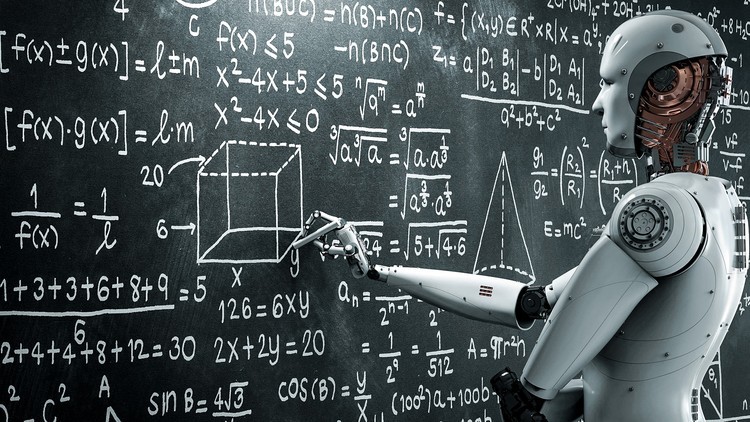
Artificial intelligence can now write essays, generate code, diagnose diseases, and compose symphonies. It can pass professional exams and solve differential equations faster than most graduate students.
A fair question naturally emerges: if machines can already do mathematics, why should a student choose to study it? The answer is uncomfortable but important. In the age of AI, mathematics is not less relevant — it is more essential than ever.
Understanding
the foundation
AI feels magical. But beneath the polished interface lies mathematics. Every large language model, recommendation engine, and facial recognition system is built from linear algebra, calculus, probability theory, and optimization. Neural networks are not digital brains; they are parameterized mathematical functions trained to minimize error across vast datasets.
When you study mathematics, you are not learning abstractions disconnected from the modern world. You are learning the grammar of the most transformative technology of the century. To use AI is easy. To understand it is different. AI systems do not know things in the human sense. They detect patterns, optimize objectives, and predict statistically plausible outcomes.
Without mathematical literacy, we risk mistaking correlation for causation and confidence for correctness. In a world saturated with AI-generated answers, information is abundant. Judgment is scarce.
Consider a 2019 healthcare algorithm that systematically underestimated the medical needs of black patients. It optimized for healthcare costs rather than need — a technical decision that encoded structural bias. Clinicians trained in optimization could interrogate that choice. Those relying on aggregate accuracy could not.
Mathematics trains precisely this judgment. It teaches students to interrogate assumptions, formalize variables, and evaluate trade-offs. The student who understands statistics does not stop at 95 per cent accurate. The student who understands optimization asks: accurate for whom, and at what cost?
Innovation and power
AI systems are extraordinary tools, but tools do not originate paradigms. The theoretical breakthroughs that enabled modern AI — information theory, convex optimization, probabilistic inference — emerged from foundational mathematical inquiry decades before their commercial applications.
When Claude Shannon introduced the mathematical concept of entropy in 1948, he was exploring abstract questions about signal transmission. That work now underlies data compression, cryptography, and machine learning. Similarly, support vector machines developed by Vladimir Vapnik in the 1990s initially appeared esoteric. Today those ideas shape global computer vision systems.
As AI accelerates experimentation across physics, biology, and climate science, mathematics becomes a unifying language. A researcher modeling protein folding, financial risk, or atmospheric dynamics draws from the same toolkit: differential equations, optimization, statistical inference. Abstraction travels across domains.
Mathematics also sits at the centre of civic responsibility. AI systems increasingly influence loan approvals, medical diagnoses, and criminal sentencing.
In 2016, a recidivism prediction tool used in US courts was found more likely to falsely classify black defendants as high-risk. The issue was mathematical: optimizing for overall accuracy can produce unequal error rates across groups. Recognizing that trade-off requires fluency in conditional probability.
Without mathematical literacy, debates about algorithmic justice remain superficial. Policymakers and citizens must grasp what models assume, where they fail, and what trade-offs they embed. Delegating these judgments entirely to technical elites weakens democratic accountability.
There is also a global dimension. In regions where access to large computational resources is limited, mathematical depth offers intellectual independence.
A student in Lagos or Dhaka equipped with strong foundations in probability and optimization can contribute meaningfully to AI research without reliance on proprietary tools or massive infrastructure. Mathematics democratizes participation in the AI revolution.
The future of value
Mathematics demands imagination — the ability to see patterns in abstraction, generalize from structure, and discover elegance in constraint. Many breakthroughs in physics, economics, and computer science began as abstract mathematical curiosities.
What appears theoretical today often becomes indispensable tomorrow. Students sometimes hesitate because mathematics is difficult. And it is. But difficulty signals depth. Mathematics forces clarity where ambiguity is tempting and rewards precision over impression. Those habits of mind compound across disciplines and across decades.
As AI automates routine tasks, formulation becomes more valuable than execution. The capacity to define problems rigorously, model them responsibly, and interpret results critically becomes the differentiator. The future will belong to those who understand formal structures — who can ask what assumptions a model encodes and where its limits lie.
AI may generate equations and compute solutions at unprecedented speed. But deciding which problems merit formalization and which trade-offs are acceptable remains a human responsibility. The question is not whether AI will transform knowledge work — it already has. The deeper question is what intellectual foundation endures when machines can calculate but cannot care, optimize but cannot define worth.
Mathematics offers that foundation. It disciplines thought, clarifies uncertainty, and anchors innovation in first principles. In the age of artificial intelligence, choosing mathematics is not nostalgia for a pre-digital past. It is preparation for a future in which human judgment — informed, rigorous, and accountable — becomes more valuable, not less.