Citizens need to have a stake in deciding how journalism gets shaped, and, of course, also understanding the pressures it is under today
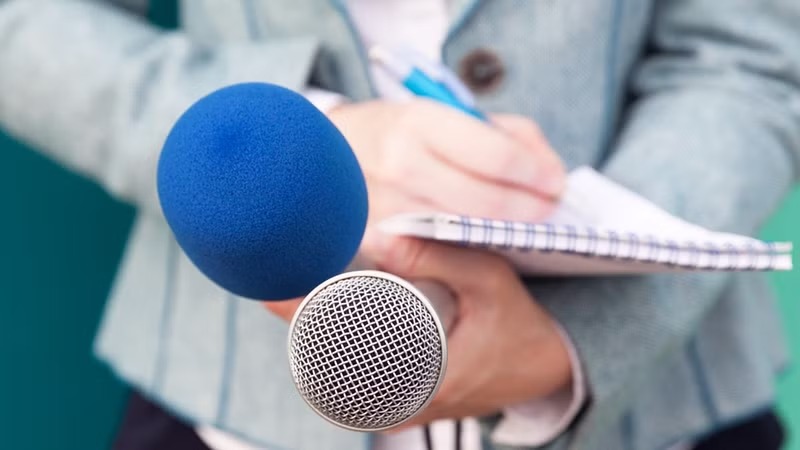
The Press discusses the whole wide world, but who discusses the Press? The other day (Nov 16) was the National Press Day for 2024. Government officials, politicians and journos joined forces to focus on issues supposedly facing the media. It's an interesting exercise when these institutions -- which have to be watchdogs and balance out each other -- instead work together and create a common platform.
Media and politicians, we all know, are supposed to have an uneasy relationship. Journalists and politicians are meant to have an "uneasy relationship", for it to be productive.
Yet, as Te Ara (Māori means ‘the pathway’, or The Encyclopedia of New Zealand) says, let's not forget: "Politicians depend on journalists for publicity, while journalists rely on politicians and politics to provide them with news. Journalists can inflict damage on reputations, with sometimes devastating effects for the electoral prospects of politicians or parties. Disgruntled politicians can withhold information from journalists. The government can also alter the economic, legislative and regulatory environment within which the media operate."
But then, cosy relationships also develop. When the Government foots the bill, the Government sets the agenda. No wonder the 58th birthday of the Press Council of India was celebrated in Panaji in some notable ways. With Transport Minister Mauvin Godinho making it seem that the "good old" bad days were the epitome of ideal press functioning in Goa; the organisers felicitated journalists while treating seniority (and the number of years spent in the profession) as if it was merit and worth; and "senior journalists" (whatever that term means) ending up discussing the theme 'Maintaining of Ethics and Accountability in Reporting'.
But hold on a second. First of all, who really follows the doings of the Press Council of India, and how relevant an institution is it in our day and time? Or, even in the past, since it was set up? Has the PCI served and played a role in keeping the Press on keel, and ensuring fair-play in a credible and neutral manner, without playing handmaiden to the Government?
In the past, there would be the occasional Press Council of India publications, that focussed on various interesting aspects of the media. For instance, on issues like the Violation of Freedom of the Press, Violation of Journalistic Ethics and Public Taste, or even the contentious subject of Parliamentary Privileges and the Press.
Today, one hardly sees much of such work, and one doesn't hear of the Press Council. The last one heard a fairly big splash was in 2010, when the Press Council of India conducted a "limited study" on the widespread practice of so-called "paid news".
It found paid news to be a "pervasive, structured and highly organised practice in Indian newspapers and other media outlets, where news space and favourable coverage is exchanged for money". This report raised the issue of quid pro quos (gifts, foreign or domestic junkets, various monetary and non-monetary benefits) and even "private treaties" between media companies and corporate entities.
It reminded us that newspapers should not carry articles that report "enmity or hatred between people on the ground of religion, race, caste, community or language". We know how effective such sound advice can be in today's India. We also know that the pressure from the publishers' lobby forced the PCI to suppress the investigation which had named media houses and politicians indulging in paid news. So much for toothless tigers posing as watchdog institutions.
On last Saturday, the panel discussion on 'Maintaining of Ethics and Accountability in Reporting' was expectedly skewed in a particular direction, because its focus was one which puts the media on the defensive.
That apart, the official DI (Department of Information) report on the event almost reduced this part of the event into an "also spoke" slot. The DI reported in its official press release: "The panel spoke of the various challenges in maintaining ethics in journalism field and highlighted the importance of authenticity in news reporting. The challenges with the advent of social media was also discussed."
In times when the media, in Goa and beyond, is coming under all sorts of pressure, and readers expect better news collection (which can be costly) in the region, maybe we owe it to ourselves to have more of these discussions in the public, well reported on, and with readers and other stakeholders getting a share too.
The official press release gives a hint of what's wrong or lacking in the media today in Goa. Protocol reporting can go only up till a point, and the taxpayer funded Department of Information needs to go well beyond focussing on the pearls of wisdom emerging from ministerial minds, or boosting the egos of those who attended a function.
If instead, one had to choose this instead? World Press Freedom Day, celebrated in early May, then surely there would have been a different connect. Over the years, this UN-celebrated event (declared first in 1993) has many events to focus on. Its recent themes include 'A Press for the Planet: Journalism in the face of the environmental crisis' (2024); 'Shaping the Future of Rights : freedom of expression as a driver for all other human rights' (2023), 'Journalism under Digital Siege' (2022), and 'Information as a Public Good' (2021). Behind each of these complex titles, there would be a plethora of serious concerns.
Journalism is far too important to be left to be discussed by journalists alone. Or even officials and politicians. Citizens need to have a stake in deciding how it gets shaped, and, of course, also understanding the pressures it is under today.