The fact of the matter is that we are indeed losing past traditions, including some charming and irreplaceable ones
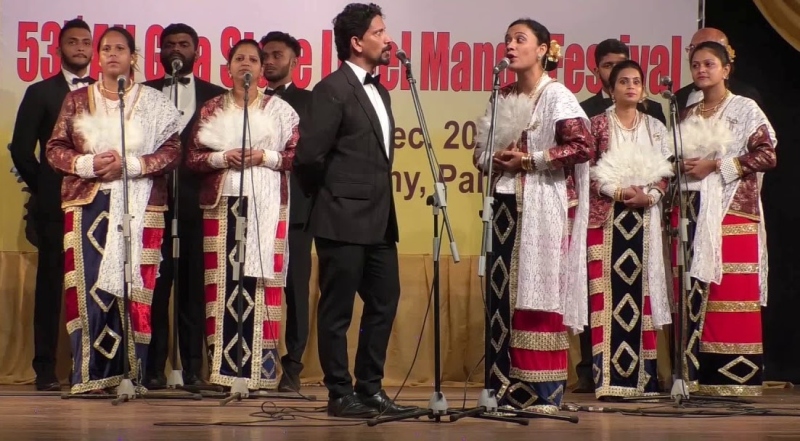
Last weekend found me at Curtorim, the talented village steeped in culture and agriculture. It was the first anniversary of the sudden death of Joseph V. Moniz, a Catholic priest whose roots are in that village though he spent much of his life ministering in Pasadena, California. Strange but true, today India (and Goa) has more Christian missionaries reaching out to the outside world rather than coming in.
At the commemoration, the religious service was followed by the singing of two mandde. Mandde (singular: mando) have been described as a blend of song, music and dance. This Goan art form emerged in the 19th century, as an expression of elite Catholic Goan culture.
Villages in Salcete (Curtorim, Loutolim, Raia, among others) have traditionally been the centre of the mando; today it has spread to many other areas, even while its future at some stages seems uncertain.
Once, mandde were central to Goan Catholic weddings, feasts and social gathering. Currently, the officially somewhat-backed festivals have taken these to 'mando festivals' and competitions. This gives it a new lease of life, but also risks losing its intimacy, context and layered meanings. On urban stages, the mando gets reduced to stylised performances, adapted for spectacle.
On the weekend at Curtorim, the two manddes were written specially as a tribute to Fr Jose Vicente Luis Moniz, or 'Zuzinho bab' as the song referred to him. Even if you had never met him, the music and lyrics were emotive enough to make one feel more than a tinge of sorrow.
The lyrics of these mandde, thoughtfully printed out and translated into English, only added to the memory of a person the gathering was paying tribute to. Suddenly it struck me: haven't we lost this form of marking life in Goa, through song and lyrics? Something which seemed so ubiquitous a few decades ago has suddenly vanished.
It needed the skills of another US-based Goan and Curtorkar (in Arizona), Antonio Costa, to pen this tribute in song. Of course, another villager, the talented Victor Costa and his entire family (wife Jane, and three tiny tots) put it into music locally.
It is not to argue that the past was filled with everything good and nice. Yet, the fact of the matter is that we are indeed losing past traditions, including some charming and irreplaceable ones, even while we take such things for granted.
Composing and singing mandde, to record events in song, was one such tradition. There have been four different kinds of mandde -- of yearning (utrike), union (ekvott), lamentation (villap) and news (fobro), as the late polymath Jose Pereira explains.
Zagor performances are almost mostly gone; few might remember the all-night village folk theatre blending song, satire and community participation. A couple of decades ago, the pop icon Remo Fernandes drew attention to the uniqueness of the zagor in his village of Siolim.
Harvest rituals (novidade), or the blessing of the first sheaves of paddy, is less common today with the shrinking role played by agriculture, as Goa gets concretised. The Kunbi saree draping has been shifted from real life to cultural shows.
Even the popular Carnaval and Shigmo have been morphed from their old styles of celebrations, to becoming urban festivals. And, when was it last that you saw the rampon-style of fishing (with hundreds of metres long shore-seine nets) once a common sight all over the Goa coast?
Village feasts centered on the bhatkar (landlord) or the comunidade, once a thing of the past, is now a faint memory. Sweets made for festivals at home, where everyone took part in the making, have been replaced by store-bought sweets.
So where have sweets like the 'letri' and 'ghons' gone?
Even tizan, the simple and nutritious porridge of 'nachni' (ragi) once a staple for elders and children, is barely seen. The Romi Konkani 'romansi', popular potboiler novels, are no longer being published. Romi Konkani newspapers and periodicals have been replaced by Devanagari Konkani or the English media.
Once the ghumot, Goa's traditional drum, was seen as a household instrument. Today, if yours carries the traditional (endangered) monitor lizard skin (banned for use by law), you could have it confiscated and face action. Oral riddles and proverbs, which were once part of Goa's daily entertainment, have all but faded.
There was a time when occupational castes performed their traditional role in village festivities. In our quest to end the unfair hierarchies that went with caste (and rightly so), there has also been a loss of centuries old identities too.
Is the Goan 'poyee' (traditional bread) any more like the one from the past? Mussoll, the pounding of rice in a wooden mortar, was once a women's chore but is now only symbolically used at cultural events. Palm leaf weaving (mollam) has been widely replaced with plastics; initiatives by people like Sabrina Da Cunha of Parra fortunately keep this alive.
Clay cooking pots (the 'kunlem') have vanished, there are attempts to bring back seasonal folk plays ('khell-tiatr' of Carnival time), and even the comunidade gaonkar assembles, once the fulcrum of village self-rule, is largely defunct. Can a WhatsApp group or two reverse the tide?
Village 'saddo' tailoring traditions have lost out to ready-made garments. Do we even recall the Goan tailors who crafted wedding and festive attire in the not-so-distant past?
It is easy to argue that all these traditions outgrew their utility, and hence died a natural death. But that's missing the point. If our goal is to end up as part of one homogenised world, where all areas look the same and feel the same, then we are perhaps on the right road. Otherwise, we need to do a rethink; and the mandde of Curtorim remind us strongly of that.