Rather than viewing police as adversarial entities, society must perceive them as indispensable partners in pursuit of justice and public safety
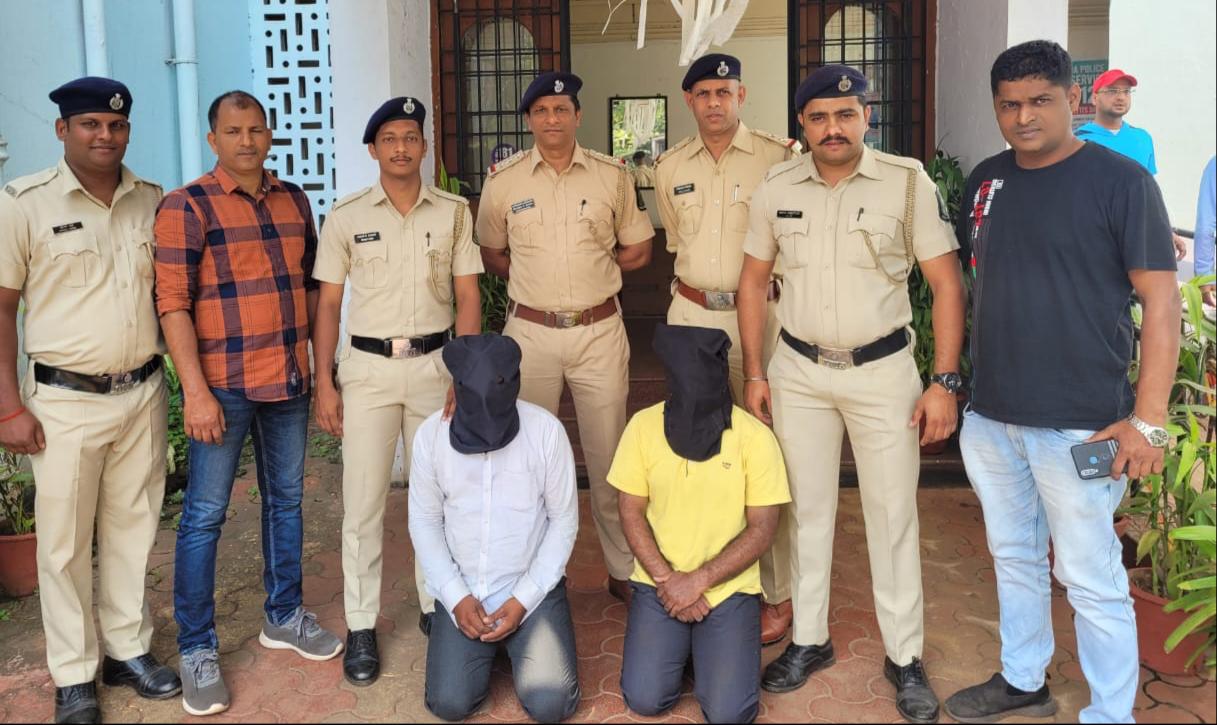
The mandate of a police force within a democratic framework is inherently convoluted and exacting. Entrusted with the preservation of civil order, the protection of the citizenry, and the rigorous enforcement of statutory law, officers are expected to execute their duties with unimpeachable precision under conditions that are frequently suboptimal.
In the context of Goa, the constabulary continues to discharge its functions with commendable resilience, notwithstanding the pervasive duress, a dearth of sophisticated infrastructure, and an increasing societal proclivity to utilize the force as a convenient scapegoat for systemic frustrations.
The paradox of
'Leisure State'
Policing in Goa is characterized by a unique set of vicissitudes. While the state is colloquially perceived as a tranquil, idyll-driven tourist destination, the empirical reality is far more taxing.
Personnel must navigate a delicate equilibrium between the competing expectations of the local populace, transient tourists, political entities, the fourth estate, and the judiciary.
Any perceived inertia or procedural lapse is subject to immediate magnification, whereas the profound sacrifices and diligent efforts of the force are often relegated to obscurity.
This skewed perspective has fostered a narrative where the police are scrutinized with uncompromising severity, devoid of any nuanced consideration for the systemic constraints that impede their efficacy.
Structural impediments
and resource deficits
A primary catalyst for the strain on the force is the profound disparity between institutional expectations and available resources.
Modern law enforcement necessitates cutting-edge technological integration, optimal personnel-to-population ratios, and rigorous pedagogical training.
Conversely, officers frequently operate with obsolescent equipment, understaffed divisions, and antiquated systems.
Despite these structural deficits, they are expected to provide instantaneous responses to emergencies and unravel intricate criminal conspiracies.
This chasm between public expectation and logistical reality exerts a formidable psychological and operational toll.
The crucible of
external scrutiny
Officers are perpetually ensnared in a dichotomy between statutory mandates and volatile public sentiment.
Actions taken in the line of duty are not merely reviewed by administrative superiors or the courts; they are subjected to the capricious judgment of social media, where narratives are often fragmentary or distorted.
This environment fosters a climate of institutional hesitation. When lawful and justified interventions are misrepresented as transgressions, it stifles the decisive action requisite for effective governance, potentially leading to a paralysis of enforcement.
The attrition of
human capital
The physiological and psychological erosion inherent in policing is frequently overlooked. Personnel endure protracted working hours, devoid of the stability of a standard regimen or adequate recuperation, often sacrificing familial cohesion on the altar of public service.
Officers are required to maintain a stoic professionalism while being daily witnesses to sanguinary violence, acute human distress, and hostility.
The long-term impact on mental health is profound, yet the discourse surrounding occupational welfare remains lamentably marginal, even as the demands on the force intensify.
Misattribution of
systemic failures
The police force often becomes an accessible target for burgeoning public frustration. The failures of the broader administrative and legal architecture are frequently attributed solely to law enforcement, ignoring the myriad social and procedural constraints that govern their efficacy.
Delays in the judicial process and legal loopholes are rarely comprehended by the layperson; instead, the police face the brunt of the collective indignation.
This erosion of trust jeopardizes the symbiotic relationship between citizens and the state, which is a prerequisite for effective governance.
Unheralded dedication
amidst adversity
Notwithstanding these formidable challenges, the Goa Police continues to operate with unswerving dedication.
Officers routinely transcend the boundaries of their formal mandates—be it during cataclysmic natural events, public exigencies, or the management of complex large-scale events.
Their presence provides a vital veneer of stability and public confidence, even when appreciation is conspicuously absent.
Numerous acts of integrity and valour remain unreported, overshadowed by isolated transgressions that dominate the public discourse.
The necessity of informed criticism
While no institution is beyond the reach of constructive critique—which is a cornerstone of democratic accountability—the wholesale demonization of the police is both fallacious and counterproductive.
Criticism must be judicious, informed, and balanced. Rather than viewing the force with inherent suspicion, there must be a concerted effort to understand the systemic impediments they face and to collaborate on holistic reforms, improved facilities, and augmented training.
Cultivating a
partnership for justice
A society that demands a force that is impartial and efficient must concurrently provide the requisite scaffolding of respect, resources, and empathy.
Public trust cannot be sustained through cynicism alone; it necessitates a transparent dialogue and mutual understanding.
Recognizing the structural burdens under which the police operate is the primary step toward fortifying the institution.
Conclusion
In summation, the Goa Police continues to discharge its duties with sincerity and commitment, despite the headwinds of resource scarcity and public censure.
Rather than viewing the police as adversarial entities, society must perceive them as indispensable partners in the pursuit of justice and public safety.
Only through mutualistic support can the true objectives of law enforcement be realized.