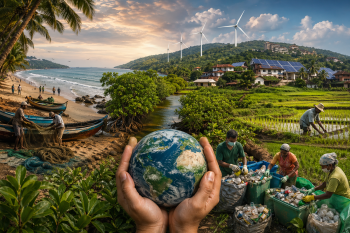
A collective effort, uniting consumers and providers, is essential to mitigate the threats of resource scarcity, such as water or energy resources
“Despite being among the first States to declare 100 per cent ‘Har Ghar Jal’ coverage, Goa’s water reality is beginning to tell a very different story - one of shortages, leakages and a system struggling to keep pace with its own claims.” (The Goan, March 23, 2026)
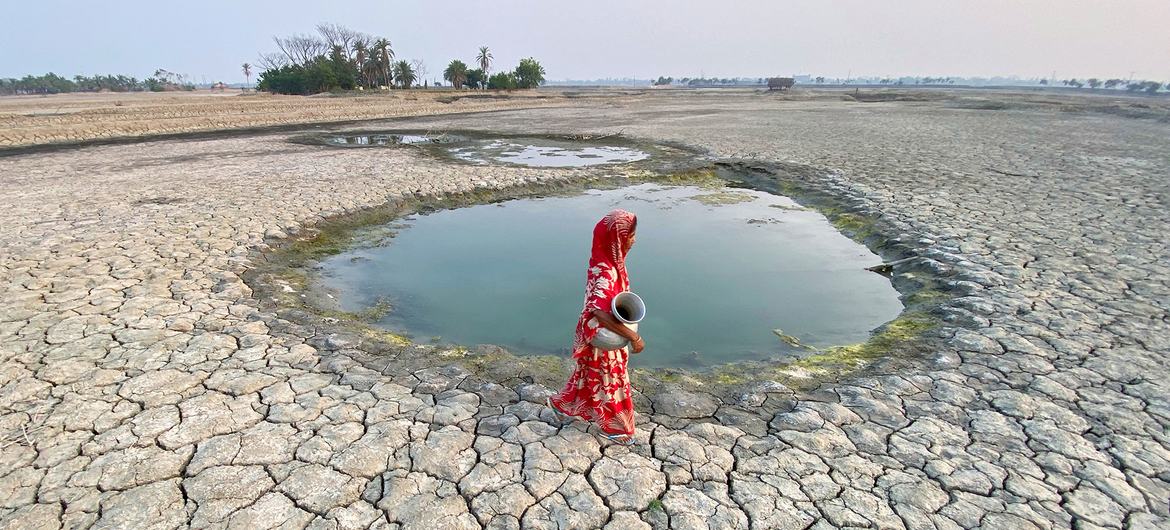
As of April 2026, multiple Indian states are experiencing a severe, accelerating water crisis due to depleted groundwater, failing reservoirs, and the onset of peak summer temperatures.
Humanity is in the throes of a peculiar dilemma these days where wars and conflicts like the one that has engulfed West Asia will one day deprive it of utility services like water, gas, and electricity.
As it is, scarcity of natural resources, driven by rapid population growth and unsustainable consumption, is triggering severe global shortages in freshwater, arable land, and minerals.
This depletion accelerates climate change and causes economic instability, sparking geopolitical tensions and competition for vital supplies.
Experts emphasize the need for technological innovation to improve resource efficiency, promoting sustainable development, and investing in renewable energy to reduce dependence on finite fossil fuels.
Climate change is already recognized as a ‘threat multiplier’ that is exacerbating shortages in water, energy, and resources, according to UN-Water and World Health Organization (WHO) reports.
The crisis is directly impacting resource availability through increased temperatures, shifting precipitation patterns, and extreme weather, threatening billions of people.
Electricity scarcity occurs when power demand exceeds available generation or when transmission systems fail to deliver electricity, often caused by extreme weather, aging infrastructure, fuel shortages, and rapid population growth. It is characterized by supply-demand gaps leading to load shedding. Solving electricity scarcity requires a multi-pronged approach that addresses supply generation, grid efficiency, and demand-side management.
Meeting growing demand calls for expanding and diversifying power generation, with a focus on clean energy to reduce carbon emissions. Rapid deployment of solar, wind, and hydropower thus become essential.
Solar power has significantly shifted the load from conventional power by replacing daytime energy demand, flattening peak electricity usage curves, and enabling decentralized, local generation.
By producing electricity during the hottest, sunniest parts of the day, solar reduces the need for expensive and polluting ‘Peaker’ power plants and reduces overall stress on the transmission and distribution grid.
In India however, the evening peak remains a challenge as solar generation drops, causing coal to take over to meet the demand.
Similarly, water scarcity is a critical crisis affecting billions, driven by climate change, inefficient management, and surging demand that exceeds supply. It limits access to safe drinking water, causes disease outbreaks, and impacts agriculture.
Solutions include water conservation, reusing wastewater, and sustainable infrastructure to manage dwindling resources.
Rapid urbanization has been at the forefront of global economic development and societal transformation, bringing both immense opportunities for growth and severe challenges to infrastructure, the environment, and social equity.
With over 80% of global GDP generated in cities, the shift is often seen as an economic powerhouse, but it simultaneously puts pressure on resources leading to the proliferation of slums, pollution, and increased vulnerability to climate change.
Rapid urbanization has caused significant shortages of water and electricity by creating an unsustainable imbalance between high-density demand and existing infrastructure capacity.
Rapid urban growth increases population concentration and economic activity, which fuels an insatiable appetite for resources. This process is exacerbated by in-migration, industrialization, and urban sprawl, which outpace the expansion of water supply systems and power grids.
Cities rely heavily on groundwater. But over-extraction to meet the needs of growing populations and industries often leads to the depletion of aquifers. The expansion of cities increases impervious surfaces which prevent rainwater from seeping into the ground, reducing groundwater recharge.
The conversion of natural lakes, wetlands, and ponds into residential or industrial areas reduces the local water supply and its natural storage capacity. Rapid urbanization often results in untreated industrial waste and sewage being dumped into rivers and lakes, making existing water sources unusable.
Older cities often have ageing pipes and infrastructure with as much as 50% or 60% of water lost in distribution in some cases, worsening scarcity.
Likewise, the surging power demand, coupled with overloaded power grids, transmission inefficiencies, and the ‘urban heat island effect’ causes peak power demands to outstrip supply, significantly deteriorating urban ambience.
To manage this trend, the focus of national and international policies is on creating sustainable, inclusive and resilient cities, prioritizing infrastructure development, and managing the rural-urban transition effectively.
Corporate Social Responsibility (CSR) in water conservation acts as a vital driver for sustainability by channeling corporate funds and expertise into watershed management, rainwater harvesting, and community water access.
It transforms water security from a ‘government only’ task into a collaborative effort that secures local communities while protecting industrial operations.
By moving beyond simple legal compliance, effective CSR projects, like watershed management initiatives and lake restoration projects, create measurable positive impacts on the environment and society, such as increased groundwater levels and restored biodiversity.
CSR in power conservation involves voluntary actions by companies to reduce energy consumption, adopt renewable sources, and promote environmental stewardship beyond legal requirements.
It is increasingly integrated into business strategies to achieve sustainable development goals, combat climate change, and maintain stakeholder trust, particularly in the energy-intensive power sector.
A looming shortfall of utilitarian services is a growing concern with the scarcity threatening to create a ‘bottleneck’ that can stall economic recovery and can lead to catastrophic public service failures.
A collective effort, uniting consumers and providers, is essential to mitigate the threats of resource scarcity, such as water or energy resources.
Addressing this crisis requires a ‘shared responsibility’ approach where both sides focus on conservation, reducing waste, and improving efficiency, rather than merely increasing supply. Humanity just cannot survive if it fails to take care of its shared environment.