PANAJI
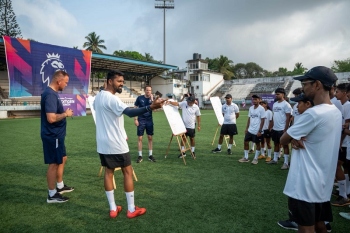
The inaugural Next Gen Coach Programme, hosted by the Premier League in Goa in collaboration with the OSCAR Foundation, recently brought together over 30 coaches from across India to refine the future of the sport.
Moving beyond mere tactics and training drills, the four-day intensive workshop focused on a foundational premise: that grassroots coaches are the primary architects of a young player's confidence, character and sense of community.
According to coaches who have undergone training under the programme and stakeholders associated with the initiative, the effort aims to build Indian football from the ground up, one community at a time, by equipping mentors with tools for leadership and inclusion.
For Navelim-based Nathaniel Da Costa, his journey into Indian football started back in 2008 as an independent journalist before he moved into club football with Churchill Brothers FC. He later worked in player management during the early years of the Indian Super League and joined FC Goa as a media manager in 2016 before eventually transitioning into grassroots football through the Forca Goa Foundation. But in that same eventful year, Nathaniel also became involved in the Premier League’s coach education pathway and later qualified as a coach educator in 2019.
Since then, he has used those rich experiences and learnings accumulated at the Premier League coaching sessions to create sessions focused on creativity, participation and making every child feel included.
“Their sessions are a lot of fun. They focus on making the sessions inclusive and participatory so everyone can be involved,” Nathaniel told The Goan on the sidelines of the recently concluded Next Gen Coach programme.
For Nathaniel, programmes like Next Gen Coach Programme stand out because they encourage coaches to think beyond technical development and instead focus on building spaces where children genuinely enjoy coming to play.
He also hopes initiatives like this continue to expand across India, giving more community coaches access to new ideas and better support systems.
For football coach Shekhar Kerkar, one of the biggest changes in grassroots coaching has been the shift towards creating safe environments where children are encouraged to make mistakes and learn through them.
“These sessions give young boys and girls an opportunity to make mistakes and learn from those mistakes,” he said. “Success is there for everyone, right from low ability to high ability.”
Bardez-based Shekhar’s own coaching journey began after attending the Premier League’s Premier Skills programme in 2014. Starting as a grassroots coach, he eventually became a coach educator himself, working across different parts of India on programmes including Premier Skills and Premier League Primary Stars.
“It has given me more vision and more tools to make my sessions more effective,” he said.
From the Premier League’s side, the focus of the Next Gen Coach Programme is to help community coaches feel more confident in creating positive experiences for young players.
According to Carl Plunkett, a Premier League under-14 and under-21 coach, many participants were initially hesitant, but interactive activities and open conversations helped them settle in quickly.
“To start with, there was a little bit of nervousness, so we had to find ways to break down barriers and make them feel comfortable,” Carl said.
“Once they started speaking, we could really find out what they knew, which allowed us then to help them more and really push them further.”
According to Dr Shilpi Sharma, COO of the OSCAR Foundation, football has always been about more than just the game itself. Through the foundation’s work, sport is used as a way to teach life skills and support children from underserved communities.
“What OSCAR wants is not just footballers, but great active citizens and role models for their community,” she said.
She believes programmes like the Next Gen Coach Programme help extend that impact even further by equipping coaches with new ideas and approaches that they can take back to their own communities.
“Today, OSCAR is reaching out to 20,000 children. When these young coaches get trained here, they are going to train hundreds and thousands of more children,” she said.