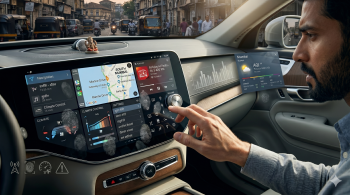
Touchscreens have rapidly become the centrepiece of modern car interiors. From budget hatchbacks to premium SUVs, physical buttons are being replaced with sleek digital displays. While this shift is often marketed as a smarter, more connected driving experience, it has also raised a key question: are touchscreens truly an upgrade, or are they becoming a distraction?
A cleaner, smarter cabin
On the surface, the advantages are clear. Touchscreens reduce clutter and give dashboards a modern, minimalist look. A single screen can control navigation, music, climate settings and even vehicle functions. Carmakers can also roll out software updates, improving features over time without requiring a physical change.
Most systems now support smartphone connectivity through platforms like Apple CarPlay and Android Auto. This allows drivers to use familiar apps, maps and voice assistants, making the transition from phone to car smoother.
There is also a manufacturing advantage. Fewer buttons and switches mean simpler design and potentially lower costs. This is why even entry-level cars in India now offer large infotainment screens as a highlight feature.
Distraction debate
Despite the benefits, safety concerns remain strong. Unlike physical controls, touchscreens demand visual attention. Simple actions like adjusting the temperature or skipping a song may require navigating menus, taking the driver’s eyes off the road for longer than ideal.
Research has shown that touchscreen use can increase reaction times, especially in busy traffic. In Indian driving conditions, where roads are unpredictable, even a brief distraction can lead to serious risks.
Another issue is the absence of tactile feedback. Physical knobs allow drivers to adjust settings by feel, without looking. Touchscreens lack this advantage, making them harder to operate instinctively. While some systems offer haptic feedback or voice commands, these are not always accurate or quick enough in real-world use.
Real-world usability challenges
Beyond distraction, there are everyday usability concerns. Screens can suffer from glare under strong sunlight, making them difficult to read. Fingerprints can reduce clarity, and laggy systems can frustrate users.
In stop-start traffic or on uneven roads, interacting with a touchscreen becomes even more challenging. This raises questions about whether all functions should be digitised, especially those used frequently while driving.
Are carmakers rethinking?
Interestingly, some manufacturers are beginning to bring back physical controls for key functions like air conditioning and volume. This suggests a growing recognition that not everything works best on a screen.
Safety regulators in some markets are also encouraging designs that reduce driver distraction. While India does not yet have strict rules in this area, global trends could influence future vehicle design here.
Finding the right balance
Touchscreens are here to stay, largely because they align with the move towards connected and software-driven cars. However, the focus now needs to shift towards better design rather than bigger screens.
A balanced approach”combining touchscreens with essential physical controls”may be the most practical solution. Systems should be intuitive, quick to respond and easy to use without constant visual attention.
Upgrade or distraction?
Touchscreens represent progress, but also highlight the risks of over-digitisation. They can enhance convenience and add features, but if poorly implemented, they can compromise safety.
Ultimately, whether they are an upgrade or a distraction depends on how they are designed and used. For drivers, limiting interaction while driving is key. For manufacturers, the challenge is to create systems that support, rather than hinder, the driving experience.