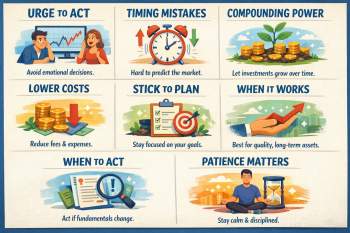
In investing, action often feels productive. Buying, selling, or reacting to market moves gives a sense of control. But in many situations, especially during volatile phases, doing nothing can be the smarter strategy. For long-term investors, patience and discipline often deliver better results than constant activity.
Urge to act
When markets move sharply, investors feel the need to respond. A fall creates fear, while a rally creates excitement. Both emotions can lead to poor decisions like panic selling or chasing trends. News flow and social media can make this worse by creating urgency. Doing nothing helps investors step back, avoid impulsive moves, and stay focused on their long-term plan.
Timing mistakes
Timing the market is extremely difficult. Many investors try to exit before a fall and re-enter at lower levels. In reality, this rarely works consistently. Markets can recover quickly, and missing just a few strong days can significantly reduce overall returns. By staying invested and doing nothing during uncertain phases, investors avoid the risk of being out of the market at the wrong time.
Compounding power
Wealth in markets is built through compounding, which works best when investments are left undisturbed. Even small, consistent returns can grow significantly over time if allowed to compound. Frequent buying and selling interrupts this process and reduces its impact. Doing nothing allows investments to grow steadily, even if short-term movements appear volatile.
Lower costs
Every investment decision comes with a cost. Brokerage charges, taxes, and exit loads can add up over time. Frequent changes in a portfolio increase these costs and eat into returns. By doing nothing and avoiding unnecessary transactions, investors can keep costs low and retain a larger portion of their gains.
Stick to plan
Most investors begin with clear financial goals, such as buying a house, funding education, or building a retirement corpus. However, market fluctuations often distract from these goals. Doing nothing helps investors stay aligned with their original plan. Instead of reacting to short-term movements, they remain focused on long-term outcomes.
When it works
Doing nothing works best when investments are in quality assets and aligned with long-term goals. If the fundamentals of a company or fund remain strong, short-term volatility should not trigger action. This approach is especially useful during uncertain global events, when markets may behave unpredictably.
When to act
Doing nothing does not mean ignoring everything. Investors should take action if there is a clear change in fundamentals, such as poor performance over time, changes in management quality, or shifts in business outlook. It is also important to rebalance portfolios periodically and adjust investments if financial goals change.
Patience matters
Patience is one of the most important yet overlooked qualities in investing. It requires confidence to stay invested during market declines and restraint during strong rallies. Doing nothing is not passive behaviour; it is a conscious decision to stay disciplined and avoid unnecessary risks.
In a fast-moving market environment, doing nothing may seem counterintuitive. But for long-term investors, it is often the most effective approach. Staying disciplined, avoiding emotional decisions, and letting compounding work can lead to better outcomes over time.
(The writer has a keen interest in business and the dynamics of stock markets)