VASCO
Over 165 diarrhoea cases and suspected typhoid infections expose a deeper infrastructure gap in Goa’s urban growth story
The health crisis at Prabhu Violetta housing complex in Dabolim ” where over 165 residents have reported diarrhoea and two suspected cases of typhoid have surfaced ” is no longer just a case of local contamination. It has opened a window into a much larger, long-standing issue: Goa’s fragile and often overstretched sewage management system.
While immediate action has been taken ” with the Water Resources Department sealing borewells and the Goa State Pollution Control Board directing the builder to transport sewage through night tankers ” the incident has reignited questions over how residential complexes manage waste, and whether the system itself is designed to fail.
Blueprint to operation: How STPs are cleared
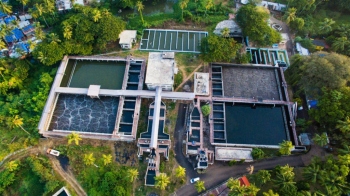
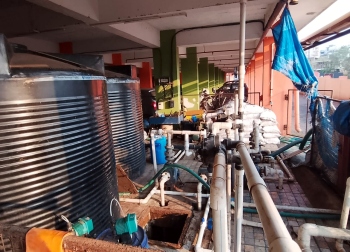
At the centre of the issue are Sewage Treatment Plants (STPs), now mandatory for residential complexes beyond a certain size.
What began as a rule for projects with 100 flats was gradually brought down to 50, and more recently to just 24 flats ” significantly expanding the number of buildings required to install and operate STPs.
The journey of an STP begins long before residents move in.
A reputed builder from Vasco explained that the regulatory framework is layered and often complicated.
“There is a two-stage approval process. At the construction stage itself, builders are required to seek Consent to Establish (CTE) from the Goa State Pollution Control Board. This permission is granted in the builder’s name and allows the installation of the STP as part of the project’s infrastructure,” said the builder.
“Once construction is completed and occupancy begins, the process does not end there.
A second layer of approval ” Consent to Operate (CTO) ” must be obtained, again in the builder’s name. This effectively places the responsibility of running the STP on the builder at the initial stage, even as residents begin moving into the complex.”
This two-step regulatory framework ensures oversight ” but it also ties the system heavily to the builder, at least in the early years.
Handover puzzle: When responsibility shifts
The real transition begins after occupancy.
Legally, builders are expected to maintain STPs for five years or until a housing society is formed. In practice, however, most builders move to form societies much earlier ” often as soon as 51 percent of flats are occupied.
This is not incidental. It is often the responsible of the builder to form a society. It is a structured process.
At the time of handing over flats, builders typically provide buyers with society formation documents and by-laws. Once a majority occupancy is achieved, an application is filed by the builder for society registration. Initial managing committees are formed ” sometimes with willing members, and at times with builder-supported nominations, wherever the participation is low ” to get the structure operational.
From there, society is formed, conveyance deed is executed, transferring ownership of land and common infrastructure, including the STP, to the society. With that, the shift in responsibility begins.
Training handover: Builder’s last mile role
Recognising that societies may not be equipped to immediately handle technical systems like STPs, builders often extend support beyond formal handover.
In several cases, builders appoint specialised agencies and sign Annual Maintenance Contracts (AMC) ” sometimes at their own cost for an initial period of one year” to ensure that the STP continues to function smoothly.
More importantly, they facilitate training.
Society members are introduced to operators, briefed on processes, and guided on the day-to-day functioning of the plant. The aim is to create a transition where residents are not abruptly left to manage complex systems without support.
Once this phase is completed, builders formally write to the Goa State Pollution Control Board, informing that the society has been formed, conveyance completed, and requesting that the Consent to Operate be transferred from the builder’s name to that of the society.
At this point, the builder’s role effectively comes to an end.
System difficult to run
For housing societies, operating an STP is far from straightforward.
“It is a thankless job,” the builder admitted. “Society members are not professionals. They have their own work and often lack both the technical expertise and funds to run these systems efficiently.”
STPs require consistent monitoring, technical oversight, and financial investment. Smaller societies, especially those newly formed, struggle to meet these demands. The result is often poor maintenance, underperformance, or complete dysfunction ” conditions that can lead to contamination risks like those suspected in Prabhu Violetta.
The capacity paradox
One of the most critical technical issues lies in how STPs function.
Most systems require a minimum of 50 to 70 per cent capacity utilisation to operate effectively. However, in newly constructed complexes, occupancy is often low in the initial years.
“For example, if an STP is designed for 100 kilolitres, but the building has only 30 per cent occupancy, the plant simply won’t function as intended,” the builder explained.
This mismatch between infrastructure capacity and actual usage creates a built-in inefficiency ” one that is rarely accounted for in planning or regulation.
This mismatch creates a system that exists on paper, but struggles to function on the ground
The result is a system that exists, but cannot perform as intended.
Sewage network across Goa
At the heart of the debate lies a more fundamental concern: the absence of a comprehensive government-led sewage network across Goa.
Builders argue that despite paying substantial infrastructure taxes ” sometimes as high as Rs 1,200 per square metre in commercial zones ” they are left to create independent waste management systems due to the lack of public sewerage lines.
“In areas like Vasco and Panaji, where sewerage networks exist, complexes are directly connected and there is no need for STPs, regardless of the size of the complex and the number of flats in the complex,” the builder noted.
But in rapidly growing sense regions such as Porvorim and Dabolim, such infrastructure remains limited or non-existent.
Builders argue that despite paying significant infrastructure charges, the lack of state-provided sewerage lines forces reliance on decentralised systems that are difficult to sustain in the long run.
Burden on smaller societies
The recent move to mandate STPs for projects with as few as 24 flats is expected to widen the gap further.
Smaller housing societies, with limited financial and technical resources, may now be compelled to install and operate systems they are ill-equipped to manage.
“This will only make the situation worse,” the builder warned, pointing out that even larger societies struggle with STP management.
Beyond Prabhu Violetta
The unfolding situation at Prabhu Violetta is, in many ways, a symptom of a deeper systemic issue ” where rapid urban development has outpaced basic infrastructure planning.
It is a reflection of a broader imbalance ” where regulatory requirements, technical realities, and infrastructure gaps do not always align.
As Goa continues to expand, the question is no longer whether STPs are necessary ” but whether the ecosystem around them is strong enough to support them.
While authorities continue to monitor the situation and enforce compliance, the larger question remains unanswered: can a State rely indefinitely on decentralised sewage systems without strengthening its core infrastructure?
Until that question is addressed, incidents like Prabhu Violetta may not remain isolated ” but could become a recurring reality in Goa’s urban landscape” unless the pipeline beneath the growth story is fixed.