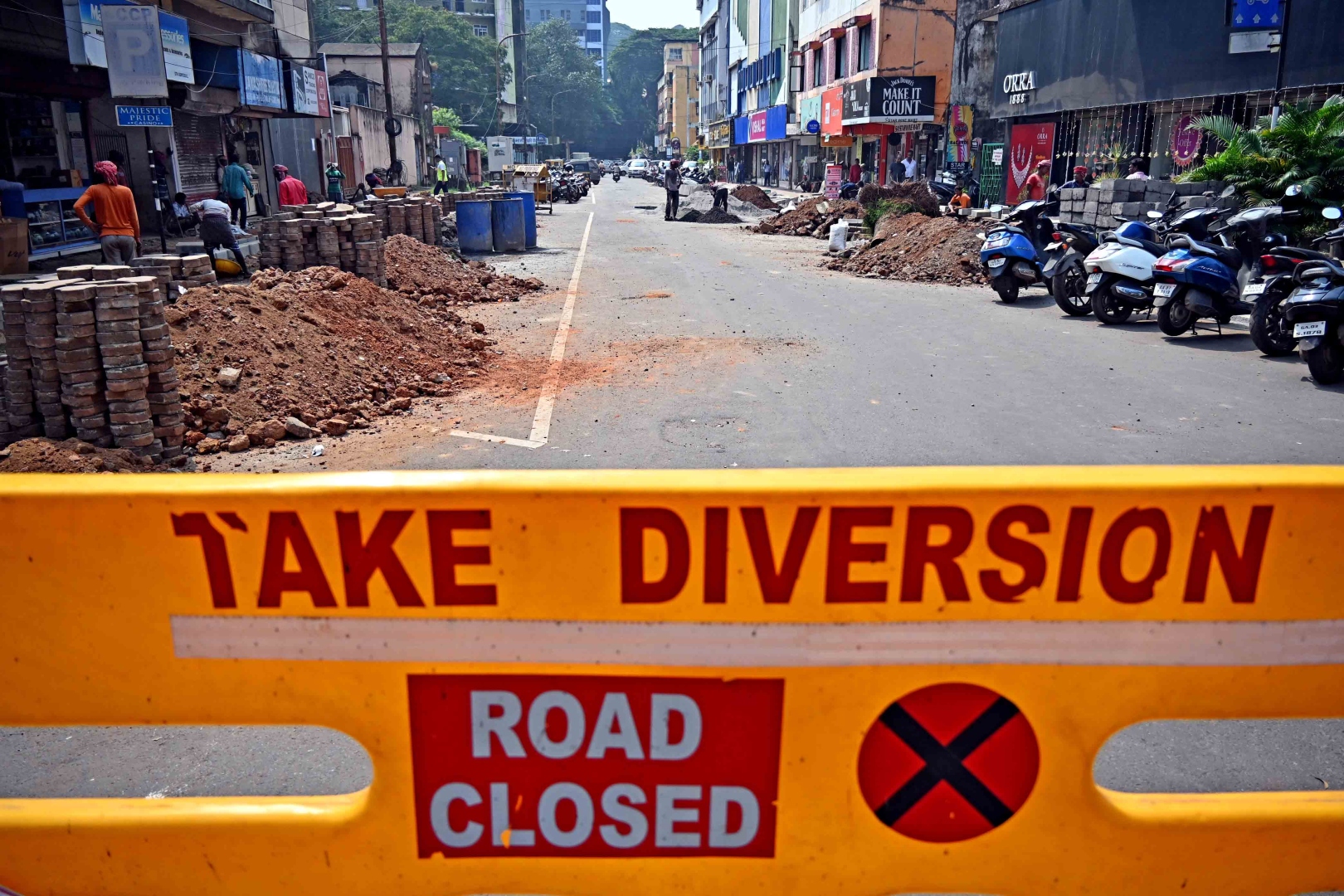
Years of Smart City works left Panaji grappling with dug-up roads, barricades and daily disruption.
PANAJI
For more than half a decade, cranes, barricades and trenches defined the skyline of the Corporation of the City of Panaji (CCP). The narrative was one of transformation, driven under the ambitious banner of the Smart City Mission.
Sewerage lines being laid — some works still underway, roads repeatedly dug up and re-laid, drains widened and multi-level parking projects rolled out as nearly 90 per cent of them executed through the Special Purpose Vehicle, Imagine Panaji Smart City Development Limited.
The scale of works, often accompanied by complaints of chaos and civic paralysis, even drew monitoring from the High Court of Bombay at Goa over prolonged inconvenience to residents and daily commuters.
Beyond the Smart City wave
Now, as the dust begins to settle and Smart City projects near completion, a disquieting question is surfacing across the capital: beyond riding the Smart City wave, what did the CCP accomplish on its own?
Public debate over the past five years centred largely on the scale, delays and disruptions of Smart City works. Lost in that churn were several long-pending civic issues that fall squarely within the corporation’s traditional mandate and remain stubbornly unresolved.
Consider the stinking stretch of the St Inez Creek. Once promised rejuvenation through desilting and coordinated intervention by multiple agencies, the creek continues to emit a foul odour that residents allege has become a permanent feature.
While the Smart City SPV was tasked with handling parts of the cleaning exercise, full restoration required sustained coordination between the CCP, the Water Resources Department and IPSCDL. Years later, the creek stands as a symbol not of renewal but of administrative drift.
Infra and parking woes
The Panaji market redevelopment tells a similar story. The third phase of the project — originally conceived in 2012-13 — resurfaced in 2024 with assurances of revised planning and design. Nearly 15 years on, the project lingers.
The issue of proper arrangements for fairs presents another gap, with large gatherings routinely straining sanitation facilities and hundreds of vendors operating amid inadequate hygiene arrangements and a shortage of portable toilets.
Parking management, too, remains contentious. Despite investments in new facilities under the Smart City umbrella, residents and business owners argue that on-ground enforcement and coherent policy from the CCP are inconsistent. With around 9,373 pay-parking spaces, the city struggles to cope with the several thousand vehicles that enter and exit daily.
Unfinished business
Even the corporation’s own headquarters building remains stalled, even though its foundation stone was laid with much fanfare. “We will take it up during our new council. The matter is in the High Court, as some commercial establishments currently operating from CCP premises have sought clarity on their fate until reconstruction is complete,” a council member said.
The Goan attempted to contact CCP Commissioner Clen Madeira for comment, but he was unavailable.