PANAJI
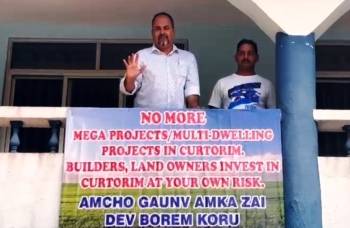
A new wave of resistance has hit Goa's streets and the fast‘unto‘death by St Andre MLA Viresh Borkar against large‘scale land conversions under Section 39A of the TCP Act last week could possibly reignite Goa’s protest traditions.
In the quiet village of Siridao-Palem, a solitary act of defiance by the villagers and Borkar became more than a personal gamble and turned into a lightning rod for public anger, drawing support from Opposition parties, civil society groups, and ordinary citizens.
Within days, the government was forced to suspend the controversial conversions.
This episode is emblematic of a broader mood sweeping across Goa: a refusal to accept unchecked development at the cost of community rights, environmental balance and the State's socio-cultural ethos.
Recent agitations
Before the simmering opposition to the government's spate of conversion of land-use zoning across the State could spill onto the streets through Borkar's protest against section 39A conversions in Siridao-Palem, the bugle was first blown by former Chief Justice of Allahabad High Court, Ferdino Rebello, through his “Enough is Enough” movement:
Rebello's campaign has rallied a significant section of Goans against the State’s aggressive promotion of real estate projects. It is demanding protection of farmland and green patches and has even proposed legislation, a draft of which has been handed over to every legislator, including the government.
The effort, however, has not yet translated into a mass movement of the kind that would send jitters through the collective conscience of the ruling party's political leadership.
Unity Mall protests: Mostly tribal residents, the month-long protest of Chimbel residents against the government's proposal to set up the Centre-sponsored 'Unity Mall' project on the Kadamba plateau put the Pramod Sawant-led BJP administration on the back foot.
The protests successfully resisted the proposed Unity Mall and Prashasan Stambh on the Kadamba plateau, arguing that it would irreversibly damage the Toyyar lake, which feeds the village's agricultural activity and is the mainstay of the region's biodiversity. The protests compelled the government to scrap the projects.
Then came the protests from villagers of Reis Magos, who forced a gram sabha resolution against the planned entry of a massive 112-meter casino vessel in the Mandovi river. Taking the cue, residents of Panaji too rose to the threat of the massive casino vessel being anchored in the Mandovi, and staged a spirited protest.
The proposed ship ” a 112‘metre‘long vessel with a capacity of 2,000 ” was meant to replace an existing casino, but locals saw it as a symbol of unchecked expansion. Demonstrators argued that the Mandovi, already burdened by multiple floating casinos, cannot sustain another massive vessel without worsening congestion, pollution, and erosion of the city’s character.
The protest drew a cross‘section of citizens, from heritage activists to environmental groups, all united in their demand to halt further casino growth.
In South Goa’s Mirabag village, resistance against a proposed check‘dam (bandhara) by the Water Resources Department has stretched into weeks of determined agitation.
Villagers argue the project threatens their livelihoods and very existence, fearing their homes and localities will go under the dammed waters. They point to pits dug at the site two years ago and a fresh excavation that has scarred farmland.
On the 18th day of protest, residents marched to the WRD office in Sanguem, demanding a detailed report and immediate filling of the pits. Their persistence forced officials to provide a written assurance that restoration work would begin by March 3, underscoring how sustained grassroots pressure can compel the government to stop in its tracks.
Elsewhere in Bardez' Tivim, resistance is ongoing at the site where the Peace University has begun work. Recently, villagers took out a mashal rally in Pernem's Arambol where villagers marched with torches against land‘use conversion for a large real estate project leading to a government rollback.
The movement against coal imports and transportation through Goa by road and rail also erupted again at Xeldem, where a proposed coal jetty is facing stiff opposition from locals.
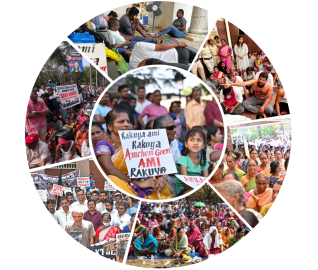
Together, these agitations reflect a pattern: grassroots mobilisation, cross‘community solidarity, and eventual government concessions.
Echoes from the past
Protests are nothing new in Goa, where streets have long been the crucible of change.
Back in the late 1970s, the 'Ramponkar movement' by traditional fishermen, led by the late Mathany Saldanha, fought mechanised trawlers threatening their livelihoods. The agitation had then reshaped Goa’s political landscape, contributing to the decline of the MGP’s dominance.
Prior to that, the student bus fare protest saw youth demand a 50% concession, and the Kakodkar‘led MGP government conceded ” a benefit that endures today.
Then, the official language agitation erupted in the mid-1980s, by far the mother of all Goan movements since its 'Liberation' from Portuguese rule. Fierce battles over the demands for Konkani versus Marathi to be the State's official language culminated in the 1987 Official Language Act. The agitation polarised society, influenced the 1989 elections, and paved the way for Statehood.
Quite significant in size and effect was the Goa Bachao Abhiyan of (2005‘06) when citizens rose against the Regional Plan 2011, which converted vast tracts into settlement and industrial zones. The movement forced the then government to scrap the plan, and in a way shaped the 2007 election narrative and finds echoes in the current unrest over land conversions to feed the real estate lobby.
Political and social impact
Each protest has compelled authorities to revisit policies, underscoring the power of collective action. In fact, these agitations and movements have often led to shifts in political fortunes ” from the fall of the MGP to Congress gains in the late 1980s, and later the rise of regional voices.
The agitations have to some extent reinforced Goans’ sense of ownership over land, language, and livelihoods, although many also question the motives, political or otherwise, of the personalities involved in spearheading them.
The blend of spontaneous uprisings and organised campaigns, nevertheless, highlights a robust democratic culture, which the political leaderships of past governments have navigated successfully or, in some cases, faltered and faced the brunt in terms of electoral reverses.
Dilemma for Sawant, BJP?
For Chief Minister Pramod Sawant and the ruling BJP, this protest tradition has become more than a historical curiosity ” it is now a pressing political dilemma.
The latest wave of agitations, from land conversions to coal transport and casino expansion, has drawn unusual traction across the State. Unlike earlier movements that could be dismissed as “urban naxal” stirrings, these protests are largely rural in character, driven by tribal and village communities, residents who see their land, livelihoods, and ecology under threat.
This shift complicates the BJP’s response. Administratively, the government must balance development and economic imperatives with mounting ecological concerns, while ensuring that projects do not alienate local populations.
Politically, the stakes are higher: with the general election just a year away, every concession or confrontation carries electoral consequences. A heavy‘handed approach risks deepening resentment in constituencies that have historically supported the party, while excessive rollbacks could embolden opposition forces and fracture the BJP’s narrative and support base.
Sawant’s government thus faces a tightrope walk. It must devise mechanisms of consultation and transparency that reassure citizens, while also protecting its developmental agenda. The challenge is not merely to quell dissent but to engage with it meaningfully so that the negative impact on its electoral fortunes in 2027 is contained.
From bus fare concessions in the 1970s to today’s battles over land, coal and casinos, Goans have consistently refused to be passive spectators. As the BJP charts its course toward the next election, it must contend with a reality that has defined Goa for decades: resistance here is not episodic but enduring, and the public will remain a decisive force in shaping politics.