As the festive season and Goa’s favourite Chavath, the local term for Chaturthi,closes in, the local markets especially in Ponda and Margao swell with peopleswarming to buy fruits and veggies for the festive season. Hindus from all overthe state visit their respective makeshift bazaarsfor the various items used to worship the deity of knowledge. Among the itemsthat make it to the shopping list are those required to create the traditionalmatoli-a makeshift roof outlined with bamboo and decorated with fruits,vegetables and flowers; and the makhar- the structure that houses the Ganeshidol.
Matoli -
The elaborate matolidecorations in parts of Ponda, Sanguem and Canacona talukas carry a few hundredtypes of fruits, herbs, flowers and vegetables mostly found in the wild and oftremendous medicinal value. The most important items in a traditional matoli include betelnuts, mauling (local citrus fruit), coconuts, kangoni, kavndal, sharwad chiddo, kallawi,bhende, ghosalim, kandlam, kattam (local vegetables), besides fruits likeguavas, apples, maindolli bananas(from Moira), chiptam (wild fruit)etc.
For Ujwala Gawde, the Ponda market isher workplace, to sell vegetables and fruits. As the festive season approaches,her customers multiply in numbers making her busier than ever. She says, “Wegather these from the wild and bring them to the Ponda market where people areready to pay even a slightly higher price as we save them the trouble ofcollecting the items themselves.”
The motive of the matoli is to offer the Lord, theselected fruits and vegetables available only during this time of the year. Itis akin to offering another form of Prasad to Lord Ganesh. Post the immersionof the Ganesh idol, the family consumes the fruits tied to the matoli and distribute it as prasad” However, with changing times,many people now prefer to use artificial items made of plastic or wood, inplace of the traditional ones. “Decorating the matoli with traditional items isnot only time consuming but has become expensive. Even wild kattam are being sold at Rs 5 a piece. Iprefer to use wax and wooden items as they can be easily tied to the matoli and the same items can be usedevery year,” says Arti Puranik from Bandoda.
Makhar “the Lord’s makeshift temple
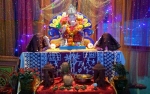
Suresh Naik sets up his temporary stallin the Margao market only during the festive season. Along with intricate craftwork done on thermocol and décor items, Suresh sells almost everything thatfinds its place in the makhar. Inmost homes, the makhar usually resemblesa temple or a throne (sinhasan) and is made out of thermocol. After the idol isplaced inside the incomplete structure, the pieces are then assembled togetherwith layers of thermocol cut outs. The most common patterns are floral andabstract, available in various shapes. The makharis hand-painted using a spray gun and acrylic paint material. In few houses,the makhar also depicts certainmythological scenes, made possible with the help of small motors and structuresmade out of cardboard or paper.
Rajendra Desai of Desai Pratishthan has been doing hisbit in creating awareness about the harmful use of thermocol and plastic usedto make makhar. He has conceptualisedand supervised a team of artisans who have created makhar out of materials likewood, jute, wool, metal and paper. Without compromising on the aesthetics, theteam has created beautiful makhar in the shape of kalash, tulsi vrindavan, etc.Apart from having an exhibition of these makhar, the team also conducted aworkshop recently at Farmagudi in the presence of members of the PollutionControl Board, Directorate of Health, Handicrafts board and around 100 NSSstudents.