GLOBAL GOENKARS SPEAK
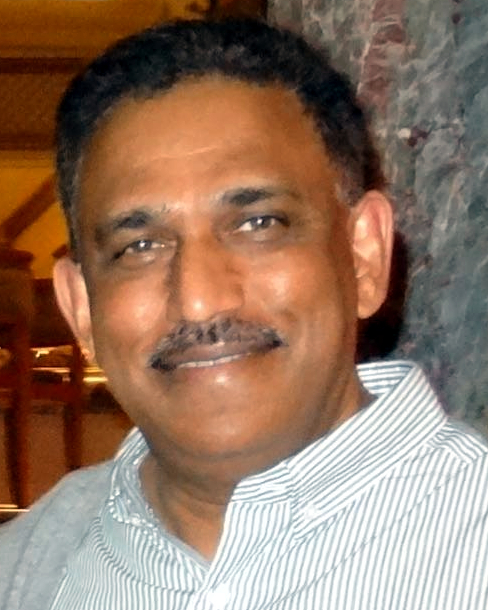 The writer is professor at Columbia University in the USA who hails from Cortalim
In the mid-1980s, getting to Panaji from my Cortalim village meant a ferry and a long bus ride, long enough to catch up on village gossip or watch the fields and trees change colour with the season.
My work at the National Institute of Oceanography required yet another bus ride from Panaji to Dona Paula, along a slow, graceful curve that followed the Mandovi River.
If the tide was high, you could see fishermen standing with makeshift bamboo rods, casting into the river. In the mornings, boats returned from the Arabian Sea, heading toward the fish market near the old Goa Medical College or across to Betim. It was an unhurried city, but it worked.
LIFE IN PANAJI
My first assignment at NIO was a monthly survey of the Mandovi and Zuari, led by my boss, the late Dr Devassy, who headed efforts to monitor the health of Goa’s waterways. That first day on the survey boat R/V Tarini has stayed with me, for reasons both small and lasting.
Coming from Cortalim, shaped by a more sheltered village, it was the first time I tasted rice idlis, packed by Dr Devassy’s wife, with chutney that made them unforgettable. We ate before the line that tethered us to the dock was released, and the long day of sampling was quietly set in motion.
The river breeze, the richness of the water, and the sense of purpose – it all made that first field trip memorable. We sampled, we learnt, we watched until, somewhere near the river mouth below the Governor’s palace, I surrendered those very idlis back to the sea. The river, then, felt alive and dependable.
After work, evenings in the city had their own rhythm. A group of colleagues, who soon became close friends, would get off near the Panaji ferry. What began as a weekly ritual soon became a daily one before we returned to our villages at sunset. We would stop first at Mr Baker, to fill our lungs with the aroma of fresh pastries, then tea at Café Real, Tato’s, or Bhosle’s. Life then was simple, unhurried, and full.
We lived in the Panaji, the Portuguese left behind. In its own way, it was already "smart". Roads drained during monsoons; they did not disintegrate after the first rains. The Santa Inez Creek flowed. There were no overflowing garbage piles, and the city smelt clean. The city and its systems were “smart”, even if no one called them that.
DECLINE OF SYSTEMS?
But today, this city we inherited is no longer the same. Over the past six years, crores have been spent to make Panaji "smarter". We have paved roads that sadly are either pockmarked after the first rains or dug up by departments that do not seem to speak to each other. Sidewalks appear and disappear.
Promenades line the Mandovi and then flood when the rains come heavy. Tall structures have replaced heritage homes. Casinos now crowd the river, encroaching, swallowing and desecrating parts of a waterfront once shaped for everyday life.
From a distance, all of this resembles progress.
But a city reveals its truth not in its skyline or its technology, but in its water. And in Panaji, that truth is beginning to unravel.
Beneath the skyline, another invisible city below must keep pace, the one that carries what we flush, discard, and forget. Sewage lines, treatment plants, drainage networks, and waste systems. They do not appear in glossy, colourful tourism brochures, yet this underground city determines whether the one above sustains life or quietly undermines it.
When growth outpaces this invisible foundation below, the excess has nowhere to go. It seeps into the ground. It accumulates. It is diverted, diluted, and ignored until it reaches the one system that records everything without judgement: the water table.
The signs are no longer subtle. The stench along the St Inez Creek. The money spent without visible relief. The slow decline of systems once taken for granted. Mala Lake now tells the story more starkly. A water body that once sustained life reveals its distress in the most visible way: fish floating belly up, mangroves thinning, and the quiet collapse of ecosystems. It is not an isolated failure. It is a warning.
And yet, we stand on the edge of repeating this pattern on a far larger scale. Our rivers, the River Sal, are as good as dead thanks to mega housing projects and neglect.
The Mandovi that flows past Panaji is more than a river. It is the city’s lifeline, ecological, cultural and historical and, for much of Goa, an economic one, sustaining fishermen and farmers alike. For years, tidal flushing and exchange with the Arabian Sea have shielded it from the worst of our excesses. But that balance is not infinite. The cumulative load, untreated discharge, expanding high-rises, and the growing footprint of floating casinos are beginning to test limits that cannot be negotiated.
Rivers are patient. They are not forgiving. What enters the Mandovi will not remain there. It will move through groundwater, estuaries, and fisheries and eventually into the food we eat and the water we drink. It will return, first quietly, then unmistakably.
SMART OR WISE?
We have seen this before. In Sancoale, when seepage of industrial effluents from ZACL rendered wells unsafe, fields barren, and village lakes lifeless. More recently, there has been a return of contamination in a new form – petroleum. The pattern is familiar: decisions taken with confidence by authorities, consequences unfolding over decades.
And still, we are told ‘Bhivpachi Garaz Nam', and we listen, thinking that this time will be different. That growth will be managed. That oversight will hold. Those impacts can be contained. But water does not respond to assurances.
A truly Smart City begins elsewhere. Not with height, but with depth. Not with expansion, but with understanding. It asks simpler, harder questions: Can our systems sustain what we are building? Can our rivers absorb what we discharge? Can our aquifers remain intact under the weight of our ambition? Do we know the carrying capacity of a newly approved construction site?
If answers are uncertain, then the path forward is not acceleration but slowdown.
Because once a water table is contaminated, recovery is not measured in years but in generations afflicted by illnesses.
And by then, the city may still look smart. But it will no longer be wise.