


GLOBAL GOENKARS SPEAK
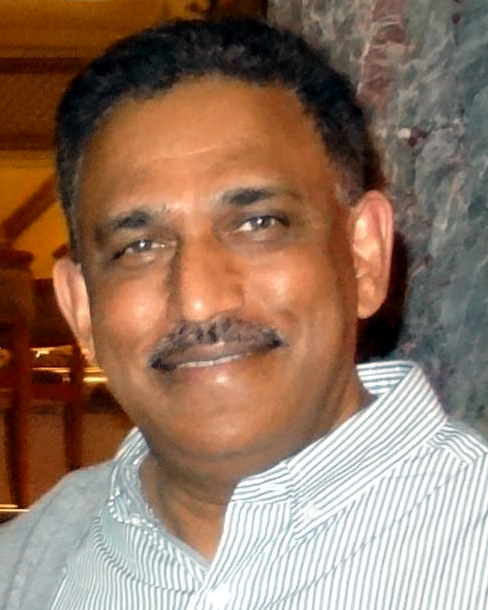 The writer is professor at Columbia University in the USA who hails from Cortalim
Across the world, societies have a curious habit: they turn politicians into gods. It happens most easily where institutions are weak, public memory is short, and loyalty begins to eclipse scrutiny. In such environments, elected officials slowly transform into figures beyond criticism, and accountability is usually the first casualty.
Goa today offers a revealing example of this dynamic. In recent years, the tone of public life has reflected a troubling shift. Politicians who hold public office sometimes speak and act with a confidence that borders on condescension toward institutions, professionals, and even citizens who question them. Only a few days ago, the Speaker of the Goa Assembly Ganesh Gaonkar expressed concern over the unruly behaviour of many ministers inside the very chamber meant to embody democratic accountability.
Episodes like these raise a deeper question, not only about the behaviour of those who govern, but about the willingness of citizens to hold them to account.
Yet despite such concerns, a striking phenomenon persists. Among certain supporters, particularly within constituencies that benefit from political patronage, leaders are often spoken of with reverence. In everyday conversations, the language sometimes borders on the devotional. A public official becomes, in the imagination of followers, something approaching a political deity. This phenomenon is not unique to Goa. But in a small state, the forces that produce such reverence can become especially powerful.
POLITICAL REVERENCE IN GOA
So where does this reverence come from?
In a place like Goa, where politics is shaped by proximity, visibility, and patronage, politicians can quickly acquire a stature that extends well beyond ordinary public life. Politicians become gatekeepers of opportunity. Access to employment, contracts, approvals, and influence often appears to flow through political offices. Gratitude then becomes loyalty, and loyalty gradually turns into devotion.
Yet living in a small state has its disadvantages. Social, professional, and political circles overlap so tightly that open criticism becomes difficult. Many may privately complain about political leaders, but in public they applaud the same individuals. The reason is not always loyalty, it is often caution.
In a place where everyone knows everyone else, people quietly calculate the consequences of speaking out: whether it might cost them access to power, a professional opportunity, or even a place within the networks that shape everyday life. Over time, admiration begins to harden into something more troubling.
Political “gods” are rarely born. They are made by the ambition of leaders on one hand, and by expectation, dependence, and the quiet fear of being distanced from power on the other.
Part of this process lies in the theatre of modern politics. Public images are carefully curated. Social media teams amplify every gesture of decisiveness as proof of tireless leadership. Spectacle replaces substance, and the constant projection of authority gradually weakens the culture of questioning that healthy democracies depend upon.
Patronage reinforces the dynamic. When employment opportunities, contracts, or institutional access appear to flow through political offices, loyalty naturally follows. Those who benefit from such networks often become the most ardent defenders of the leaders who control them.
Within the ruling party, influence tends to gather around those who control powerful portfolios and can mobilise resources for the party and its members.
In a state like Goa, where land values, tourism, construction, clubs, and the casino economy intersect with politics, the boundaries between governance, business interests, and political loyalty can become increasingly blurred.
In such an environment, authority can easily harden into confidence, and confidence into excess. Only weeks ago, a minister publicly declared that he could marshal tens of thousands of followers and shut down protesters in Panaji. Statements like this reveal how strong political backing, from supporters, colleagues, and beneficiaries of patronage, can give leaders a sense of invincibility.
EXPECTATIONS OF CITIZENS
But the deeper question is not about the confidence of politicians. It is about the expectations of citizens.
Goa prides itself on being one of India’s more affluent states. Its citizens therefore have every reason to demand the highest standards of governance and public services, world-class hospitals, infrastructure, environmental stewardship, and planning. These are not favours to be dispensed by politicians. They are basic obligations funded by taxpayers.
Citizens of an affluent state should not have to approach politicians with folded hands, hoping for favours that ought to exist as a matter of right.
Yet when political culture begins to resemble devotion rather than scrutiny, these expectations quietly erode. Citizens begin to judge leaders not by institutional performance but by personal access. Public office becomes less about governance and more about patronage. And when that happens, the real challenges facing the State are pushed aside.
Goa today stands at a delicate crossroads. Hills are being cut, orchards replaced by concrete, and village landscapes transformed at a pace few could have imagined a generation ago. Planning provisions that allow land conversion continue to reshape traditional settlement patterns across a fragile coastal ecosystem.
These changes demand serious public debate.
But when public discourse is reduced to defending personalities people consider with reverence rather than examining policies, the real issues quietly disappear from view.
Democracies do not decline because leaders are admired. They decline when admiration hardens into unquestioning loyalty and citizens stop asking difficult questions.
The true measure of a democracy is not how loudly its leaders are praised. It is whether citizens remain willing to examine the power those leaders wield”and the future they are shaping in the process.
Societies are rarely weakened by criticism of their leaders. they are weakened when those leaders become the revered we ourselves have chosen to create.


