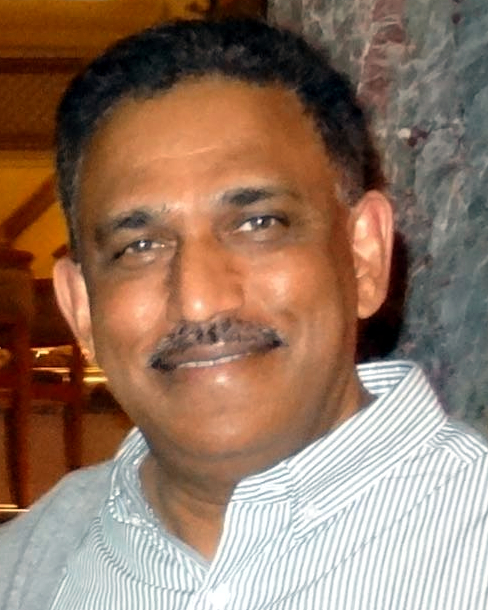
 The writer is professor at Columbia University in the USA who hails from Cortalim
Once again, those in power have shown open disregard for the environment, Goan values, and democratic accountability. The Mandovi River, a living estuarine system, not an empty stretch of water, is being stealthily dredged to welcome yet another towering floating ‘Den of Vice’. This is no accident. It is deliberate, calculated, and carried out with the confidence that resistance from the very city most affected will be minimal. Until recently, that confidence appeared well founded.
CONTINUED SILENCE
Panaji prides itself on being educated, cultured, and politically aware. It sees itself as environmentally conscious and socially progressive. Yet for far too long, when faced with the steady takeover of its river, waterfront, and public spaces, the city largely chose silence. Complaints flowed freely online, but the streets remained empty. Anger simmered in private conversations and social media posts, but rarely translated into sustained public action.
This silence did not begin with casinos. It was evident during the disastrous execution of the Smart City works that tore through the old city with little planning and even less accountability. Roads were dug endlessly. Drainage systems were compromised. The city flooded, not merely because of heavy rainfall, but because of poorly designed and poorly implemented infrastructure projects already showing signs of failure. Where were the sustained demands for audits and answers then?
The silence continued as casinos multiplied, not just as floating vessels, but as an ecosystem of disorder around them. Traffic congestion worsened. Narrow streets filled with oversized vehicles. Bikes crowded every available space. Touts became fixtures. Drunkenness spilled onto public roads. The waterfront, once a shared civic space, was gradually handed over as a private launching pad for casino operators. The riverfront now no longer feels like it belongs to the people of Panaji.
RECENT CONCERNS
What has changed, and must be acknowledged, is that Panaji has begun to stir.
In recent days, residents came together, met the Mayor, and demanded clarity. The Mayor indicated the matter would be discussed in the Council but stated that the Corporation of the City of Panaji has no jurisdiction over the Mandovi River.
This administrative position raises a deeper question: how can civic authorities disown responsibility when the consequences of river-based decisions spill directly into the streets they govern? Congestion does not stop at municipal boundaries. Nor does noise, altered public character, or the erosion of civic life.
Jurisdiction on paper cannot erase responsibility in practice. The river may lie outside municipal limits, but its impacts do not.
A citizens’ collective ‘Ponjekars Against Casinos’ also met Goa’s Captain of Ports, Octavio Rodrigues, to raise concerns about replacing an existing casino vessel with a larger ship anchored in the Mandovi. Rodrigues reportedly defended the permissions granted, stating that the proposed vessel falls within approved capacity limits and possesses all required licences. He added that monitoring systems would ensure compliance and crowd management.
These assurances address regulatory procedure. They do not address the larger civic question now being asked: whether continued expansion, even if technically compliant, aligns with the ecological health, cultural character, and long-term livability of Panaji.
This is no longer merely a debate about capacity limits and licences. It is about accountability and consent.
FORGOTTEN PROMISES
Not long ago, promises were made. Ministers publicly assured citizens that casinos would be moved out of the Mandovi. These assurances were repeated during election campaigns and used to calm public concern. Once elections concluded, the narrative shifted. The same leaders who spoke of removal now defend expansion, dredging, and “temporary” arrangements that never seem to end.
It is worth recalling that prior to being elected, the current MLA of Panaji, now a powerful cabinet minister, gave clear assurances that casinos would be removed within a defined time frame. Those assurances have quietly faded. Such reversals erode public trust and make civic engagement not optional, but necessary.
CHIMBEL PROTESTS
Contrast this with Chimbel. When confronted with threats to land and livelihoods, villagers stepped out and made their resistance visible. Their protests were not perfect, but they demonstrated that collective action can compel attention.
Activists have done what they can, filing petitions, documenting damage, raising alarms. But activists alone cannot safeguard a river. Environmental protection cannot be outsourced to a committed few while the wider community remains disengaged.
FRAGILE ECOSYSTEM
The Mandovi is not a scenic backdrop for tourism or a convenient anchorage for floating infrastructure. It is a fragile estuarine ecosystem where river and sea meet, supporting fisheries, mangroves, birds, and thousands of livelihoods. Continuous dredging, anchoring, wastewater discharge, noise, light pollution, and round-the-clock human activity impose chronic pressure on a system with limits.
The loss is not only ecological; it is cultural. Near the old Assembly building, Adil Shah’s Palace, and the statue of Abade Faria, markers of Goa’s layered civic history, tranquility and public dignity are steadily being eroded. What was once a civic heart now bears witness to noise, chaos, and loss of its way of life.
The Mandovi is a living ecosystem, not a parking lot. Treating it as expendable reflects a failure of policy, and of civic responsibility.
Panjimites are not and should not remain bystanders while their city and way of life is being stolen from them. They stand on the frontline.
Silence, in this context, is not neutrality. It is consent.