Pollution board orders Quality Exports to suspend Ops; show-cause issued for possible revocation of consent to operate
MARGAO
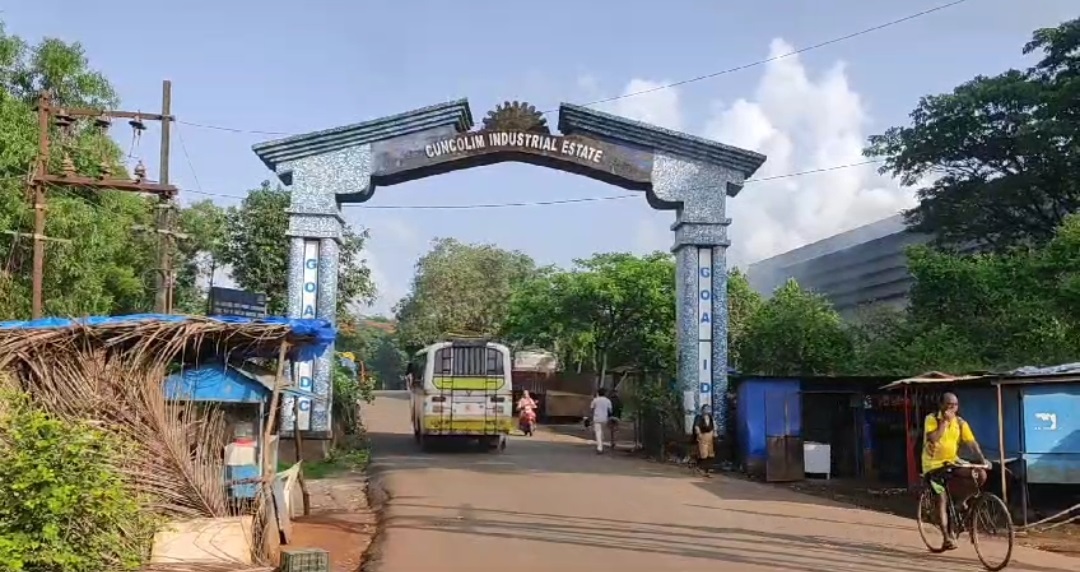
The Goa State Pollution Control Board (GSPCB) has widened its crackdown on polluting fish processing and fish meal units at the Cuncolim Industrial Estate, ordering M/s Quality Exports to immediately suspend operations until further orders for allegedly discharging untreated and inefficiently treated effluents.
The latest action comes a day after the Board directed M/s United Marine Products to cap production and implement measures to curb foul odour, signalling an intensified enforcement drive against units operating in violation of environmental norms.
In fresh directions issued by GSPCB Member Secretary Geeta Nagvenkar, the Board has asked the management of Ms Quality Exports to show cause withinseven days why the Consent to Operate issued to the plant on December 12, 2019 should not be revoked.
The GSPCB has warned that failure to satisfactorily comply with the present directions will compel the Board to initiate stringent legal action against the unit under the provisions of the Water (Prevention and Control of Pollution) Act, 1974 without any further notice.
The directions were issued in exercise of the powers vested with the Board under section 33(A) read with section 25/26 of the Water (Prevention and Control of Pollution) Act, 1974 and on account of the continued inefficient operation of the ETP at the unit.
The GSPCB Member Secretary pointed out that analysis of a sample of treated water from the Effluent Treatment Plant (ETP) at the unit, which was collected during the course of site inspection on September 18, 2025, indicated that the parameters of BOD, COD and phosphate were exceeding the permissible limits.
“As such, it was observed that you were operating your unit in violation of condition No. 3(iii) of the Consent to Operate Order bearing No. 12/2019-PCB/218523/00001920 dated 01/12/2019 issued to your unit under the Water (Prevention and Control of Pollution) Act, 1974”, the notice stated.
In this respect, the GSPCB Member Secretary stated that the Board, vide directions dated January 29, 2026, had directed the unit management to submit a bank guarantee for an amount of Rs two lakhs with a validity of one year as directed in the Addendum to the Consent to Operate issued to the unit by the Board on February 4, 2025.
In its reply, Ms Quality Exports submitted that the elevated parameters observed in September 2025 were attributable to temporary operational instability as a result of heavy rainfall and not structural inadequacy or deliberate bypass. The Board, however, pointed out that a sample of treated effluent from the unit ETP collected for analysis during the inspection of the unit on December 15, 2025 indicated that the BOD parameter was exceeding the permissible limits.
“The analysis report indicates that you are continuing to operate the ETP installed at your unit in an inefficient manner that is causing environmental pollution in the vicinity and that amounts to a continued violation of clause 3(iii) of the Consent to Operate order bearing No. 12/2019-PCB/218523/00001920 dated 01/12/2019 issued to you by this Board,” Nagvenkar added.
====
Inspection report flags lapses
The inspection report has flagged several operational and compliance lapses at the unit. While flow meters have been installed at the IDC water inlet and at the ETP inlet and outlet, no flow meter has been provided for ice production. As a result, the unit has not maintained records of water consumption for ice production, making it difficult to assess the overall water balance.
The report also noted that the unit has failed to maintain details of water sourced through tankers in the prescribed logbook or register.
Further, sludge generated from the Effluent Treatment Plant (ETP), which is categorised as hazardous waste, is reportedly being used as manure for gardening, according to information provided by the unit’s representative.
During the inspection, two sludge drying beds were found completely filled with sludge while the remaining one was empty. The report has recommended that the unit ensure regular disposal of dried sludge and install a mechanical sludge dewatering system to improve sludge management.
====
Activist cites ‘illegal’ road to seek licence rejection for fish meal unit
MARGAO: Cuncolim-based environmental activist Dr Jorson Fernandes has lodged a complaint with the Cuncolim Municipal Council (CMC) to reject the application for a construction licence made by Ms Goa Marine Impex Pvt Ltd on the ground that an allegedly illegal and unauthorised road has been constructed to provide road access for the setting up of a fish meal plant at Cuncolim.
Dr Jorson has also filed a complaint before the Town and Country Planning department to revoke the technical clearance granted to Ms Goa Marine Impex Pvt Ltd on the grounds that the road is allegedly illegal. In the complaint to the TCP, he has asked the department to conduct a fresh site inspection and check whether the position as shown in the sale deed plan is in consonance with the position at loco.
The complaint to the CMC states that the road constructed through the property having survey No. 340/1 and 340/2 is unauthorised and therefore ought to be demolished at the earliest.
“A proceeding for demolition under section 184 of the Municipalities Act be initiated at the earliest and the said road be demolished forthwith. The application for a construction licence filed by Ms Goan Marine Impex Pvt Ltd be dismissed as the said road is unauthorised and illegally constructed to provide road access for setting up a fish meal and fish processing plant,” Dr Jorson stated.
He submitted that the construction of the 12-metre-wide road is illegal and unauthorised and has therefore called for initiating necessary proceedings under section 184 for demolition of the illegal structure forthwith.
He further submitted that Sociedade Agricola dos Gauncares de Cuncolim E Veroda has not granted any permission to construct any road on its property bearing survey No. 340/2, adding further, “in any case, the said land cannot be used for construction of a road as it is agricultural land.”