PANAJI
Out of 191 village panchayats in Goa, only 91 have permanent Material Recovery Facilities (MRFs), while 100 continue to operate with temporary setups, underlining gaps in the State’s decentralised waste management system.
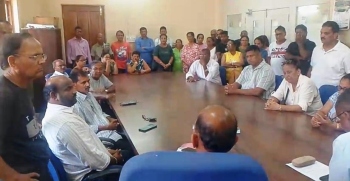
Minutes of a high-level review meeting chaired by the Director of Panchayats on April 2 reveal wide disparities across talukas in the availability and functionality of MRF infrastructure.
In Sattari, all 12 panchayats are expected to eventually have permanent MRFs, with 4 already permanent and 8 currently temporary -- half of which are nearing completion.
In Sanguem, 5 out of 7 panchayats have permanent MRFs, while the remaining 2 are still identifying land for permanent facilities.
Bardez, one of the largest talukas, has only 15 permanent MRFs out of 33 panchayats, with 18 still operating temporary units. Authorities have, however, sought re-inspection of several facilities that may qualify as permanent.
In Ponda, 14 of the 19 panchayats have permanent MRFs, while 5 are temporary -- two of which are newly constructed and expected to become operational shortly.
Salcete has 19 permanent MRFs across 30 panchayats, leaving 11 still dependent on temporary facilities. Officials flagged that many of these are located in coastal or high-density areas, worsening garbage concerns.
In Dharbandora, 4 out of 5 panchayats have permanent MRFs, with one still functioning temporarily and in the process of identifying land.
Quepem has 6 permanent MRFs out of 11 panchayats, while 5 remain temporary, though two have recently set up facilities awaiting full functionality.
In Bicholim, 10 of the 19 panchayats have permanent MRFs, while 9 operate temporary units. Of these, some are nearing completion, while others face land constraints.
Pernem presents one of the weakest scenarios, with only 4 permanent MRFs among 20 panchayats, leaving 16 dependent on temporary setups, most struggling with land availability.
In Tiswadi, 10 out of 19 panchayats have permanent MRFs, while the remaining 9 are still in the process of identifying land for permanent facilities.
The Directorate has directed all Block Development Officers (BDOs) to ensure that panchayats apply for mandatory authorisation from the Goa State Pollution Control Board (GSPCB) by April 20. Issues such as land ownership documentation, short validity of authorisations, and delays in site identification were flagged during the meeting.
To address these challenges, the Directorate has pushed for re-inspections, cluster-based waste management models, and time-bound land identification, while also seeking extended validity of authorisations and training programmes for panchayat officials.
The taluka-wise data highlights that while progress has been made, a substantial number of panchayats are yet to transition to permanent waste management infrastructure, raising concerns amid increasing waste generation across the State.