Residents say complexes have failed to provide parking
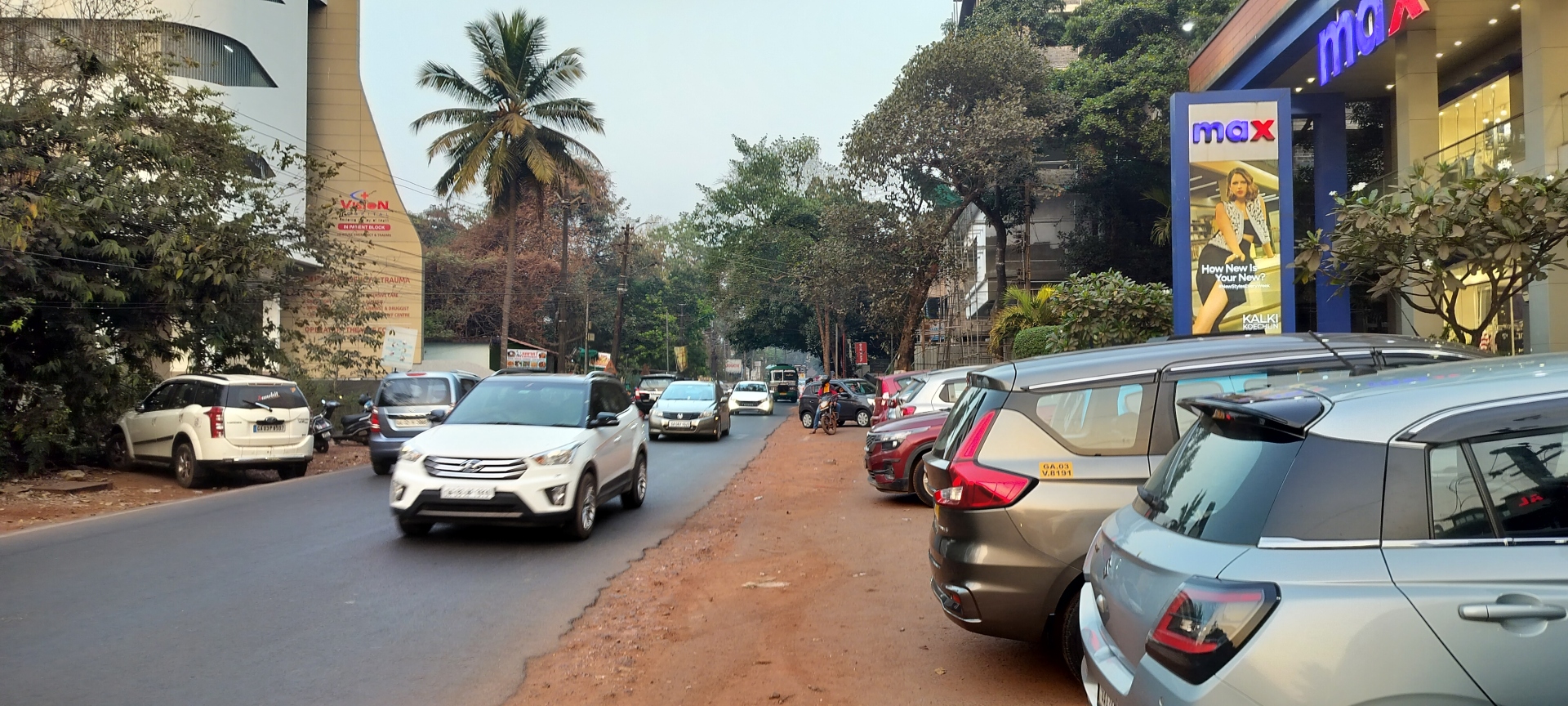
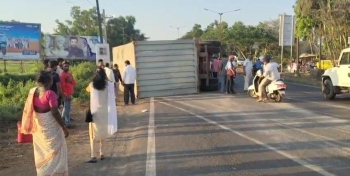
PARKING PERIL: Vehicles parked along the roadside outside Vision Multi-Speciality Hospital and Max Fashion Mall in Mapusa narrow the carriageway and disrupt traffic flow, highlighting how the alleged conversion of designated parking spaces into shops a
MAPUSA
What was once dismissed as routine congestion has now snowballed into a full-blown civic crisis. In Mapusa, unauthorised roadside parking – triggered largely by commercial establishments that fail to provide adequate parking – is steadily paralysing traffic, endangering pedestrians and raising serious questions about enforcement.
Across the bustling town, vehicles line both sides of already narrow roads, reducing carriageways to single lanes and forcing motorists into chaotic bottlenecks.
Residents allege that several malls, hospitals and commercial complexes that had earmarked parking spaces in their approved building plans have either failed to create sufficient facilities or have converted designated parking areas into shops and storage units to maximise revenue.
Atmaram Gadekar, a resident of Canca Bandh, has formally raised the issue with the Deputy Collector of Bardez, with copies marked to the Mapusa Municipal Council and traffic police.
“Unauthorised parking on the roadside, coupled with the misuse of designated parking areas for storage, has compelled visitors to park on the streets. This creates significant obstructions and increases the risk of accidents,” Gadekar stated in his complaint.
He has urged authorities to clear encroachments and restore parking spaces as per approved plans.
Among the establishments under scrutiny is Max Fashion Mall, where inadequate parking provision has allegedly forced customers to park along the roadside.
Residents claim that access points have been obstructed with railings and iron chains, further limiting usable space. Directly opposite, Vision Multi-Speciality Hospital faces similar allegations of insufficient visitor parking, compounding congestion in the area.
The consequences, locals say, are not merely inconvenient but deadly. In March 2020, a 38-year-old man lost his life near the hospital after being struck by a truck.
Residents maintain that vehicles parked on both sides of the road had dangerously narrowed the passage, contributing to the tragedy.
Other commercial structures such as Keni Tower and Kalika Bhavan in Keni-vaddo are also accused of providing little or no parking, forcing patrons onto public roads. School and college students navigating these stretches daily face heightened risks amid the chaos.
Civic accountability, however, appears blurred.
A municipal official, when contacted, said it was primarily the responsibility of the traffic police to clamp down on haphazard parking.
When asked about alleged conversions of parking areas into commercial spaces, the official declined to comment.
A traffic officer admitted that enforcement drives often face “pressure to slow down or halt action” once influential establishments are targeted.
Urban planners warn that such practices amount to a systematic erosion of public space.
“Parking provisions are mandatory under building regulations. Converting them into revenue-generating units is a direct violation and a mockery of planning laws,” said a town planning expert on condition of anonymity.
With commercial expansion outpacing infrastructure and enforcement appearing selective, residents argue that the town’s roads are being sacrificed for profit.