Sub-Sec (I-A) mandates issuing EHN, levying tax on buildings constructed without authorisation; P’yat in quandary as houses are on tenanted paddy fields where law bars land conversion

MARGAO
When the government in 2021 amended Section 153 of the Goa Panchayat Raj Act, 1994 by inserting sub-section (1-A), to levy tax on buildings constructed without authorisation in panchayat areas, the civil society had cried foul, accusing the government for pushing the amendment with an eye on the vote bank.
A year later, the Davorlim illegal housing imbroglio has brought the amendment in sharp focus. On one side is the law barring conversion of tenanted fields for any purpose, other than agriculture. The Amendment to Section 153 of the Goa Panchayat Raj Act, 1994 by inserting Section (I-A), however, mandates the panchayats to issue Enable House Number (EHN) and levy tax on buildings constructed without authorisation within the limits of panchayats.
This has thrown up a simple question for the panchayats to handle -- whether the panchayat is duty bound to issue the Enable House Numbers (EHNs) to the illegal houses as per the 2021 Amendment or is the panchayat justified in denying house numbers on the plea the houses have come up on a tenanted paddy fields where the law bars land conversion for construction.
Questions are being raised whether the panchayat is bound to turn a blind eye to houses that have come up on tenanted fields, notwithstanding that tenanted land cannot be converted for housing. Or, the panchayat is mandated to issue the EHNs to the houses going by the Amendment to Section 153 of the Goa Panchayat Raj Act. Or whether the panchayat can keep the applications on hold on the plea that the local body has set in motion the process for action against the illegal structures.
City-based senior lawyer, Adv Cleofato Coutinho was forthright in saying the panchayat can always take the plea that since the structures have come up on tenanted land, where conversion is barred by law, the body will study and take a call. Adv Coutinho, however, hastened to add that to adopt this plea, the panchayat should set in motion the process against the structures. “The panchayat should have some records to show that the body has initiated action as per the law against a particular construction and it is not prudent to issue the house numbers to the same structures,” he added.
Another lawyer wondered whether the panchayat is mandated by the Amendment to shut its eyes to a blatant illegality, more so in the instant case, when tenanted land is barred for conversion for any purpose other than agriculture as per the High Court judgement.
Ex-Dy CM Manohar Ajgaonkar, who has taken up cudgels for the 166 applicants, insists the panchayat is not required to go into the legality and illegality of the structures. “The Amendment empowers the panchayat to issue the EHNs to the unauthorised structures. The 166 applicants are not seeking regularisation, but only the EHN to avail government schemes and loans,” he said.
He added; “If the Davorlim panchayat does not want to issue the EHNs for the 166 structures for whatever reasons, we have no issue. But, let the panchayat reject the applications so that we can go in appeal to put the Amendment to test.”
Davorlim Sarpanch Herculano Niasso, however, begged to differ. “How can a panchayat issue the house numbers to structures in a tenanted land where conversion of land to non-agriculture is totally barred. Let the applicants produce the mandatory documents before the panchayat takes the decision.”
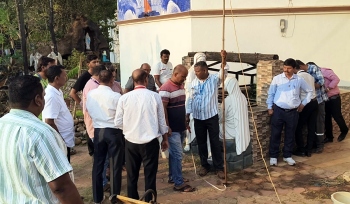
Deputy Town Planner, TCP Ranjit Borkar pointed out that the TCP has sought details from the panchayat body on the 166 structures. “We had a look at the site where the structures were believed to have come up long ago. We are awaiting the panchayat to furnish certain documents, before initiating further action,” he said, when asked whether the Margao TCP office has initiated any action on the instructions of the TCP Minister to initiate action against the illegal structures.