MARGAO
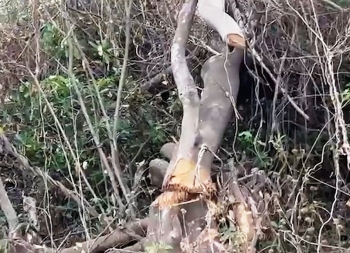
Hundreds of mangrove trees were found felled and destroyed in Curtorim on Thursday, prompting the Forest Department to register a First Information Report (FIR) against unknown persons for the illegal act.
The incident has raised serious environmental concerns, even as local political representatives offered differing perspectives on the reasons behind the large-scale clearing.
According to Forest Department officials, the destruction occurred along a bundh near the Handi Khuris area, where extensive cutting of mangroves has also weakened the protective embankment. A senior official confirmed that an FIR has been filed and an investigation is underway to determine the ownership of the land based on survey records and to identify those responsible.
“Mangrove felling is strictly illegal, and no permission is ever granted for such activities,” the official said. “These trees are a vital component of the ecosystem, protecting coastal areas from erosion, supporting biodiversity, and acting as natural buffers against saline intrusion. The violators will face strict action, including penalties and possible imprisonment, if found guilty”, he added.
The destruction has sparked debate after Curtorim MLA Reginaldo Lourenco suggested that some local farmers may have carried out the clearing in an attempt to protect their agricultural lands. He stated that over the past 15 years, mangroves had gradually encroached into fields, forcing farmers to leave portions of their land fallow.
“I am not defending the act, as cutting mangroves is undoubtedly illegal,” Lourenco said. “However, it appears that some farmers may have acted in good faith to deepen water catchment areas and prevent saline water from entering their fields. This was not done for construction or commercial purposes, but to support agriculture”, he said.
He further claimed that the trees were not uprooted entirely and expressed hope that the mangroves could regenerate over time. “These mangroves will return to the same place after some time,” he added.
Environmentalists, however, warn that such actions”regardless of intent”can have long-term ecological consequences. Mangroves play a crucial role in maintaining coastal balance, and their destruction can lead to increased vulnerability to flooding, soil erosion, and loss of habitat for various species.
The incident highlights the growing tension between environmental protection and needs of local stakeholders.
As the Forest Department continues its investigation, the case is expected to reignite discussions on sustainable land management practices and the need for clearer frameworks to address conflicts between conservation and livelihoods.