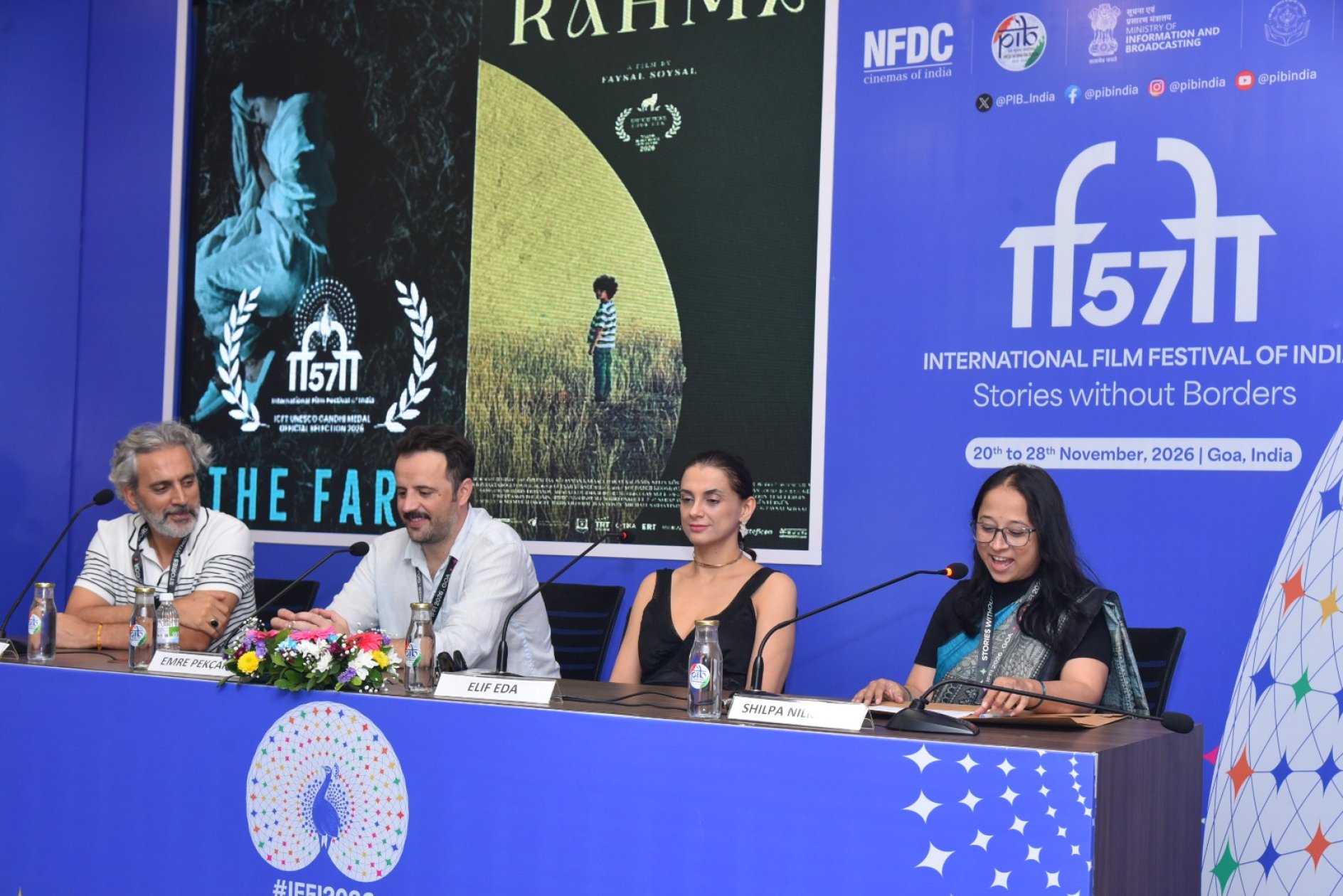
PANAJI: Films Rahma and The Farm, screened under the International Cinema Section of the 57th International Film Festival of India (IFFI) in Goa, explored themes of motherhood, human vulnerability, empathy and respect for all forms of life during a press conference attended by their filmmakers.
The session featured Faysal Soysal, director and writer of Rahma; Elif Eda, director and writer of The Farm; and Emre Pekçakır, cinematographer of The Farm. Moderated by Shilpa Nilkanth, the discussion offered insights into the films' creative journeys, underlying messages and the experiences of bringing their stories to the screen.
Rahma, directed and written by Faysal Soysal, centres on Meryem, an archaeologist struggling with the emotional toll of being unable to conceive despite undergoing multiple surgeries and unsuccessful IVF treatments. As she considers surrogacy in Georgia, her life takes an unexpected turn when she meets Rahma, a nine-year-old Syrian orphan struggling to survive on her own.
As Meryem learns more about the young girl's circumstances, the two gradually develop a bond that brings emotional comfort and healing.
Speaking about the inspiration behind the film, Soysal said the story emerged from the contrast between couples who undergo immense struggles to have children and children who grow up without families. Through the film, he sought to examine the meaning of parenthood, the emotional complexities of family and how human connections can fulfil deep emotional needs in unexpected ways.
Written and directed by Elif Eda, The Farm explores the sanctity of life through the perspective of 12-year-old İrem, who moves in with her estranged grandmother on a dairy farm after losing her parents.
Disturbed by the practice of separating newborn calves from their mothers to increase milk production, İrem finds herself unable to accept the cruelty around her. With the help of Halid, an orphan working as an apprentice to the farm's veterinarian, she sets out to free the pregnant cows.
Explaining the film's central message, Eda emphasised the need to respect all forms of life and develop empathy towards the suffering of others. She observed that the greater danger lies not simply in experiencing pain but in becoming indifferent to the pain of others.
She also reflected on how humanity's desire to control everything often causes suffering to other living beings. Through The Farm, she wanted to draw attention to the largely unseen suffering of animals and encourage audiences to reconsider their relationship with other forms of life.
Eda also spoke about the challenges of establishing herself as a woman filmmaker, pointing to the additional obstacles women face while pursuing their creative ambitions in the film industry.
Sharing his experience of filming The Farm, cinematographer Emre Pekçakır spoke about the challenges of working with animals, particularly the cows. He said he spent considerable time on farms, staying close to the animals to understand their behaviour and capture the nuances of their surroundings. Despite the difficulties involved, he described filming with the animals as an enjoyable and enriching experience.
Together, Rahma and The Farm offer different perspectives on compassion, belonging and empathy, encouraging audiences to look beyond their personal circumstances and recognise the struggles and aspirations of others, whether human or animal.