


VASCO
Activists have rejected Vasco MLA Daji Salkar’s “win-win situation” on the double-tracking issue in Vasco, claiming that a 1-metre buffer is nothing short of ridiculous.
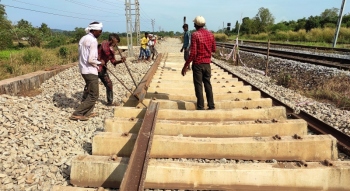
Speaking after a joint inspection with Railways and other officials, Salkar on Friday had assured people that no houses would be damaged during the ongoing railway double-tracking work at Uddi in Belabai area of Vasco.
He also said people would also get a widened internal road and footpath with gutters in return from the Railways.
“We decided to have a win-win situation for everyone. We have told the Railways not to go extremely close to houses as they could get damaged due to piling works and asked them to leave a buffer gap of one metre from every house in the area,” Salkar had told reporters.
Citing Goa Heritage Action Group concerns, their Vice-Chairperson Heta Pandit claimed that “keeping a buffer of 1 metre between the railway track and a house is nothing short of ridiculous.”
“Is that meant to be a relief? Heavy railway wagons 1 metre from the house will cause damage through vibration and noise. Anyone who says that there won’t be any adverse impact is lying or ignorant of the fragility of our Goan houses,” said Pandit.
Responding to Salkar’s solution, Max de Souza of Velsao and a retired engineer by profession said “while it is difficult to accept that a gap of one meter would protect houses from the impact of piling, details of precautionary measures railway authorities claim have been taken to safeguard houses from doubling of the track must be shared with the local authorities/government as required by the Railway Engineering Code.”
With this query of no proper study done or research carried out left unanswered, the Railways have been given a green light to begin expansion work keeping in mind the less than 4-feet impact that was heavily contested by homeowners in the area, he added.
Architect Lester Silveira, who curates a Heritage at Risk Series that throws light on the rich traditions of Goan built heritage, said the MLA’s solution seemed to miss the point that double-tracking is detrimental for Goa’s natural and built environment.
“It is not about leaving one metre, but the very fact that double-tracking will lead to increased frequencies of vibrations that will ultimately lead to the destruction of heritage along the track, besides the environmental and health impacts from its construction and subsequent coal transportation.”
He further added that no study has been done for assessing the impact of double-tracking on Goan heritage buildings.
“These buildings represent the Goan ethos and are mostly built out of traditional material, putting them at greater risk of damage from the existing track itself, let alone a second track,” said Silveira.
“Time and time again, the need for assessment, scientific backing and research has been touted as an important player in the development projects that threaten Goa’s environment, community and heritage.”
“If these projects are allowed to go ahead, it could set a dangerous precedent and could be used to force the double-tracking in areas further down the line where there is a wealth of Goan heritage at risk,” Silveira added.


