MAPUSA
The late August and September rains have significantly bolstered water levels in Goa's reservoirs, with nearly all dams across the State now holding between 90 to 100 per cent of their total capacity.
This ensures an ample water supply for drinking, agricultural and industrial purposes in the coming months.
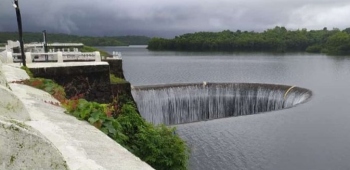
The State’s largest water reservoir, Selaulim, is now operating at 102 per cent capacity, a milestone it reached back in early July when the heavy monsoon rains caused it to overflow.
Located in South Goa, the Selaulim dam is a critical water source, serving the drinking water needs of several major talukas, including Salcete, Mormugao, Quepem, and Sanguem.
Despite its capacity being exceeded, the dam continues to function efficiently, ensuring no water shortages in these regions.
Goa’s second-largest dam, Anjunem, which supplies water to the northern regions, is also nearing its peak, currently standing at 93 per cent full.
Together, the Selaulim and Anjunem dams are responsible for meeting a significant portion of the State's water requirements, ensuring a stable water supply even during drier spells.
Meanwhile, the Amthane reservoir, which plays a crucial role in supplying drinking water to Bardez and parts of Bicholim, is nearly full, with its water level recorded at 99 per cent capacity.
This reservoir's healthy levels are a positive sign for the densely populated Bardez taluka, where water demand is typically high throughout the year.
In Canacona, the smaller yet vital Chapoli and Gaunem dams have both reached 100 per cent capacity.
The Chapoli dam, in particular, is the primary source of raw water for the entire Canacona taluka, ensuring a steady supply for the local communities.
The Panchwadi dam, serving the water needs of the Shiroda and Panchwadi regions, also remains in a strong position.
After hitting full capacity in early July, the dam’s current water level is at 99 per cent, a slight decrease but still ample to meet the area's demands.
The Tillari dam, situated across the border in Dodamarg, Maharashtra, is another key water source for Goa.
Currently at 94 per cent capacity, Tillari contributes significantly to Goa’s raw water supply, supporting both drinking water and irrigation needs across the State.
Its healthy levels following the monsoon rains are a positive indicator for agricultural productivity in the region.
The abundance of water stored in these reservoirs, coupled with ongoing rainfall, provides assurance of a stable water supply in the months ahead. Officials from the Water Resources Department have expressed optimism that the current water levels will comfortably sustain Goa's needs until the next monsoon season.