MAPUSA
The Public Works Department’s National Highways division is not planning any structural modification to the Porvorim elevated corridor but is working on additional arrangements to facilitate direct access to Atal Setu, Executive Engineer Gajanan Desai has said.
Desai said the department was exploring both temporary and permanent solutions to provide the required access, while ensuring that the proposed changes do not compromise road safety.
The plans come amid growing attention on traffic movement and the safety of motorists using the newly opened elevated corridor.
“We are not planning any structural modification as such. We can’t modify the main structure, but we are going to do something additional,” Desai said, adding that the department was examining a different arrangement to provide entry to Atal Setu from the Porvorim side.
The engineer said the department was also considering widening the road near Hotel Majestic, where the existing service road lane is narrow, along with constructing a ramp to facilitate the movement of vehicles.
The work is expected to be taken up within the next six to seven months, he said, adding that the Ministry of Road Transport and Highways had agreed to the proposal.
The proposed access arrangement assumes significance as the elevated corridor currently provides an exit on the Porvorim side for vehicles travelling towards the Mandovi bridges, but the promised connectivity to Atal Setu is yet to be put in place.
AI cameras planned at multiple points
In a parallel move to strengthen traffic monitoring and enforce speed discipline, the National Highways division plans to install AI-enabled cameras at the start and ending points of the elevated corridor at Guirim and Porvorim, besides at least two locations along the stretch.
Desai said the cameras were expected to be installed within a week, although the timeline remains subject to the department’s implementation.
The proposed surveillance system is intended to help monitor traffic movement and improve compliance with speed limits along the corridor. The engineer stressed that motorists must slow down while approaching entry and exit points to reduce the risk of accidents.
“We have planned that a vehicle has to move at a 50 km speed when it reaches the exit/entry points. If that happens, we guarantee that accidents will never happen. But it is not in our control. That is the main problem,” Desai said.
The emphasis on speed control comes as the department considers additional access arrangements that could alter traffic movement at the Porvorim end of the corridor.
Khaunte seeks better connectivity
The proposed measures follow Tourism Minister and Porvorim MLA Rohan Khaunte’s recent demand for an opening to facilitate movement towards Atal Setu and for other works to improve traffic flow on the elevated corridor.
The PWD’s challenge will be to ensure that the additional access does not create fresh traffic conflicts or compromise the safety of motorists.
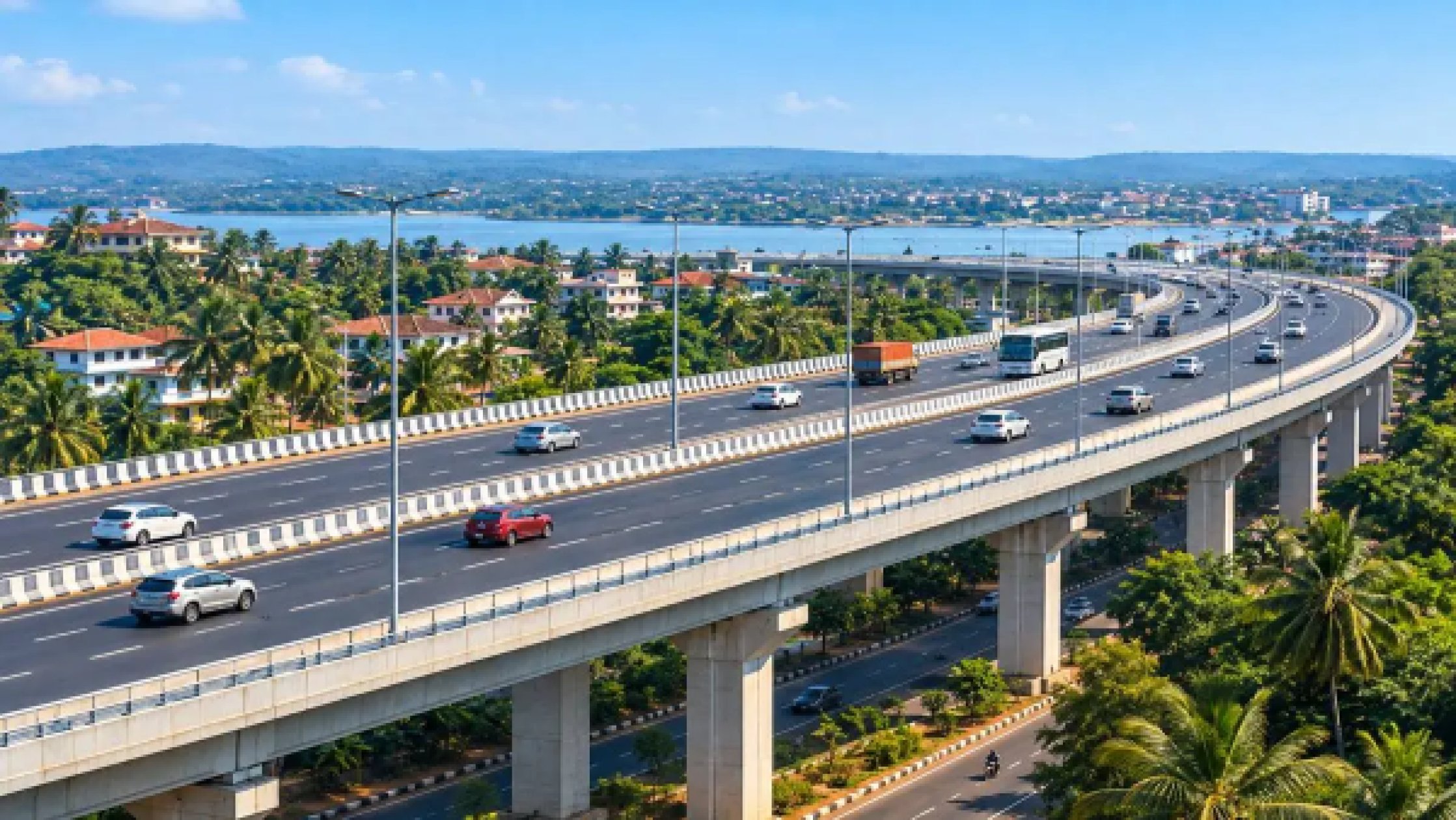
The six-lane elevated corridor was built to improve traffic movement along the busy NH66 stretch at Porvorim.
However, the proposed access to Atal Setu and the need for further road improvements have brought the focus back on how traffic is channelled at the corridor’s approaches and exits.