MARGAO
The Goa State Pollution Control Board’s (GSPCB) latest directions to local authorities along both banks of the River Sal to inspect residential complexes, dwelling units and commercial establishments and ensure that untreated or partially treated sewage is not discharged into storm-water drains, streams or other water bodies have raised a pertinent question: What happened to the recommendations made during previous inspections to plug the flow of sewage into the river, the lifeline of Salcete?
The question assumes significance against the backdrop of repeated inspections of the River Sal and the storm-water nullahs carrying raw sewage into it by the GSPCB and other authorities. The latest directions differ in one key respect: they place the onus on local authorities along both banks of the river to inspect residential complexes and commercial establishments.
This raises a fundamental question for the state’s apex pollution control body: Have the inspections conducted in the past, along with the recommendations that followed, succeeded in stopping the flow of sewage from Margao, the state’s commercial capital, into the River Sal?
The answer may lie in the findings of an inspection conducted in April 2026 by the GSPCB, along with other authorities, including the Margao Municipal Council (MMC) and the Margao Urban Health Centre.
The inspection, conducted at the request of the Cavelossim Panchayat and the Benaulim Block Congress Committee, had confirmed long-standing concerns over sewage contamination of the River Sal. It found that sewage was flowing through Margao’s storm-water nullahs before eventually emptying into the river.
What action followed earlier recommendations?
Following the inspection, the GSPCB directed the MMC and the Margao Urban Health Centre to jointly undertake an extensive verification drive in areas stretching from Boshe Circle to Comba. The two authorities were tasked with inspecting houses and residential complexes to ascertain whether they had functional septic tanks and soak pits or were connected to the underground sewerage network.
However, key questions remain unanswered. Has the GSPCB sought an action-taken report from the MMC and the Urban Health Centre on the implementation of its recommendations? Did the Board prescribe a deadline for completing the inspections and submitting a compliance report?
Assuming the two authorities have carried out the verification exercise, has the GSPCB established whether the identified houses and residential complexes have since been connected to the underground sewerage network? More importantly, has the exercise resulted in any measurable reduction in sewage flowing into the storm-water drains and, ultimately, the river?
Has sewage discharge from unauthorised hutments been plugged?
The GSPCB had also recommended that the MMC and the Urban Health Centre accord top priority to inspections in Khareband, where sewage discharge into storm-water drains has emerged as a major concern. The recommendation assumes particular significance as the April inspection had reportedly found hutments discharging sewage into the River Sal.
Has the situation in Khareband improved since the April inspection, or does sewage continue to flow into the river unchecked?
There is also the question of whether the authorities are relying on the proposed installation of mini-sewage treatment plants (mini-STPs) along the riverbanks to address the problem. The proposed facilities are expected to intercept sewage flowing through storm-water nullahs, treat it and release the treated water into the river.
Questions remain about when the facilities will be put in place, since setting up the mini-STPs may take months. In such a situation, have the GSPCB and other authorities explored other options to contain the rampant flow of sewage into the river?
====
Citizens question five years of inaction, slam 'cosmetic' fixes
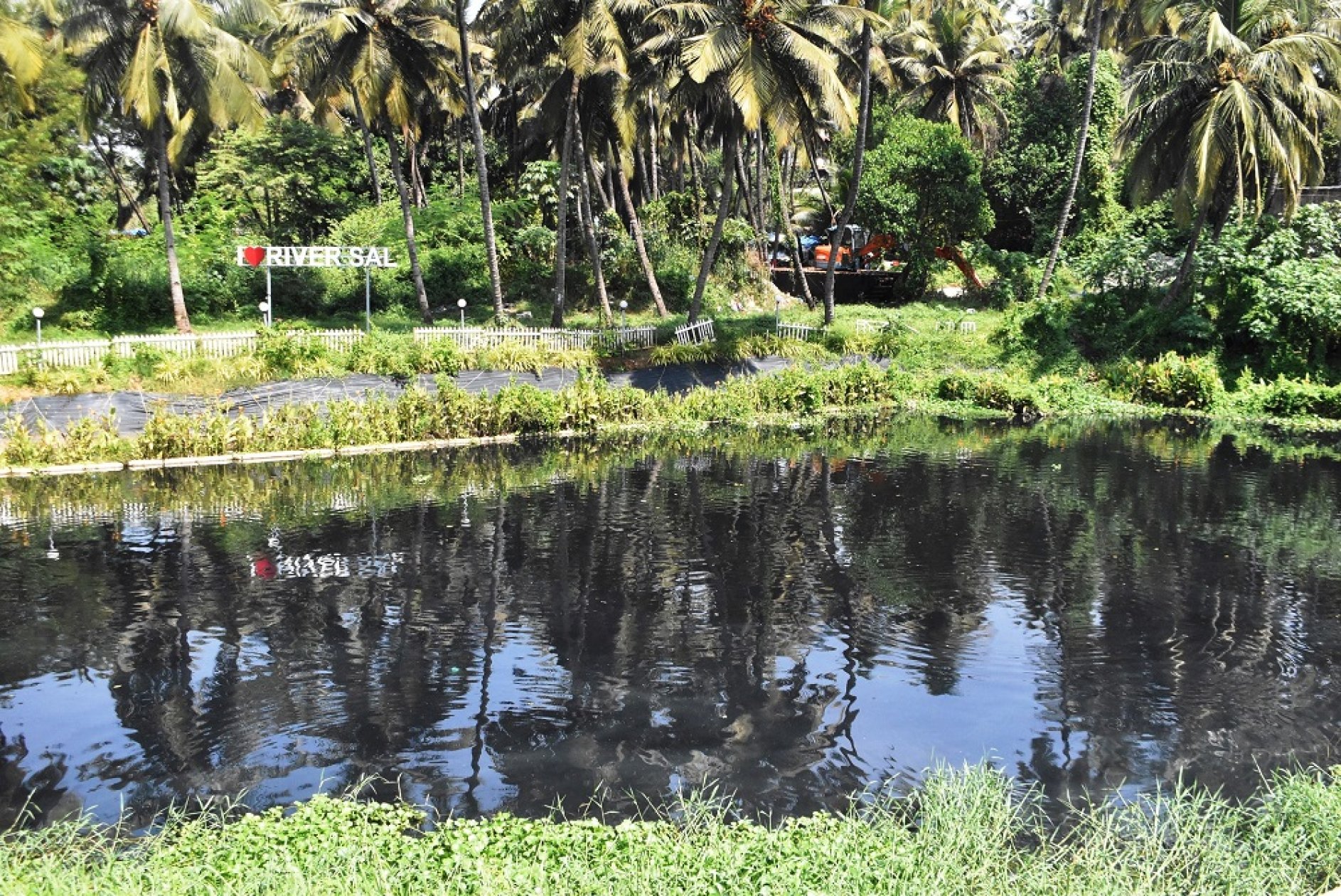
MARGAO: With an unbearable stench emanating from the River Sal near the Khareband bridge due to the discharge of raw sewage, a group of citizens from the Salcete coastal belt on Wednesday called for a holistic approach to address the problems plaguing the river, instead of resorting to cosmetic measures.
Recalling the pledge taken by Benaulim MLA Venzy Viegas and his Margao counterpart Digambar Kamat on the banks of the River Sal around four-and-a-half years ago to save the river and restore its glory, the citizens questioned why the authorities had failed to stop the flow of sewage from Margao into the river over the past five years.
Farmer Raymond D’Costa expressed dismay over the deteriorating condition of the river near the Khareband bridge, where the foul odour has made life difficult for those living and working in the vicinity. He said he usually pumps water from the river to irrigate his fields but was now unable to do so because of the severely polluted water. “Raw sewage is flowing into the river near the Khareband bridge. The water has turned black and is unfit for irrigation,” he said.
Social activist Santan Pereira said the stench had become unbearable over the past week due to the rampant discharge of sewage into the river. “The two MLAs had taken a pledge four-and-a-half years ago to restore the river, but nothing has come of it. Cosmetic measures were undertaken near the bridge in the name of beautification. What we need is a concrete action plan to restore the River Sal to its pristine glory,” he said.
Cavelossim sarpanch Dixon Vaz echoed similar concerns, pointing out that the discharge of raw sewage into the River Sal, which empties into the Arabian Sea at Betul, was a major cause for concern over marine water quality.
“If seawater is found to be contaminated, the discharge of raw sewage into the river is one of the primary concerns. We must move beyond cosmetic measures and pool our efforts to restore the river. The prevailing condition of the River Sal is also detrimental to the fishing community,” he said.
Vaz appealed to the Chief Minister to intervene and take urgent steps to arrest the deterioration of the river.