


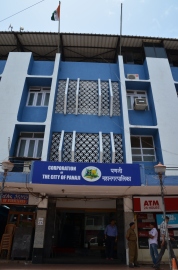
PANAJI
The Corporation of the City of Panaji (CCP) is heading into elections with a shaky financial backbone. House tax and trade licence fees, its main sources of revenue, remain poorly collected and arrears have mounted despite repeated drives.
The CCP enters yet another election season, weighed down by arrears running into crores, and its budget documents show that house tax dues alone hover between Rs 8“10 crore, with significant amounts pending even from government undertakings.
Trade licence fee arrears add another Rs 2“3 crore, reflecting many businesses that shut shop without surrendering their licences.
In its 2025“26 budget, the CCP projected revenue receipts of around Rs 48.5 crore, with house tax expected to contribute Rs 15 crore and trade licences another Rs 1.5 crore.
Yet actual collections have consistently fallen short, year after year.
Commissioner Clen Madeira had last year warned defaulters via public notices that penalties would be imposed, but beyond the threat, there is little to show of any real effort to recover the monies.
These arrears represent nearly a quarter of CCP’s annual demand, leaving the civic body struggling to fund its routine and minimal duties towards waste management, sanitation, and maintenance of streets and public spaces.
The new council, to be elected on March 11, will inherit this fragile financial core.
Yet neither side vying for the control of the civic body ” the ruling Bharaitya Janata Party (BJP) backed and Monserrate-backed panel or the Opposition-backed Ami Panjekar panel ” has addressed this issue of financial weakness.
Mayor Rohit Monserrate, who will be completing an uninterrupted five-year term before the elections are over, acknowledged the challenge. A year ago, when he was re-elected for a fifth consecutive one-year term, Monserrate had said: “We cannot run a capital city on promises alone. Revenue recovery is the backbone of civic responsibility. Without it, services collapse.”
But beyond words, there has been little or no effort to tackle the issue of the CCP's taxation cell falling short on recovery.
Madeira, when he warned in 2025 that defaulters would face penalties if dues were not cleared, had said: “We have given enough time. Now we will act.”
That promised action by the Commissioner has also not seen the light of day in the last one year and recovery continued to remain slow although the CCP has tried to modernize systems using online portals to allow payments, holding awareness campaigns to urge compliance.
The impact, however, has been limited even where individual notices are issued with penalties and fines.
As Panaji heads to the polls on March 11, with results due March 13, the issue looms large. Candidates are expected to face tough questions from voters about how they plan to fix the city’s finances.
Observers note that successive councils have struggled with the same problem. “We need accountability and transparency. Citizens must see where their money goes,” said a senior civic official, speaking on condition of anonymity.
Panaji’s image as Goa’s capital is at stake. Locals and visitors expect clean streets and efficient services, but without the cash in the civic body's kitty, those expectations are belied, year after year.
For now, the CCP remains caught between mounting dues and mounting responsibilities. The election outcome will decide who takes charge of fixing this fragile financial core of the civic body.


