


Shipping keeps global commerce running. Almost 90% of the goods and commodities are transported internationally by ships. The computers that we use, the fuels that we utilise for our cars, the clothes that we wear, cosmetics, various food stocks, alcohols, livestock, cars, various ores, logs, chemicals, fertilizers, cement, gases, fruit juices, etc are transported by ships. And when one is rich enough and want leisure you have the cruise ships.
The seafarers are the frontline workers of the shipping industry. The challenges at sea are varied. The seafarers have to face heavy seas, storms, gale, have to stay away from their families for the entire duration of their contract on board, work with various nationalities, and cultures, work under various climatic conditions. And yet they have to maintain the schedule of the ship to ensure commercial profits to the owners and satisfy the market demands.
The seafarers have to maintain the ships to comply with various international and national regulations and standards. Without which the ship shall lose business. The seafarers are always on their toes when the ship arrives at various ports for loading/discharging and simultaneously presenting the ship to various inspectors of that particular country who verify that the ship is manned, maintained and operated according to the international and national regulations.
Shipping is one industry that is focusing on reducing the carbon footprint, the greenhouse gases and developing various alternate fuels to reduce global warming according to The Paris Agreement 2016 under the guidance of the IMO (International Maritime Organisation), simultaneously maintaining the world trade demand.
The Covid pandemic has brought to the fore the world's apathy towards seafarers. The cruise ship industry has taken a big hit globally. All the scheduled cruises had to be halted abruptly rendering thousands of seafarers on cruise ships jobless. The other merchant navy ships lost business due to closure or tough restrictions in ports. Due to the abrupt lockdowns and closure of airports the seafarers were stranded on ships and at the airports. Currently, the seafarers who are serving onboard have to stay for an extended period beyond their contracts and the ones at home couldn’t join on time due to which seafarers are undergoing financial stress. Despite the challenges, seafarers have continued to demonstrate great professionalism and dedication.
June 25 each year is the international “Day of the Seafarer”, recognizing the invaluable contribution seafarers make to international trade and the world economy. This year the IMO calls for #FairFuture for seafarers. Ensuring a fair future for seafarers is a collective responsibility of the National governments, global maritime companies, shipping organisations, stakeholders and the seafarers.
The United Nations General Assembly has called on the UN Member States to designate seafarers and other marine personnel as key workers and to implement relevant measures to allow stranded seafarers to be repatriated and others to join ships, and to ensure access to medical care. A resolution on International cooperation to address challenges faced by seafarers as a result of the pandemic to support global supply chains, adopted on 1 December 2020.
In line with the UN resolution, the global maritime companies and shipping stakeholders signed The Neptune Declaration on Seafarer Wellbeing and Crew Change
The Neptune Declaration urges the implementation of four main actions to address the crisis:
- Recognize seafarers as key workers and give them priority access to Covid-19 vaccines
- Establish and implement gold standard health protocols based on existing best practice
- Increase collaboration between ship operators and charterers to facilitate crew changes
- Ensure air connectivity between key maritime hubs for seafarers
On Dec 21, 2020, the Directorate General of Shipping through circular designated seafarers as “key workers”. Which is much appreciated by the seafarers. But a lot needs to be done. The seafarers should be vaccinated with both doses based on verification of their identity documents, which is the CDC (Continuous discharge Certificate) and not made to arrange for a joining letter from the company so that they are ready as soon as the vacancies arise for joining. The seafarers especially from the cruise ships are jobless for the last 18 months and it is agonising to mention that there has been no monetary help from the governments or the stakeholders. The government should consider paying compensation to the deceased seafarers due to Covid.
Seafarers immensely contributed to the economy through remittances and their purchasing power. But unfortunately, when the seafarers needed assistance they were left vulnerable to bear the brunt of the pandemic. The quarantine facilities should have been free with ease of travelling between states while joining and sign off. But sorry to mention that when the first batch of seafarers arrived in Goa last year following all the protocols and SOPs our locals opposed them being quarantined in their area. As if a person infected with corona is a stigma.
So how can a fair future for seafarers be ensured? First and foremost recognise that seafarers are at the frontline of the world economy. The pandemic has thought us bitter lessons, moving into the future, the Governments must be proactive and sensitive towards the seafarers and put in place measures to counter such calamities. Our unions should request the government to intervene and impose a moratorium on loans until jobs are restored.
Occasionally seafarers have to leave for joining at very short notice where the duration between the time the seafarer leaves his residence and the flight take-off is limited, government should consider having a check-in counter dedicated only to the seafarers at the major airports.
Life onboard is stressful, seafarers wait for an opportunity for shore leave to de-stress, seaman’s clubs should be established at all the ports and should ensure ease of shore leave and provide for conveyance between the vessel and the seaman’s club. In the developed countries this facility is provided which can be implemented in India.
The Government should strive to implement the requirements of the Maritime Labour Convention 2006.
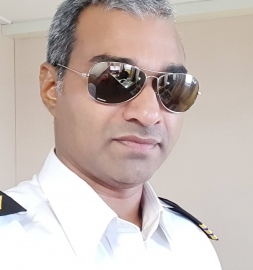
(The writer is Second Engineer on a merchant navy ship and residing at Agonda-Canacona)


