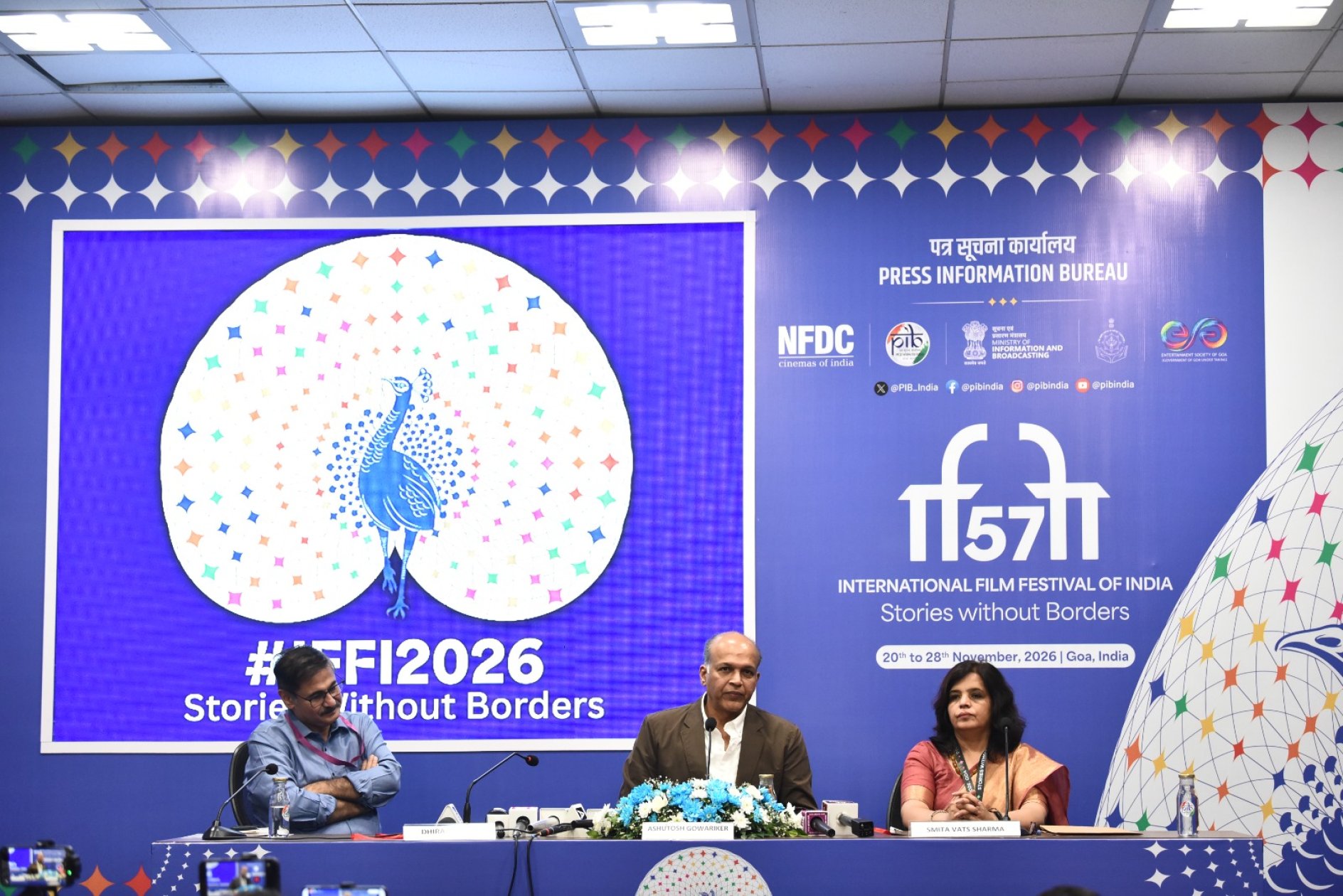
PANAJI: ‘Stories Without Borders’, the theme of the 57th International Film Festival of India (IFFI), seeks to look beyond geographical boundaries and examine the divisions that shape societies, from caste and religion to differences within families and communities. Festival Director Ashutosh Gowariker said the theme reflects the relevance of cinema in a world grappling with conflicts, social divides and cultural differences.
Speaking at a media briefing at the PIB Media Centre in Panaji on Friday, Gowariker said the theme was not restricted to territorial boundaries but also addressed the social and personal barriers that exist across communities and societies.
“Stories Without Borders is not just topographical or geographical. It is also about borders within a family, borders between two brothers, borders in caste, borders in religion and borders in every other socio-cultural aspect that we face, not only in India but also across the world,” he said.
Explaining the approach to this year's film selection, Gowariker said the theme had informed the curation of films, although not every film could necessarily fit into it. The festival has also expanded its programming with three new sections: Animation, Documentaries and Films About Films.
Emphasising the growing importance of documentary filmmaking, he said IFFI aimed to provide documentary filmmakers with additional opportunities to showcase their work and reach wider audiences.
While acknowledging the Mumbai International Film Festival (MIFF), which focuses on documentaries and short films, Gowariker said IFFI's documentary section would complement the existing platform and offer filmmakers another opportunity to present their work.
“Documentaries are being made much, much more, and we want to give the opportunity to documentary filmmakers. We have two festivals in a year. You miss MIFF, you can come here. You miss IFFI and you still have MIFF,” he said.
As part of this initiative, IFFI will host a special gala presentation honouring the winners of the recently concluded MIFF. Describing it as a red-carpet opportunity for the filmmakers, Gowariker said their winning films would also be screened as part of a special 90-minute presentation.
Highlighting the breadth of the festival's programming, Gowariker noted that retrospectives, curated showcases and special screenings were equally important in presenting the richness and diversity of cinema. He encouraged audiences and media representatives to explore different sections rather than restrict themselves to films that match their individual preferences.
He urged media professionals to attend gala screenings, red-carpet events, international press conferences and Panorama interactions, noting that these engagements provide opportunities to discover diverse cinematic perspectives and hear directly from filmmakers and visiting delegates. He also emphasised the importance of covering films across different sections, including retrospectives, while retaining independent judgement and critical perspectives.