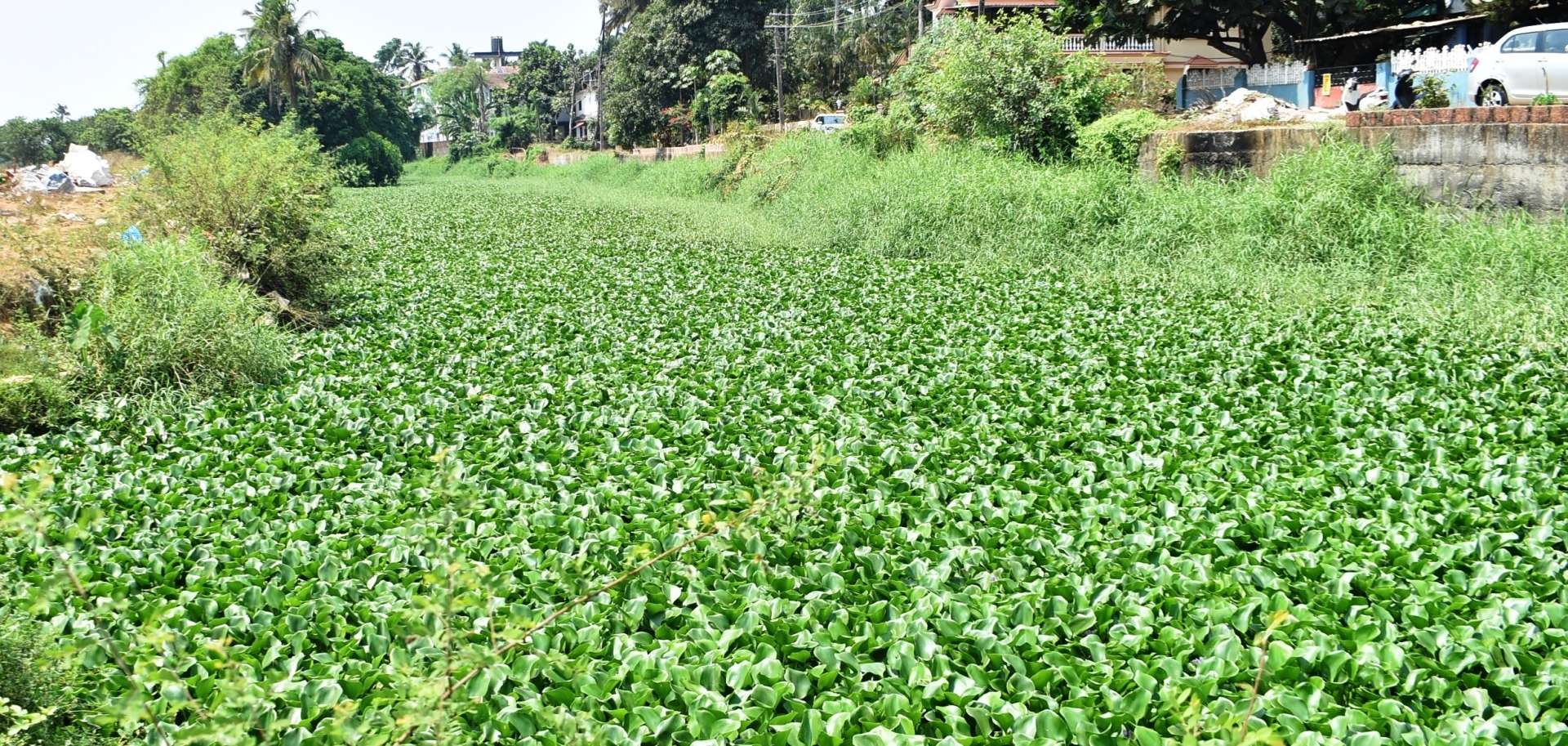
The river course along the Khareband bridge is invaded by a thick carpet of water hyacinth.
MARGAO
The Central Pollution Control Board (CPCB) has classified the River Sal as a critically polluted waterbody, a finding that has come as little surprise to residents of Salcete, particularly Madgavkars and Saxttikars, who have long witnessed its steady decline.
The condition of the river along its downstream course from Margao scarcely requires a formal study. A visit to the Khareband stretch tells the story. While areas near the bridge may present a cosmetically improved appearance, a walk along the riverbanks on the Margao side reveals the stark reality: untreated sewage and wastewater flowing unabated into the river.
In fact, a ground visit to the Khareband stretch downstream of Margao reveals a sad state of affairs. Away from the cosmetically improved sections near the bridge, untreated sewage and wastewater can be seen gushing directly into the river. Large portions of the river surface are blanketed by water hyacinth, a tell-tale sign of high nutrient pollution and deteriorating water quality.
The situation is further aggravated by stormwater drains carrying visibly blackened wastewater into the river. These drains are not isolated contributors. A study conducted by the Water Resources Department around two years ago identified at least eight discharge points along the stretch from the Margao wholesale fish market to Khareband, all releasing sewage and waste into the river.
Social activist Prof Sanjay Desai has strongly criticised what he describes as official apathy towards the river’s condition. He emphasised that the River Sal, once a vital lifeline of Salcete, is now being reduced to a channel for waste disposal. “The river is crying for attention. Authorities have failed to implement effective solutions to restore it to its pristine state,” he said, calling for urgent intervention.
Desai also raised concerns over the ongoing sewerage works in Margao, questioning why existing infrastructure has not been effectively utilised. He suggested that sewage currently flowing into nullahs should instead be diverted to manholes and treated at sewage treatment plants. He further questioned the utility of barrages constructed near the fish market and Khareband, asking whether their intended purpose—possibly to aerate wastewater before discharge—has been properly implemented.
Echoing public frustration, Cavelossim Sarpanch Dixon Vaz recently warned that residents of the coastal belt may resort to direct action if the continuous discharge of sewage into the river is not stopped. He indicated that locals might block the outlets of sewage-carrying drains if authorities fail to act.
With pollution levels rising and public concern mounting, the state of the River Sal highlights the urgent need for coordinated action, enforcement of environmental norms, and long-term restoration efforts to reclaim one of Goa’s key natural resources.