


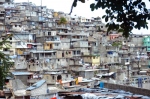
Port-au-Prince acts as a magnet in this desperately poorCaribbean nation, which was struck by a catastrophic 2010 earthquake thatkilled an estimated 225,000 people and displaced 1.5 million, one in six of thepopulation. Haitians flock to the capital from badly deforested and degradedrural areas in the hope of finding work to support their families.
But 80 percent of people in the capital live below thepoverty line, many in squalid tent cities or in rickety housing near the edgeof deadly ravines. Some shantytowns are built on flood plains that risk beingwashed away when rainstorms come. Many camps lack basic sanitation, leavingthem more prone to infectious diseases like the cholera epidemic that hasclaimed more than 7,500 lives since sweeping the country in the wake of thequake.
For all these reasons, there have long been moves afoot torelocate slum dwellers to safer housing. When the quake hit and theinternational community turned its attention to Haiti's woes, those callsbecame a clamor. But many slum dwellers don't want to leave. A lot of thehousing alternatives being offered are outside the capital, which would meanless opportunity to find work.
"I was born here," 62-year-old William Jean said,as he sat on a bench facing his small dwelling in the optimistically named"Jalousie" or "Jealousy" neighborhood. "At thebeginning, there were just a few houses." In tents or makeshift abodesmade out of sheeting, families eke out a miserable existence in the camps. Whenthe flood waters pour in, mothers try to sleep standing up, cradling theirbabies. "It's a delicate matter," Environment Minister Ronald St-Cyr said,adding "something has to be done."
Some 400,000 Haitians continue to live in tents, accordingto the International Organisation for Migration. Some residents pointed angrilyto luxury homes nearby. "They want to evict us but the owners of two- tothree-level houses continue to enjoy their position," said a pregnantwoman, pointing to large residences hidden behind high walls with barbed wire. Whatwill happen remains to be seen, as despite billions of dollars being of pledgedtowards international aid, progress has been painfully slow.


