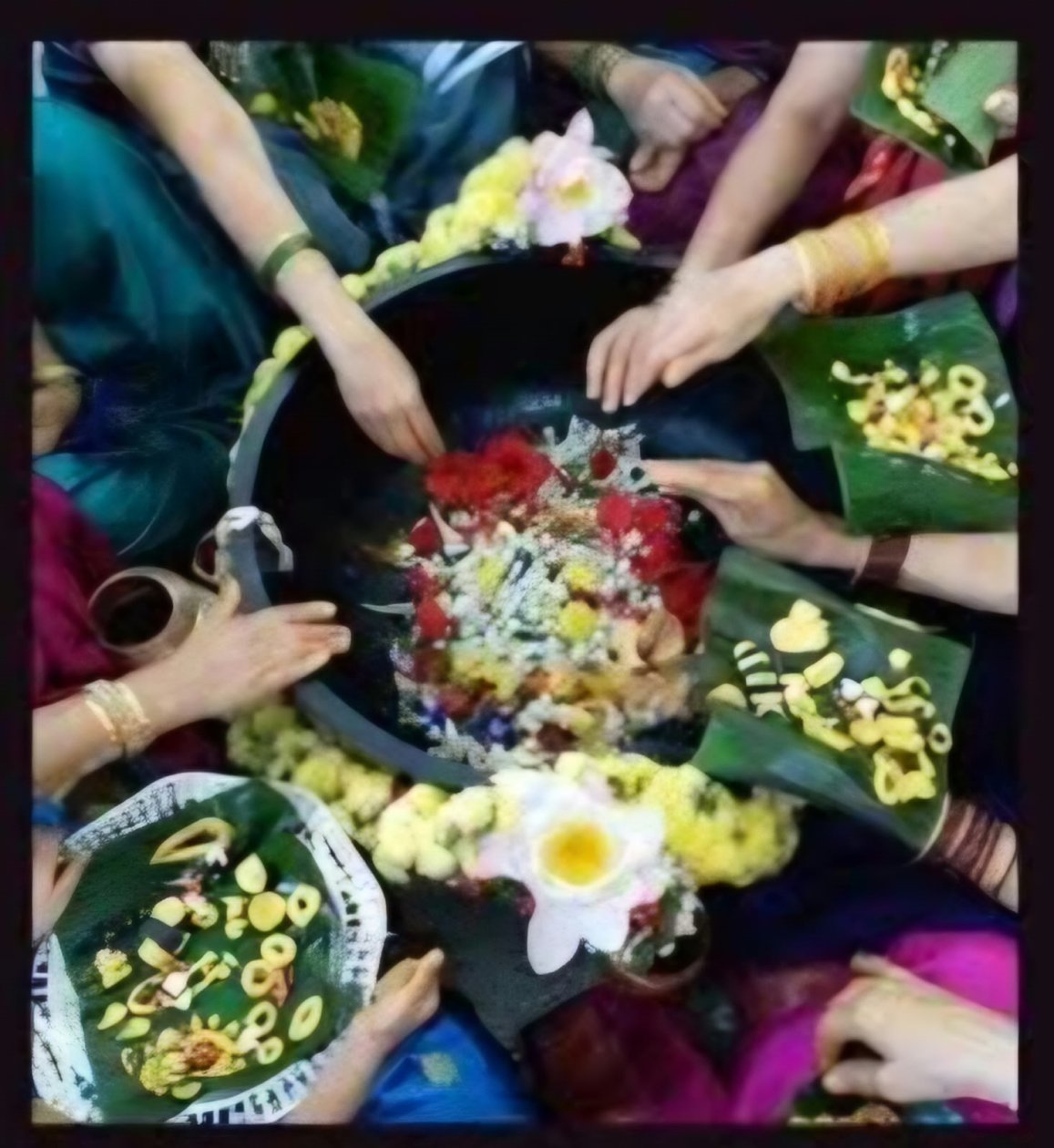
 Women come together to perform Bodan Puja, a traditional Navratri ritual dedicated to Goddess Annapurna.
Sneha Umarye
Bodan Puja
In Surla, Gauri Desai speaks of Bodan Puja. "We have been performing this puja for at least 55 years now. But I believe the tradition in our family could be around 150 years old," she says. The preparations for Navratri begin with Ghatasthapana on Ashwin Shuddha Pratipada, the first day of the festival. A kalash is established to welcome Goddess Durga into the household, followed by the sowing of grains and seeds, locally referred to as Rujvan. These are taken out on Dussehra. Bodan Puja, meanwhile, is a women-led ritual dedicated to Goddess Annapurna. The deity's idol is placed in a brass vessel, surrounded by nine betel nuts representing different divine forms. Following the initial worship, three to four married women and a Kumarika, an unmarried girl, sit around the vessel. The women adorn the deity with ornaments made from flour and sing the Navratri aarti using flour lamps. They then pour Panchamrut, a mixture of milk, curd, ghee, honey and sugar, into the vessel, mixing it while saying Udand, meaning abundance. The ceremony continues with prayers at the household's Tulsi Vrundavan and cowshed, where present, followed by the traditional story associated with Bodan. The mixture prepared during the ritual is eventually offered to a cow. The story itself carries an interesting message. It speaks of a daughter-in-law who is treated unfairly by her family but continues to show kindness and devotion. When she feeds the Bodan offering to a cow, she is blessed with prosperity, eventually leading her family to recognise their discrimination and seek forgiveness. Beyond its religious significance, the story offers a reminder of compassion, dignity and the importance of treating women fairly within their own households. Gauri explains that Bodan is also performed on auspicious family occasions, such as weddings. The belief is that the ritual invites Dhana-Dhanya and Sukh-Samruddhi, symbolising food, wealth, happiness and prosperity.
Mahalakshmi Vrat
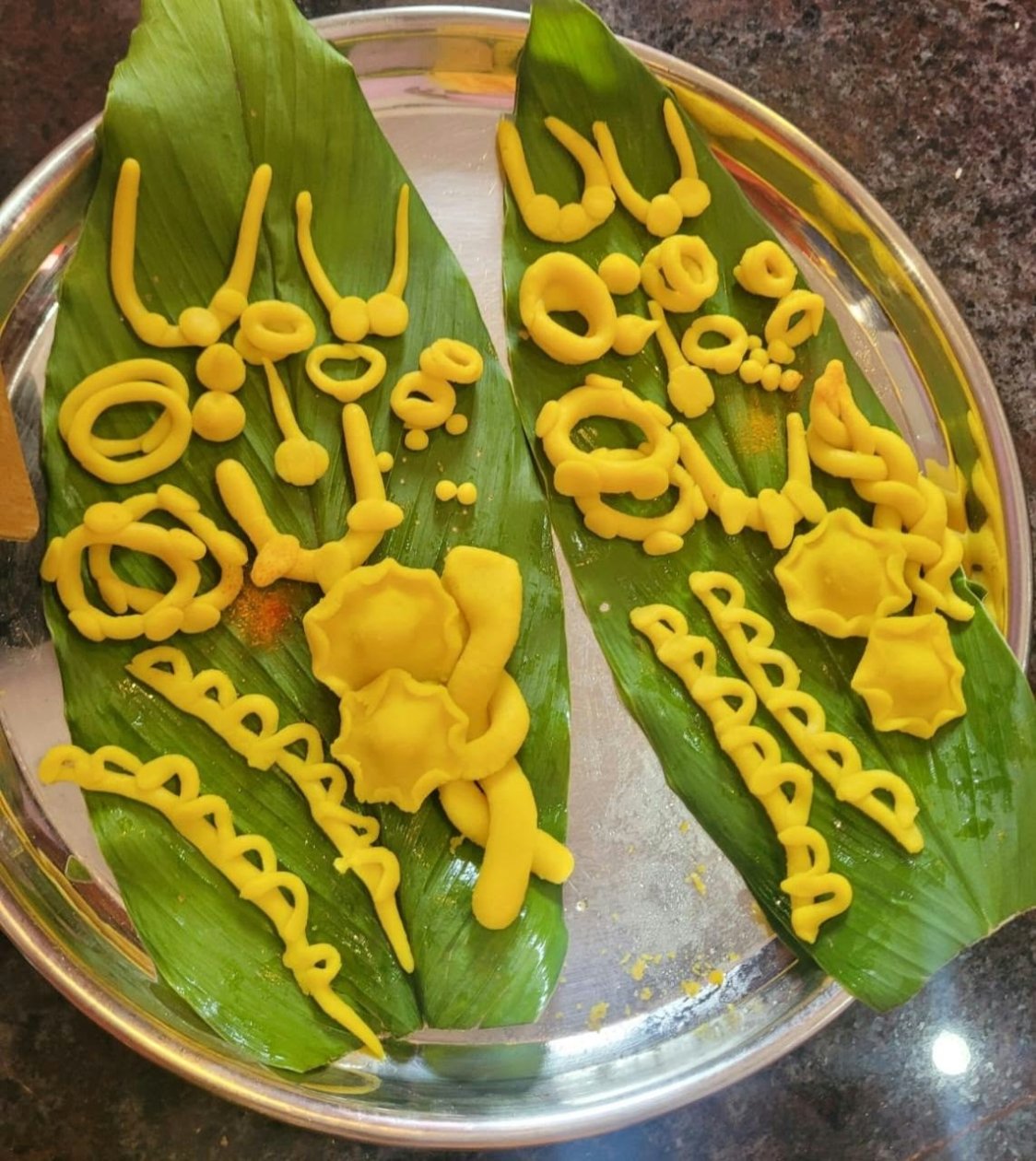
Another distinctive tradition observed by women in certain communities of Goa and Maharashtra is Mahalakshmi Vrat, performed on Ashtami, the eighth day of Navratri. Sugandha Maneriker said that the vrat requires considerable preparation, commitment and adherence to specific customs. A woman may undertake the vrat for one, three, five, seven or nine years. Five years is a common practice in Goa. Traditionally, a newly married couple performs the ritual together in the first year, after which the woman continues it. The day begins with women making small rice-flour jewellery and diyas, which they offer to the deity during the Gauri Puja. By evening, the preparations gather pace, with several rituals and activities taking place through the night. The women dress in traditional Nauvari sarees, while a skilled artisan prepares the Goddess's Mukhavta, or face, using rice flour. The face is carefully shaped, adorned with jewellery, and paired with a decorated body, usually made of wood. The Goddess is then draped in a saree and dressed as a Suvasini, a married woman. Every detail matters. Sugandha explains that the facial features must be formed carefully, without cracks. Traditionally, a crack is considered an inauspicious sign, believed to indicate the Goddess's displeasure. Once the idol is ready, devotees are welcomed for darshan. What follows is Jagran, a night of collective celebration, with women singing aartis and prayers and performing traditional fugdi with water pots. The ritual concludes the following day, usually around five or six in the morning, after the visarjan. Sugandha says, “The night of Ashtami holds particular significance because the Goddess is believed to be Jagrut, or spiritually awakened, and receptive to devotees' prayers.”
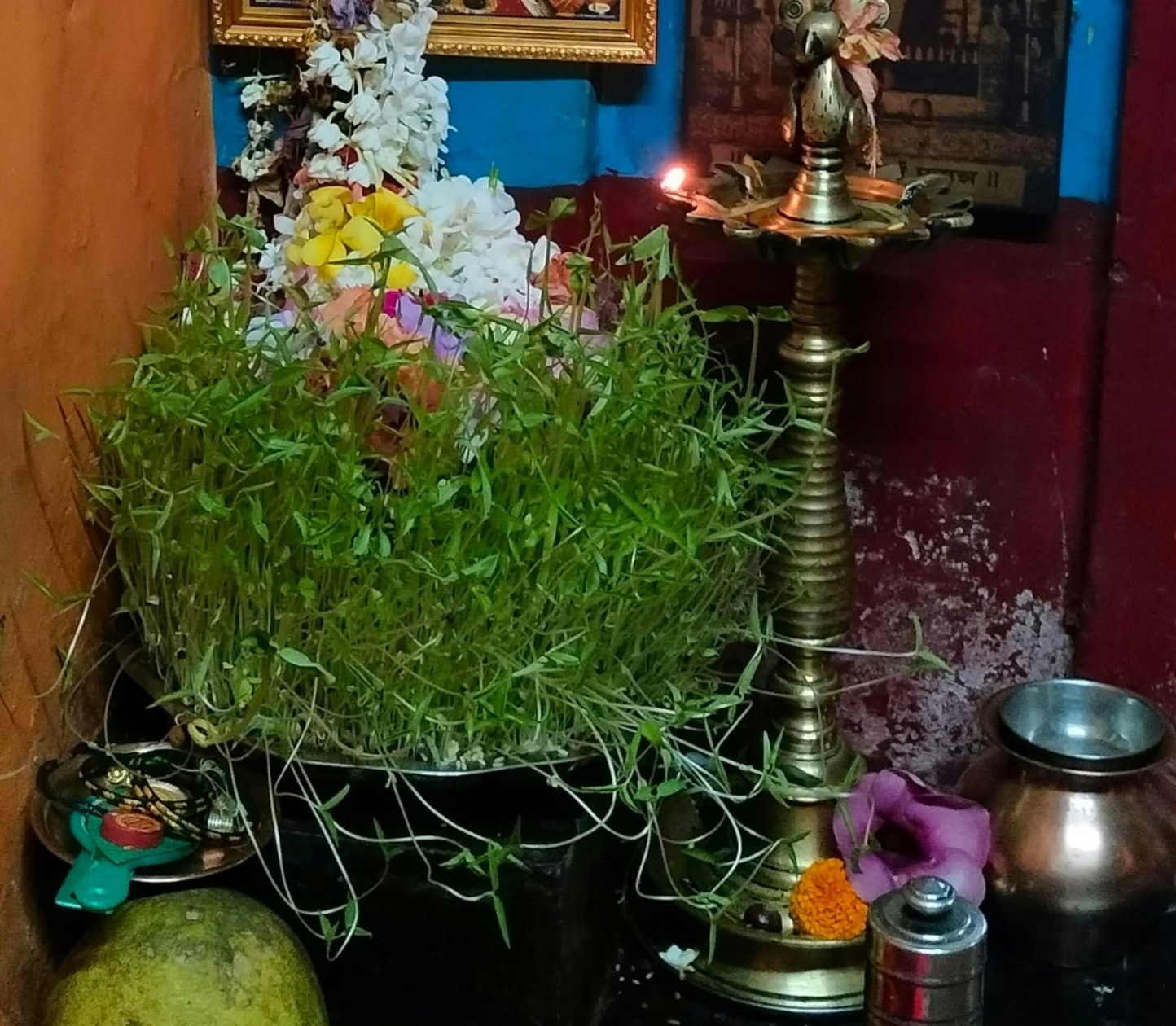
The occasion is also associated with Bhaar, a spiritual trance in which the Goddess is believed to manifest through an elderly woman, who acts as a medium between the deity and devotees. Given the demanding nature of the vrat, women who can accommodate its requirements often host the ceremony for others. Some temples in Goa also provide a space for these observances. At times, women undertake the responsibility after fulfilling a personal vow. For Sugandha, the night carries a sense of positivity and possibility. She believes that even a simple observance, performed wholeheartedly, holds deep meaning.
Reminder of the Strength
Within These traditions go beyond rituals and restrictions. They bring women together to celebrate, share responsibilities, and carry forward customs. And perhaps, in celebrating the Goddess's strength, there is also an opportunity to reflect on the strength women carry within themselves, often in ways that go unacknowledged. There is also something to reflect upon beyond the rituals. During Navratri, we celebrate feminine strength in its divine forms. Yet, the same strength deserves recognition in the women around us and, importantly, within ourselves. Respecting that strength also means respecting women's bodies, their choices, their efforts, and the many ways they sustain families and communities. Perhaps that is a meaningful thought to carry into Navratri. The Shakti we honour during these nine days need not remain confined to an idol or a festival. It is present in everyday life, in women and around us, waiting to be acknowledged with the same respect.