The villagers of Chimbel are not opposing India’s development. They are reminding the Republic of its constitutional obligations
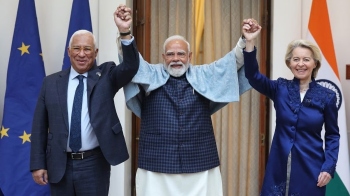
Every year, the Republic Day parade at New Delhi is choreographed as a grand constitutional spectacle. It is designed to communicate power, preparedness and permanence. Military columns, missile systems, mechanised regiments and technological tableaux are carefully curated to reassure allies and caution adversaries. The presence of foreign dignitaries, this year including the leadership of the European Union, adds diplomatic gravitas to the event. The message is clear and deliberate: India is stable, sovereign and militarily capable of defending its territorial and strategic interests in an increasingly volatile world.
This outward projection is not merely ceremonial. It serves as a symbolic demonstration of state authority and national unity. The parade conveys that India speaks in one voice on matters of defence, diplomacy and global engagement. It presents the Republic as a coherent political entity, bound together by constitutional values and institutional strength. The underlying assumption is that internal cohesion already exists and therefore can be displayed externally with confidence.
Trade as triumph
The signing of the India European Union Free Trade Agreement has been projected as another milestone in India’s global ascent. The Prime Minister has described it as a blueprint for shared prosperity, emphasising innovation partnerships, clean energy cooperation and strategic technology transfers. With trade volumes exceeding 180 billion euros and over 800,000 Indians living across EU states, the agreement has been framed as mutually beneficial and people centric.
From an international relations perspective, the agreement strengthens India’s position within the multipolar global order. It enhances India’s credibility as a reliable economic partner and signals policy stability to global investors.
Yet, the idea of shared prosperity becomes ambiguous when examined from the vantage point of the Indian periphery. Free trade agreements, by their very nature, operate at the macroeconomic level. Their benefits are diffused unevenly and often captured by corporate sectors, urban industries and export oriented enterprises. The rural citizen, the village community and the ecological stakeholder rarely appear within these calculations.
The legal and constitutional question therefore arises as to whether economic diplomacy can meaningfully claim success when it fails to secure the basic environmental and social guarantees of its own population. Trade growth, in isolation, cannot substitute the constitutional promise of dignified life under Article 21. Development that erodes ecological security cannot logically be classified as prosperity.
Unity at Chimbel
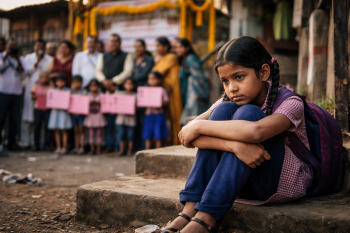
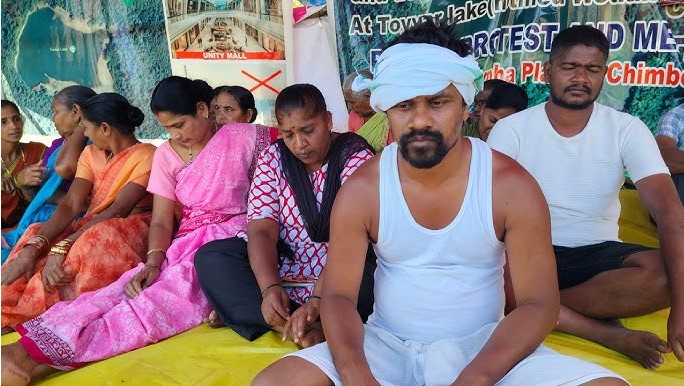
In stark contrast to the Republic Day spectacle and the celebration of global trade diplomacy, the villagers of Chimbel present a very different image of unity. Here, unity is not displayed through military regiments or diplomatic summits, but through ordinary citizens standing on roads with placards stating in simple Konkani, “Amka naka mall” - translates as: “We do not want the mall”.
The proposed Unity Mall project within an ecologically sensitive zone has triggered widespread opposition from local residents. The protest does not arise from ideological hostility to development. It arises from existential anxiety. The village is located within a fragile environmental belt, surrounded by water bodies, forest patches and biodiversity corridors. Any large-scale commercial construction directly threatens groundwater levels, wildlife movement, waste management capacity and the overall carrying capacity of the region.
The irony is difficult to ignore. A project branded as a symbol of national unity is being imposed upon a village that views it as a threat to its collective survival. The very language of unity is thus transformed into an instrument of coercion. Instead of binding citizens together, it fragments trust between the state and the governed.
From a constitutional standpoint, the villagers’ protest represents a far more authentic expression of republican unity. It is rooted in participatory dissent, environmental consciousness and collective self determination. It reflects unity as lived reality rather than visual symbolism. When villagers unite to protect their habitat, they exercise the democratic core of the Republic far more directly than any ceremonial parade ever could.
The real divide
The real divide, therefore, does not lie between nationalism and dissent. It lies between performative unity and lived unity. The Republic celebrates itself through spectacles in the capital, while simultaneously marginalising communities at its ecological frontiers. The state speaks of shared prosperity in global forums, while local populations struggle to defend their right to clean air, potable water and sustainable land use.
This contradiction highlights a deeper structural problem within contemporary governance. Development is increasingly conceptualised as spatial expansion rather than spatial consolidation. Instead of strengthening existing urban centres and degraded industrial zones, the state seeks new territories to commodify. Ecologically sensitive regions become convenient frontiers for commercial experimentation, precisely because they lack political visibility.
The comparison with authoritarian development models becomes unavoidable. In many regimes, the capital city projects modernity and global integration, while rural landscapes are subjected to extractive development in the name of national progress. The pattern remains consistent. Economic elites benefit, infrastructure contractors flourish, and local communities are expected to absorb the social and environmental costs.
In constitutional terms, this raises serious questions about the integrity of Article 21 jurisprudence. The right to life has consistently been interpreted to include the right to a healthy environment, ecological balance and sustainable livelihood. When state policy actively compromises these rights, it cannot seek moral legitimacy through symbolic appeals to unity.
The villagers of Chimbel are not opposing India’s development. They are reminding the Republic of its constitutional obligations. Their protest highlights that unity cannot be imposed through infrastructure projects that violate environmental laws and democratic consent. It must instead emerge through governance that places human dignity, ecological security and local participation at the centre of national policy.
In that sense, the real Republic is not marching down ceremonial boulevards. It is standing quietly on village roads, holding handwritten placards, defending the simple idea that development should not come at the cost of existence itself.