Activists have acted better than investigative journalists. They've done well in digging up scandal, or at least pointing to dubious policy making
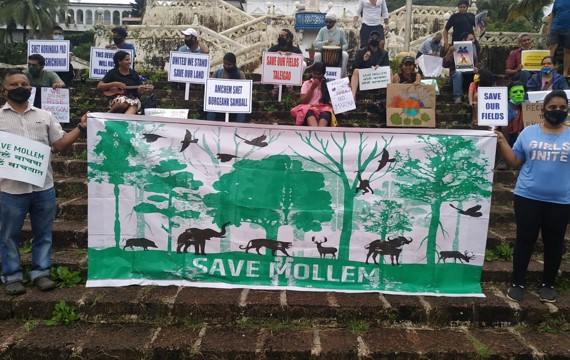
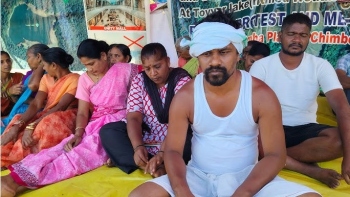
In Goa, every second person has become an activist. Or this is how it seems today. Is that a bad thing? Or should one see it as a positive development? If this is indeed the case, why is it happening now? What's the cause, and who's to blame? Why are our grievance redressal systems not working as these should?
Indeed, Goa has had an early tryst with activism. As the late Matanhy Saldanha would often say, the people of Goa were fighting green causes (Zuari pollution, ramponkar or traditional fishermen's rights) way back from the 1970s. That is, even before the word "environmentalism" became a catchphrase, or even fashionable, at the global level.
There was also a time when activism in Goa was dismissed as the past-time of the middle-class Catholic. Or a handful of them. Because not many understood the issue, or was willing to come out on the streets, this seemed almost true.
In the 1980s, tourism critics were questioning the impact of the sector on Goa, through groups like the JGF and the CCAT, Citizens Concerned About Tourism. (The Jagrut Goenkaranchi Fauz's name in Konkani translated to Vigilant Goans Army, though this was a peaceful lot of protesters.) At that time, the then chief minister, Pratapsing Rane, once famously dismissed their protest as an activity of "seven or eight people" on the old Patto bridge.
Today, such concerns have got mainstreamed. Debarshi Dasgupta, writing in The Straits Times, carried a quarter-page article titled 'Enough! Goa's residents are fed up with the tourist hordes' (Sep 17, 2024). But do such issues here get noticed only because mass tourism is being critiqued and protested in places like Spain?
People feel the pinch when projects they don't like, or suspect the benefits of, come up in their backyard. We could dismiss this as the NIMBY (not in my backyard) syndrome. But it's natural for people to protest something they see as cutting into their interest. You can't blame them for that. While politicians should also be concerned about, but are mostly not.
In the past, the protests against the Konkan Railway (KRC) was seen as a narrow self-defined attempt to protest the dominance of the minority population in parts of Goa. Maybe fearing a dilution of their numbers, as some portrayed it then. Politicians at the time, including some from the MGP, went out of their way to support the KRC.
Today, mega development projects like Mopa are being questioned too. These are part of the "New India's" attempts to expand airports at a massive scale (75 new airports built in the last ten years, doubling the total).
Environmentalism is definitely not a minority Catholic-pushed agenda in Goa anymore, as it once seemed it was. Today you have a Xencor Polgi, a Swapnesh Sherlekar, an Abhijit Prabhudesai, a Rajendra Kerkar, a Rajan Ghate, among others.
Ironically enough, speaking in Goa itself, the BJP politician Nitin Gadkari was quoted in a headline saying: "I am the biggest environmentalist, but...." On the other hand, commenting in the context of the tiger reserve issue, the Goa minister Subhash Phal Desai was quoted (Aug 2023) saying: "No one should teach us about the environment."
Mega projects raise everyone's suspicion. A university coming up in Tivim is greeted with skepticism, and there are other private universities in the pipeline too. This in a Goa where its youth still hunger for access to higher education that they can afford (in terms of time-spent, flexible part-time education, access options available and seats offered).
In some cases, the activists have acted better than investigative journalists. They've done well in digging up scandal, or at least pointing to dubious policy making. In a way, they've embarrassed politicians and others in power. For a change, policy planners have been forced to come up with answers.
Unlike in the past, the Opposition, which also feels hard pressed by the ruling BJP stealing from its ranks, has been a bit more active in taking up issues that the citizens are protesting about. In some cases, they have also raised concerns raised by the citizens in the Assembly.
Sometimes, this confuses the issue. The AAP was quick to seize the Romi Konkani issue (some in the Opposition Congress did so too). Due to this, the ruling party was quick to see it as an AAP-promoted campaign, which it is obviously not. The citizens have realised they will have to campaign for their own issues, it throws up a leadership of its own; some politicians are sometimes willing to lend their support.
Anthony D'Silva, the outspoken activist for Assolna-Ambelim who has used video as a loudspeaker for his campaigns, sarcastically welcomed Chief Minister Pramod Sawant to the "Activist Club of Goa". D'Silva was responding to a video that was shared on last Sunday or so, when the chief minister gave a video response to another video critical of the governance in Goa.
The CM dismissed the video he was responding to as a "fake video". But D'Silva asked what was the need for the CM to respond to the video criticism through his own (the CM's) video response. As D'Silva put it: "I can understand if activists do it, because sometimes we don't get access to the media.... He (the CM) is one of the members of our activist group today," said D'Silva cheekily.
In the past few days itself, Anura Dissanayake became Sri Lanka's first Communist President. Someone, dismissing this trend via the usual one-liners of the WhatsApp University, saw it as the growing influence of China. Whatever comes of this, the fact is that Dissanayake has been steadfast against cronyism, nepotism, concentration of power, and corruption. Shouldn't the failure of ruling politicians there need to be seen as much responsible as it is here?