


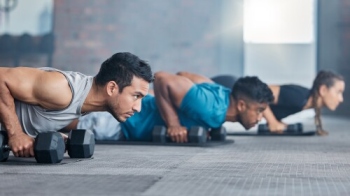
Two recent but varied news reports appearing in different sections of the local press served to highlight contrasting approaches of Goan women aspiring for a policing career.
While the first one mentioned that clearing physical tests is proving to be a hard nut to crack for women aspiring to be police officers in the state, the other one was a matter of pride for Goa as a girl from Vasco emerged as the only candidate from the state to be selected for the Border Security Force (BSF).
The ongoing recruitment process for the posts of Lady Police Sub-Inspectors (LPSI) in the state has raised this piquant situation where the unavailability of sufficiently fit candidates has seen the whole exercise go haywire.
Whether the situation is exacerbated by stringent physical standards and a lack of awareness and preparation among female applicants is a matter of conjunction.
The employment opportunities in the armed forces, the police, and the civil defence organisations place a critical emphasis on physical fitness as an indispensable job requirement for operational effectiveness, personal safety and mission success.
Physical fitness is not merely a box to check during the application process, it is a fundamental and continuous necessity for a career in these security services.
Since personnel need to be prepared for the extreme physical and mental demands of their roles, physical fitness is of paramount importance in defence and police services. These demands range from life-threatening situations to prolonged duty shifts, all requiring peak physical conditioning to ensure operational effectiveness, safety and resilience.
To put it more bluntly, physical fitness is not merely a job requirement but a fundamental, ‘non-negotiable’ necessity for effective, safe, and resilient service in the defence and police forces.
While both the armed forces and the police forces require high levels of fitness, the armed forces place much more stress on medical fitness, the difference lying in the nature of their respective duties and the environments in which they operate.
Military personnel are deputed to isolated, austere, and combat environments where immediate access to medical facilities is limited or non-existent. The medical standards are designed to ensure candidates are robust enough to withstand the rigours of combat and prolonged deployments without requiring significant medical support.
For instance, the rotational deployment of soldiers at the high-altitude forward post of Siachen Glacier is designed to manage the extreme psychological and physical toll of the harsh environment prevalent in the region.
Efforts at maintaining a balance between a continuous military presence and preserving the health and well-being of soldiers posted at such remote or ‘hard area’ field postings calls for fitness levels which hover around the exceptional mark.
One would be surprised to know that the Armed Forces Medical College (AFMC) selects individuals who are not just academically bright but also possess the inherent physical and mental fortitude to serve as military medical officers, making the medical fitness test a mandatory and critical step in the selection process.
Service members are required to undergo Periodic Health Assessments (PHAs). Medicals remain important even as personnel advance in rank or transition out of service.
On the other hand, while police personnel require excellent physical conditioning for active duty, their roles occur typically within established communities with access to medical infrastructure.
Although they must be fit enough for physically demanding tasks like pursuits, arrests, and patrol, the job does not integrally involve the same level of sustained extreme physical stress or guaranteed lack of medical access as military combat operations.
Therefore, the medical fitness criteria for the armed forces are more stringent, focusing on pre-existing conditions that may be manageable in a civilian or typical police setting but could become critical liabilities in a deployed military environment.
Policing has however evolved over the years, encompassing a line of duty where immense physical and psychological risks to officers’ lives are characteristic attributes.
Modern policing roles extend far beyond traditional law enforcement, requiring officers to manage diverse situations such as emergency response, community engagement, and addressing specific challenges through specialized units.
With women having ventured into a field which was hitherto a predominantly male domain, they have opened up new avenues and challenged long-standing gender norms.
‘Operation Sindoor’ exposed the female face of the military by featuring two decorated women officers as the public faces of the official media briefing.
The event became part of a broader national conversation about the growing and permanent role of women in the Indian military, moving beyond symbolic representation to actual leadership.
Although women receive some relaxation in specific physical standards in the military academies, the overall physical fitness requirements are stringent and designed to ensure they can handle rigorous military training.
The core endurance and strength benchmarks for physical training are generally the same or comparable to those for male candidates.
It would not be any different in the police force with women aspirants required to maintain a certain level of fitness which serves as a prerequisite for successfully handling physically demanding situations in their line of duty.
Prominent lady police officers throughout history have made significant impacts through trailblazing achievements, anti-corruption campaigns, and major prison reforms. Their exploits often involve challenging established norms and demonstrating exceptional courage and leadership.
Nevertheless, organizations involved in public safety have a responsibility to set minimum fitness requirements that reflect the genuine demands of the role to ensure the safety of the personnel, colleagues, and the public they serve.
Ultimately, the goal of modern recruitment practices is to ensure that standards are directly related to the actual job requirements, are implemented fairly, and provide equal opportunities for all qualified individuals to succeed.
Hence, meeting these physical fitness standards is a critical step in a career in law enforcement.


