On the way to Margao, after the Agassaim police station, ifone takes the road to the right, one would reach the village of Siridao. Thevillage famous for its toddy and fishing community is also known for itshand-woven fishing nets. But with the availability of machine-made nets, thefishermen are struggling keep alive the practice and tradition of hand-wovennets. Once upon a time, these hand-woven fishing nets were in high demand amongthe fishermen and anglers.
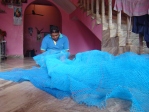
Manuel Pinheiro from Dandiwaddo is famous in the village forhis hand-woven nets. In his residence on the banks of the Zuari, he is bentover weaving a net. At 68, his experienced hands skillfully twirl and weave thedeep blue thread. He has been weaving nets for the last 50 years. Withoutlooking up, he says, “Age is catching up. My legs and hands ache. I have totake regular breaks even while weaving the smaller nets.” To weave the biggernets of 24 meters, Manuel hires labourers to help him. A 24-meter net takes him20 days to make with help from two workers. He pays each worker Rs 300 per day.A finished net sells for anything between Rs 25,000 to Rs 30,000. “Besides therising cost of labour, prices of raw material are also rising,” he points out.
Machine-made nets are competition to net weavers likePinheiro. Though they are cheaper, Pinheiro refuses to buy themachine-manufactured nets. He said, “They may be cheaper, but are not sturdy. Iprefer to make my own nets.”
Reminiscing of his early days as a net-maker Pinheiro said,“We used to eagerly wait for the monsoons as we were able to make some money.”The dwindling stock of fish in ponds, rivers and canals has adversely affectednet-makers over the years. With the business in the doldrums, the youngergeneration is now switching professions.
With nets available for purchase online and at stores, thedwindling number of weavers in Siridao continue to weave their own fishing netsthe same way their ancestors did.