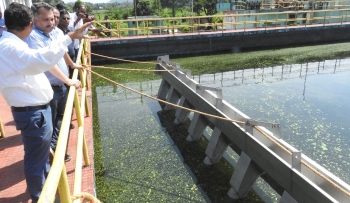
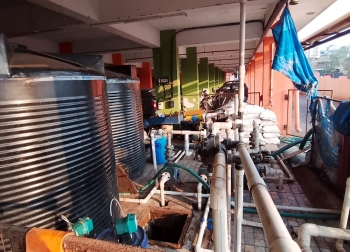
A health scare in Vasco has brought renewed attention to Goa’s sewage infrastructure and its underlying gaps. Even with multiple treatment plants in place, issues of maintenance, monitoring and connectivity persist. As urban growth accelerates, these shortcomings pose increasing risks to water safety and public health. 'The Goan' delves into the issue
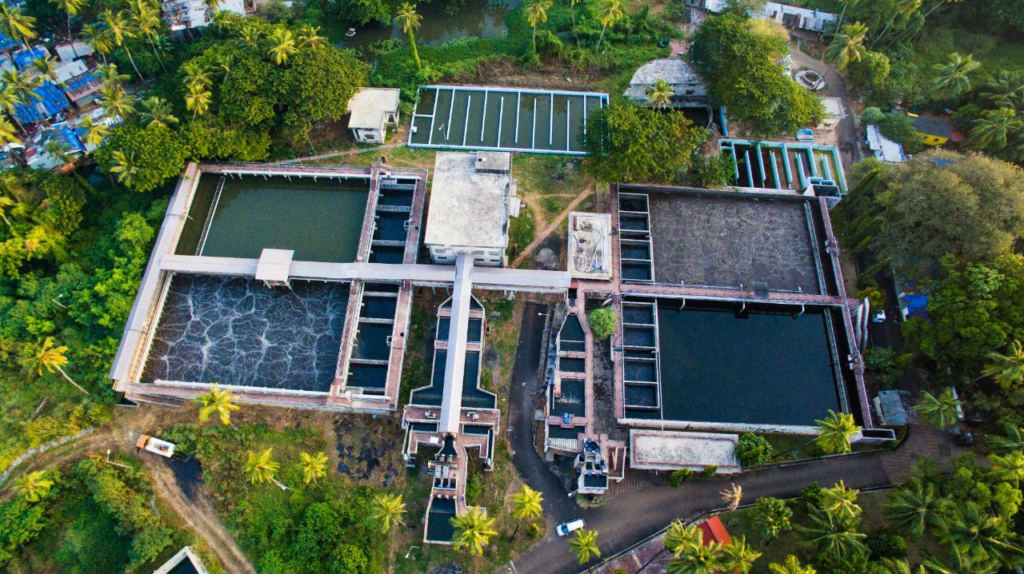
MAPUSA
The recent outbreak of diarrhoea in Vasco, reportedly linked to sewage contamination of drinking water, has once again exposed a fragile underbelly in Goa’s urban infrastructure – its sewage treatment systems.
While the State has invested in Sewage Treatment Plants (STPs) over the years, questions are now being raised about their reach, efficiency and monitoring.
Modest network, growing burden
Goa currently has around 14 operational sewage treatment plants (STPs), with three more under construction, as per official data.
These facilities are distributed across major urban centres, including Panaji (3), Margao (2), Ponda (2), Mapusa (1), Baga (1), Vasco da Gama (1), GMC (1), Sancoale (1), Sanquelim (1) and Colva (1).
Their capacities range from smaller decentralised units to large plants capable of treating several million litres per day (MLD).
Construction of additional STPs in Porvorim, Curchorem and Margao is underway, with the Porvorim facility nearing completion.
According to an official from the Sewerage and Infrastructure Development Corporation of Goa Ltd, the combined installed capacity of the commissioned plants stands at approximately 113.58 MLD.
However, experts caution that installed capacity does not necessarily translate into actual utilisation.
“These STPs are designed with a lifespan of 40–50 years, so current utilisation is only about 50 per cent,” the SIDCGL official said.
A closer assessment reveals that several plants operate below optimal levels due to incomplete sewer networks, inadequate connectivity and technical limitations.
As one senior official noted, “While infrastructure has been created, the supporting pipeline network and maintenance systems have not kept pace—that’s where the real gap lies.”
Decentralising sewage treatment
The State government has proposed additional sewage treatment plants (STPs) as part of its long-term planning, particularly in rapidly urbanising belts and coastal areas.
However, officials say that land availability remains a major hurdle in executing these projects.
Apart from government-built and operated facilities, a growing number of industries, hotels and even residential complexes have installed their own STPs.
In fact, the government has made it mandatory for residential complexes with 24 or more units to set up in-house treatment systems, indicating a clear shift towards decentralised wastewater management.
However, experts caution that merely creating infrastructure may not be enough to address the deeper systemic issues in sewage management.
The maintenance question
At the heart of the problem lies operation and maintenance (O&M).
STPs are highly sensitive systems that require: continuous power supply, skilled operators, routine desludging and strict monitoring of output quality.
Even minor lapses can result in untreated or partially treated sewage being discharged into natural water bodies – or worse, mixing with potable water lines.
Environmental norms require treated water to meet strict parameters such as Biological Oxygen Demand (BOD), Total Suspended Solids (TSS), oil and grease, and microbial levels.
Failure to meet these standards can lead to contamination and health hazards.
A wastewater engineer explained, “An STP is not a one-time project. It’s a living system. If maintenance is poor for even a few days, the output quality drops drastically.”
The watchdog: GSPCB’s role
The Goa State Pollution Control Board plays a central role in regulating and monitoring sewage treatment plants (STPs) across the State. Its responsibilities include conducting inspections and surprise checks, sampling treated water and ensuring compliance with prescribed environmental standards.
Before an STP is constructed, the Board grants Consent to Establish after evaluating the plant’s design and technical specifications. To improve oversight, GSPCB has also introduced online monitoring systems at STPs, reducing reliance on time-consuming manual sampling and enabling real-time tracking of key parameters.
Once all conditions are met, the Board issues Consent to Operate.
“GSPCB has to monitor the discharge and ensure it meets required standards. If it doesn’t, action is taken – ranging from show-cause notices and fines to even shutting down the plant,” a former Board official explained. This regulatory framework applies uniformly to all STPs – government-run, industrial, hospitality-based and private.
Government-operated STPs remain critical as they handle large volumes of sewage. Industrial units and hotels also operate sizeable plants and are required to treat and recycle wastewater.
However, challenges persist on the enforcement front.
“The standards are in place, but enforcement needs to be continuous and stringent. At times, that is lacking, allowing violations to slip through. Although GSPCB is an autonomous body, there are instances when our hands are tied,” the former official added.
Multiple departments, one problem
Sewage management in Goa involves multiple agencies:
· Sewerage & Infrastructure Development Corporation (SIDCGL) – builds and manages STPs,
· Public Works Department (PWD) – oversees water supply networks,
· Water Resources Department (WRD) – manages water bodies,
· GSPCB – regulates and monitors pollution.
While this multi-agency structure allows specialisation, it also creates coordination challenges, especially during crisis situations like contamination events.
The Vasco episode has highlighted how a failure at one point – whether in pipelines, treatment or monitoring – can cascade into a public health emergency.
The road ahead
Experts suggest a multi-pronged approach:
· Upgrading ageing STPs with modern tertiary treatment technologies,
· Expanding sewer networks to ensure all households are connected,
· Real-time monitoring systems for effluent quality,
· Regular audits and maintenance contracts,
· and public disclosure of STP performance data.
There is also growing emphasis on reuse of treated wastewater for non-potable purposes like gardening, flushing and industrial use – reducing stress on freshwater sources.
A wake-up call
The diarrhoea outbreak in Vasco is more than a localised incident – it is a warning.
Goa’s STP network, while expanding, still faces critical gaps in coverage, efficiency and oversight. As urbanisation accelerates and water demand rises, the margin for error is shrinking.
Unless infrastructure is matched with robust maintenance and strict monitoring, the risk of contamination will persist – with direct consequences for public health.