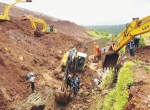
The KonkanRailway’s annual geo-safety exercise involves stabilising hillcuttings to make the track safe to travel. KRCL has carried outvarious geo-safety works on its route as a pre-cautionary measure prior to theonset of monsoon this year. “The intensity of rainfall is very high in the KRregion with an average of between 3500 “ 4500mm with the intensity of rainfallfrequently exceeding 80mm per hour” says Konkan Railway Chief Public RelationOfficer Siddheshwar Telugu. This combined with the lateritic rocks and thecontinuous change in the lethomargic clay combinations makes the earthunstable, rendering the deep cutting slopes landslide prone.
“We make regularinspections at the vulnerable spots and stabilise them by various geo-safetyworks”, says Telugu. KRC has also appointed a Multi-disciplinary ExpertCommittees to address the issue. Based on these recommendations of the expertcommittees / teams, essential works have been identified and completed sincethe commissioning of the Railway line. Yet the landslides keep occurring.
“We were at the mercy of the busoperators and when the Konkan Railway was completed we had hope. But yearslater we wonder if its’ services can be relied upon” says Lanja residentKumudini Rege. Rege isn’t wrong. Last year the line was shut for 7 days duringthe monsoons. 82 year old Rege had to hop on to a bus between two stations thenresume her journey.
However, Konkan Railway in its’ own unique way tries toensure a safe journey. It implements a monsoon time table on its route toensure smooth train operations during rainy season. Even then a Konkan Railwayjourney in the monsoon remains unpredictable.