TEAM AUTO | THE GOAN
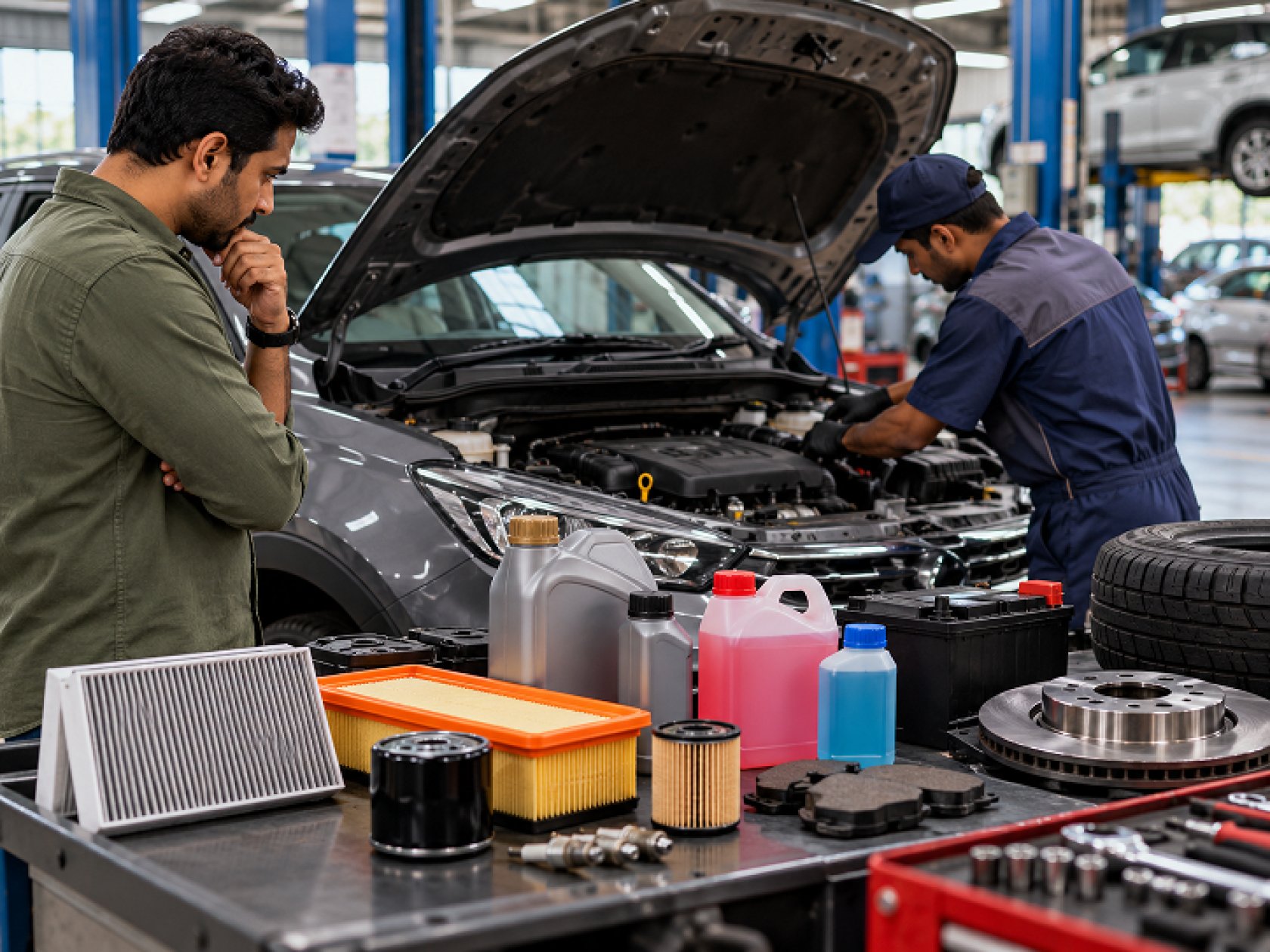
Taking your car for servicing is a necessary part of ownership. Regular maintenance helps keep the vehicle reliable, improves safety and can prevent minor problems from turning into expensive repairs. However, for many motorists, a visit to the service centre can also be confusing. Along with routine maintenance, service advisers may recommend additional treatments, replacements and inspections that significantly increase the final bill.Some of these recommendations are important, while others may not be immediately necessary. The challenge for car owners is knowing which jobs deserve attention and which can be postponed or skipped.
The answer is not to reject every additional service, but to understand what your car actually needs.
Engine Essentials
Engine oil is among the most important items to check during routine servicing. It lubricates moving components, reduces friction and helps control engine temperature. Over time, the oil deteriorates and becomes contaminated, making replacement at the manufacturer's recommended intervals essential.
The oil filter should generally be replaced along with the engine oil, according to the manufacturer's service schedule. It traps contaminants that could otherwise circulate through the engine.
The air filter also deserves attention. A clogged engine air filter can restrict airflow and affect engine performance. However, replacement should depend on its condition and the manufacturer's recommendations rather than an automatic sales pitch.
Cabin air filters, which help keep dust and other particles out of the passenger compartment, may also need periodic replacement. Their condition depends on the vehicle, usage and the environment in which it operates.
Motorists should always check the recommended oil grade and specification in the owner's manual. Choosing a cheaper oil that does not meet the required specification can be a false economy.
Essential Fluids
Engine oil is not the only fluid that requires attention. Brake fluid, engine coolant and transmission fluid also play important roles in keeping a vehicle safe and reliable.
Brake fluid can absorb moisture over time, potentially affecting braking performance and corrosion resistance. It should be replaced according to the manufacturer's specified interval or when testing indicates that it is necessary.
Coolant helps regulate engine temperature and protects the cooling system against corrosion. Using plain water as a permanent substitute or mixing incompatible coolants can cause problems.
Transmission fluid requirements vary considerably between manual, automatic, CVT and dual-clutch transmissions. Some vehicles require periodic replacement, while others have different maintenance schedules. Owners should follow the correct procedure for their particular model rather than relying on generic advice.
These jobs should not be ignored simply because the car appears to be running normally. Some maintenance needs are not immediately obvious to the driver.
Tyre Checks
Wheel alignment and wheel balancing are frequently recommended during servicing, but they are not necessarily required at every visit.
Wheel alignment helps ensure that the wheels point in the correct direction according to the manufacturer's specifications. Incorrect alignment can contribute to uneven tyre wear and poor handling. Warning signs include the car pulling to one side or the steering wheel sitting off-centre when driving straight.
Wheel balancing addresses uneven weight distribution in a wheel-and-tyre assembly. Imbalance can cause vibrations, particularly at certain speeds.
Both services are worthwhile when there are symptoms or a specific reason to carry them out, such as hitting a pothole hard, replacing tyres or suspension work. However, motorists should ask why either service is needed if the vehicle shows no symptoms and the tyres appear to be wearing evenly.
Extra Treatments
Some service centres offer fuel additives, engine flushes and other treatments intended to improve performance, clean internal components or reduce friction.
Such products are not automatically necessary for every vehicle. Modern engines are designed to operate with specified fuels and lubricants, and routine maintenance usually provides the protection they need.
An engine flush, for example, should not be treated as a compulsory part of every oil change. Depending on the engine's condition and the product used, an unnecessary treatment may offer little benefit and could create problems.
Similarly, motorists should be cautious about claims that an additive will dramatically improve mileage or restore engine performance. Unless the manufacturer recommends a particular treatment or a mechanic identifies a specific problem, it is sensible to ask for evidence before agreeing to the expense.
Battery and AC
Air-conditioning servicing is another area where unnecessary spending can creep into a maintenance bill. The cabin filter should be inspected and replaced when required, while the system should be checked if cooling performance declines, unusual smells develop or other problems appear.
Refrigerant should not simply be topped up at every service. If the system repeatedly loses refrigerant, the underlying cause should be investigated.
Battery checks, on the other hand, are sensible preventive maintenance. A battery's condition can deteriorate with age, heat and repeated short journeys. Testing its health and charging system can help identify a potential failure before the car refuses to start.
However, a battery should not be replaced solely because it has reached a particular age. Its tested condition, symptoms and the manufacturer's recommendations should guide that decision.
Smart Servicing
One of the simplest ways to avoid unnecessary expenses is to read the maintenance schedule in the owner's manual. It explains when different components require inspection, replacement or servicing, often with separate recommendations for severe driving conditions.
Frequent short journeys, dusty roads, heavy traffic and extreme temperatures can place additional demands on a vehicle. A car driven regularly in such conditions may need attention sooner than one used mainly for longer, uninterrupted journeys.
Before approving additional work, ask the service adviser to explain the problem, show you the affected component where possible, and clarify whether the job is urgent, preventive or optional. Request an itemised estimate and retain the final invoice for future reference.
It is also worth distinguishing between a manufacturer's warranty requirement and an optional service-centre package. If the vehicle is under warranty, check the warranty terms and confirm which maintenance procedures are required.
Spend Wisely
Car servicing should not be viewed simply as an expense to minimise. Skipping essential maintenance can lead to breakdowns, expensive repairs and safety risks. At the same time, agreeing to every recommendation without understanding its purpose can leave owners paying for work their vehicles do not need.
The sensible approach is to prioritise safety-critical components, follow the manufacturer's maintenance schedule and investigate genuine warning signs. Ask questions when something seems unnecessary, but remain open to recommendations supported by evidence.
Ultimately, good car ownership is about more than keeping the service bill low. It is about spending money where it matters, maintaining the vehicle properly and knowing the difference between essential care and an avoidable expense.