The festive season is traditionally one of the busiest periods for India's automobile industry. From Navratri and Dussehra to Dhanteras and Diwali, manufacturers and dealerships roll out attractive offers, hoping to turn festive enthusiasm into vehicle sales. But with the celebrations now over and the calendar year approaching its final weeks, another buying opportunity could be emerging for prospective car buyers.
The question is whether November and December offer a better opportunity to purchase a vehicle than the festive season itself.There are reasons to believe that buyers could have some negotiating power in the coming weeks. According to the Federation of Automobile Dealers Associations (FADA), passenger vehicle retail sales stood at 5,07,768 units in October 2026, registering a 14.23 per cent decline compared with the corresponding month last year. However, the decline needs to be viewed in the context of the festive calendar. Diwali fell in October last year but was celebrated in November this year, shifting a significant portion of festive purchases between the two months.
More importantly, FADA reported that passenger vehicle inventories remained at around 43-45 days in October, unchanged from September. This is considerably higher than the association's recommended inventory level of 21 days. The situation could encourage manufacturers and dealerships to introduce additional incentives to move vehicles and bring down their stock levels.
For customers planning to purchase a car, this could translate into an opportunity to negotiate a better deal.
Why year-end could be attractive
The final two months of the year are usually an important period for automobile dealerships. Manufacturers often look to improve annual sales figures, while dealers try to clear existing inventory before the calendar changes. This can result in a combination of cash discounts, exchange bonuses, corporate benefits and other promotional offers.
The extent of these benefits, however, varies depending on the manufacturer, model, variant and availability. Vehicles that have been sitting in dealership stock for longer periods could attract more attractive discounts than recently launched models or variants with strong demand.
This is where buyers need to be attentive. Instead of focusing only on the advertised discount, they should compare the actual on-road price across multiple dealerships. A seemingly attractive offer may include benefits that are conditional on financing, exchange or specific eligibility criteria.
Negotiating on insurance, accessories, extended warranties and handling-related charges can also make a difference to the final purchase cost.
December versus January dilemma
One of the biggest considerations for buyers towards the end of the year is whether to purchase a vehicle in December or wait until January.
A car purchased and registered in December 2026 will carry a 2026 registration year, while one purchased in January 2027 will be registered as a 2027 vehicle. Although the two vehicles could be identical in terms of specifications and features, their manufacturing and registration timelines could influence their perceived resale value.
This becomes particularly relevant for buyers who plan to upgrade their vehicles after a few years. In the used-car market, prospective buyers often consider the registration year while evaluating a vehicle. Consequently, a December purchase could face a disadvantage compared with a similar vehicle registered in January, even if the actual difference in age is relatively small.
However, waiting until January is not necessarily the better financial decision. Buyers could miss out on discounts and incentives available towards the end of December. The decision ultimately depends on the difference between the discount offered and the potential resale advantage of owning a newer registration-year vehicle.
There is also an important distinction between a vehicle's manufacturing date and its registration date. Buyers should always check the manufacturing month and year, particularly when purchasing a vehicle that has been in dealership stock for several months.
Do not let discounts drive the decision
While attractive offers can make a vehicle more affordable, purchasing a car simply because it is available at a discounted price can be a mistake.
The cost of owning a vehicle extends well beyond its purchase price. Insurance, fuel, servicing, replacement parts, loan interest and depreciation all contribute to the overall ownership expense. Buyers should also consider whether the vehicle suits their daily requirements, driving conditions and long-term budget.
Financing deserves particular attention. A lower monthly EMI may appear attractive, but a longer loan tenure can increase the total interest paid. Comparing the overall repayment amount rather than just the EMI can help buyers make a more informed decision.
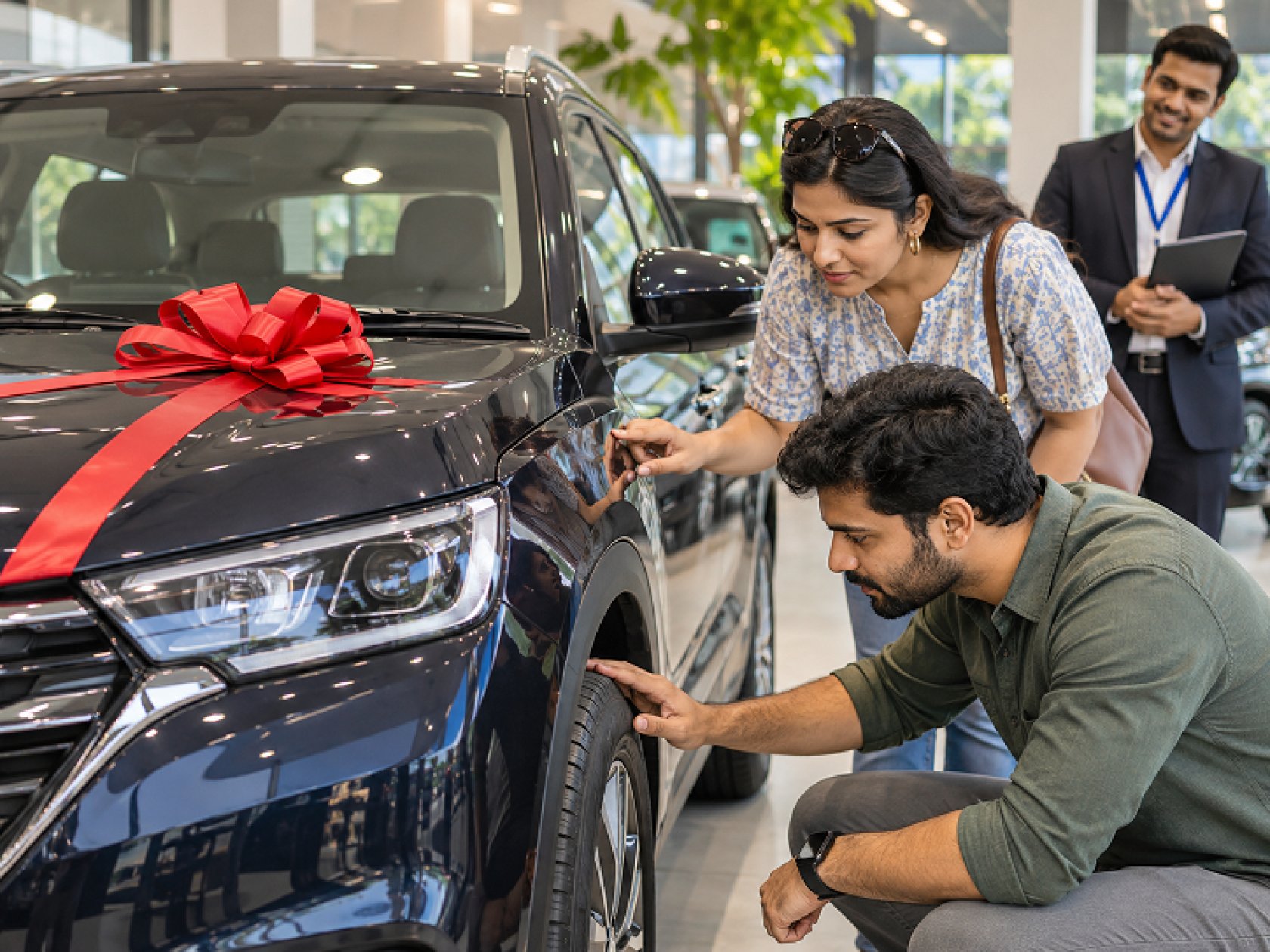
It is equally important to conduct a thorough pre-delivery inspection. Buyers should check the vehicle's manufacturing details, paintwork, tyres, battery, odometer reading and overall condition before accepting delivery. Any discrepancy should be raised with the dealership before completing the purchase.
An opportunity, but not a reason to rush
India's automobile industry continues to witness considerable activity, but the post-festive period could bring a different set of opportunities for consumers. With dealerships looking to manage inventory and manufacturers preparing for the next calendar year, buyers may find room for negotiation.
However, there is no guarantee that every vehicle will attract a substantial year-end discount. Popular models and variants may continue to command strong demand, while newer launches may have limited promotional benefits.
For someone who has already planned a vehicle purchase, the coming weeks could be worth exploring. Those without an immediate requirement, meanwhile, should not feel pressured into making a decision merely because a dealership advertises a limited-period offer.
The best time to buy a car is not necessarily when the discount is the biggest. It is when the vehicle meets your requirements, the price makes financial sense and the timing works in your favour. After all, a good deal is not simply about saving money at the showroom; it is about making a purchase that remains sensible throughout the years of ownership.