Goa Board of Secondary and Higher Secondary Education has taken a very hurried decision of including 25 per cent of the Goa’s history in Std X and XII syllabus from the next academic year.
The biggest takeaway for students could be is the knowledge of Goa’s history. But to include Goan history in the syllabus is no mean task and would require proper planning on content selection. Implementing it hastily from the next academic year could complicate matters. Firstly, Goa board has a history of supplying textbooks late and now with changes to textbooks, it’s only going to get worse. Secondly, the changes would also mean that teachers will have to be trained within a short span of time and this perfunctory move could have disastrous effects on the results of students.
Goa has a rich and diverse history spanning across centuries involving influential dynasties, seafarers, merchants, traders and missionaries. Goa has been ruled by Portuguese for 450 years, and there are historic events that stand out in the recent times too. From Canonization of Goencho Saib, Goa Revolution, Opinion poll, Statehood, Official language struggle and Sainthood of Joseph Vaz are all part of our history. Besides that there are stalwarts etched onto the pages of Goa’s history who fought for the State’s independence, and there are major institutes that stand out in the uniqueness of Goa.
The current Goan student is primarily ignorant of Goa’s history and its heritage and is more occupied in learning French revolution and histories of other states and nations. There is a clear disconnect between these young minds and their State. How many students could answer if asked to name the Chancellor of Goa? Or if asked about Opinion Poll or for that matter, who was the first chief minister of Goa?
However, touching Goa’s history will be a Herculean task. Lest we forget, Chief minister Manohar Parrikar was in eye of a storm in 2004 when a film on Goa’s liberation struggle sponsored by state’s Education Department became a subject of controversy. The film, which was made at a cost of Rs 40 lakh, was later withdrawn after Archdiocese of Goa and Daman and Church authorities took objection to the fact that it gave a communal slant to history.
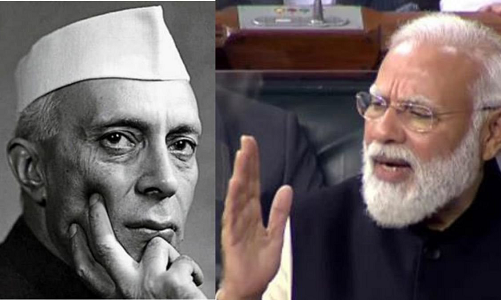
A recent brush with history was when the Goa unit of the National Students’ Union of India slammed the government for replacing a picture of former Prime Minister Jawaharlal Nehru by Hindutva ideologue and freedom fighter Veer Savarkar’s in a Class X textbook. The controversy died down only after the Goa Board clarified that it had been discontinued four years ago.
Including Goan history in text books is a step taken very hastily. Here is a subject which is very emotive to Goans, where even historians stand divided, and an issue which can bond or break people. Government should be wary of past controversies and handle it with great caution.
Going ahead, government must explore the possibilities of introducing an entire subject on Goan history, or if it cannot, work out a concept like sports marks quota for Goan history also. When the government can introduce road safety in the curriculum in a bid to sensitize youngsters on the importance of responsible driving, why not try to connect them to Goan history to establish a greater bond between people and State?
T B Cunha wrote in his book on ‘Denationalization of Goans’ on how Portuguese tried to alienate people from their own culture. Let us break ground and reconnect our students with Goa’s rich and diverse history, but let’s not have a slipshod approach.