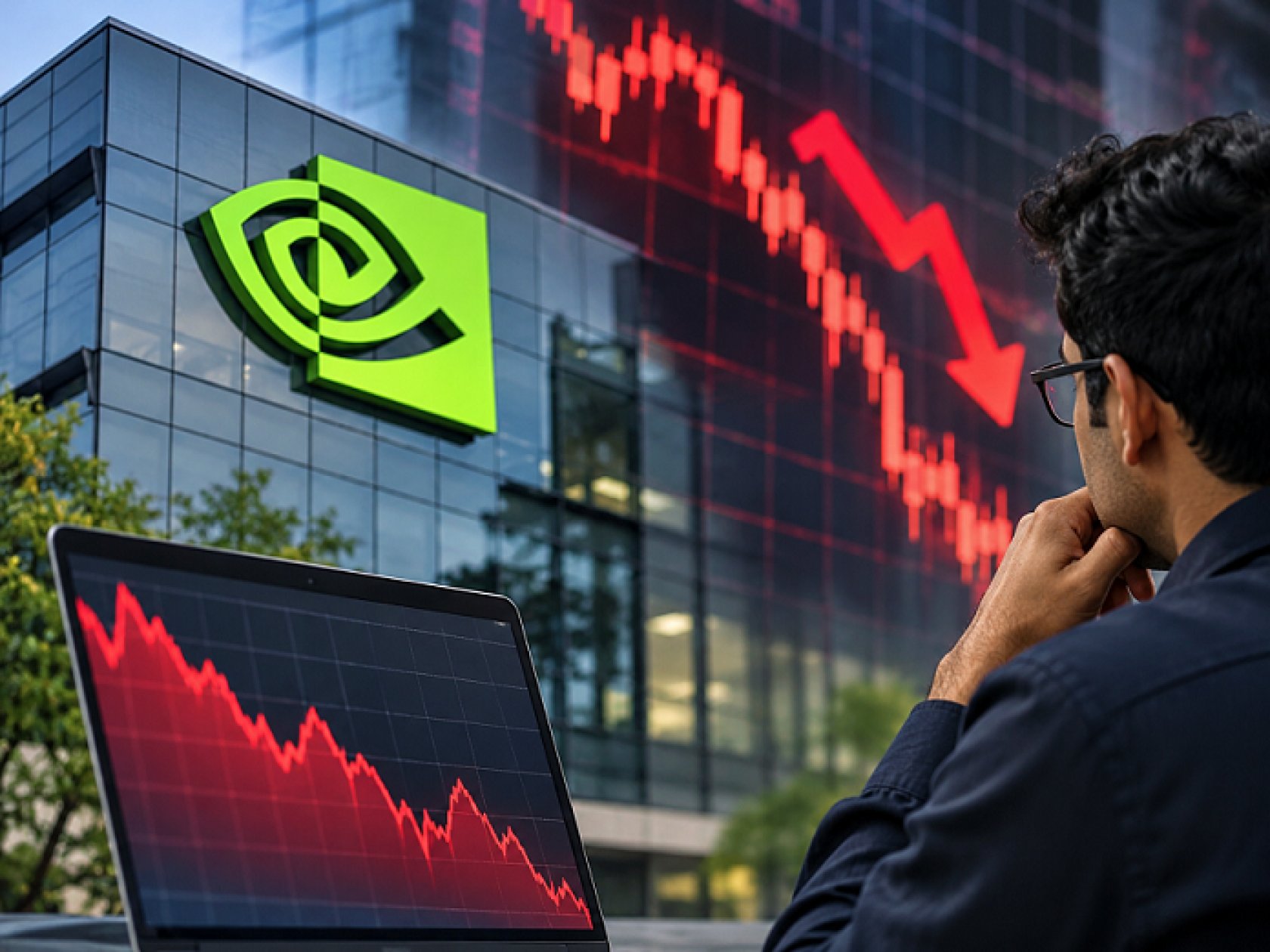
A company does not necessarily have to lose money to see its share price fall. Sometimes, all it takes is a controversy, a scandal or a sudden change in leadership to make investors nervous.
Nvidia, one of the world’s most valuable technology companies, is a recent example of how quickly market sentiment can change.
The American chipmaker has been facing a major controversy surrounding its chief executive, Jensen Huang. Reports about his personal relationships and alleged links to a suspected Chinese intelligence operation have triggered concerns about corporate governance, national security and the company’s future leadership. The controversy has contributed to a sharp decline in Nvidia’s share price.
But why should a controversy involving a company’s leadership affect its share price? Shouldn’t investors be more concerned about how much money the company makes, how many products it sells and how profitable its business is?
The answer lies in understanding how the stock market works.
The Future Matters
When investors purchase shares of a company, they are not simply buying a portion of its present business. They are also investing in what they believe the company will become in the future.
A company’s share price reflects expectations about its future earnings, growth, profitability and ability to remain competitive.
For instance, an investor buying Nvidia shares is not just looking at the company’s existing chip sales. The investor is also betting on the growing demand for artificial intelligence, the expansion of data centres and Nvidia’s ability to maintain its position in the industry.
However, when negative news emerges, these expectations can change.
Uncertainty Creates Fear
Imagine a company whose share price is rising steadily because investors have confidence in its management and business prospects.
Suddenly, a scandal emerges involving its top leadership. An investigation follows, questions are raised about corporate governance and there is uncertainty about who will lead the company.
Even if the company’s factories continue operating and its sales remain unaffected, investors may begin questioning its future.
Could the controversy lead to legal problems? Could regulators impose restrictions? Could important customers reconsider their business relationships? Could the company lose its competitive advantage?
These questions create uncertainty. And financial markets generally do not respond well to uncertainty.
Why Investors Sell
When investors believe that the risks associated with a company have increased, some may decide to sell their shares rather than wait for the situation to worsen.
Others may sell because they fear that more investors will exit, pushing the price even lower.
As selling pressure increases, the share price can decline.
A simple example explains this.
Suppose a company’s shares are trading at Rs 1,000. Investors are willing to pay that amount because they expect the company to perform well in the coming years.
A major controversy then emerges. Investors begin worrying about the company’s leadership and future business prospects.
Some decide that the shares are no longer worth Rs 1,000. They are willing to sell, but potential buyers are unwilling to pay the earlier price.
The share price may consequently fall to Rs 900 or even Rs 800 as the market adjusts to the new expectations.
Importantly, the company may not have lost any money during this period. Its share price has fallen because investors have changed their assessment of its future.
Investor Confidence Matters
Confidence is one of the most important factors influencing stock market valuations.
A company with a strong reputation, reliable leadership and a clear business strategy may attract investors who are willing to pay a premium for its shares.
However, when that confidence is shaken, the premium can disappear.
This is particularly important for companies whose valuations depend heavily on expectations of future growth. Even a small change in investor sentiment can result in significant movements in their share prices.
Nvidia’s recent decline also demonstrates how several concerns can come together. The controversy surrounding its leadership has emerged alongside existing worries about the sustainability of artificial intelligence investments and future business growth. Therefore, it would be incorrect to attribute the entire fall to one incident.
A Falling Share Price
There is an important distinction between a company’s business performance and the price at which its shares trade.
A company can continue generating revenue, making profits and expanding its operations even while its share price declines.
Similarly, a company reporting excellent financial results may still see its shares fall if investors were expecting even better performance.
Ultimately, the stock market is not just a reflection of what a company is doing today. It is also a reflection of what investors expect it to do tomorrow.
Nvidia’s experience offers a useful lesson for investors. Financial numbers matter, but so do leadership, reputation, governance and confidence.
After all, investors are not just buying a company’s present success. They are buying into its future. And when that future begins to look uncertain, even a market giant can find its share price under pressure.