


GLOBAL GOENKARS IN FOCUS
PANAJI
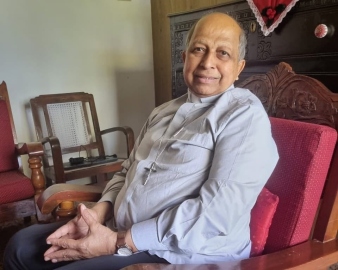
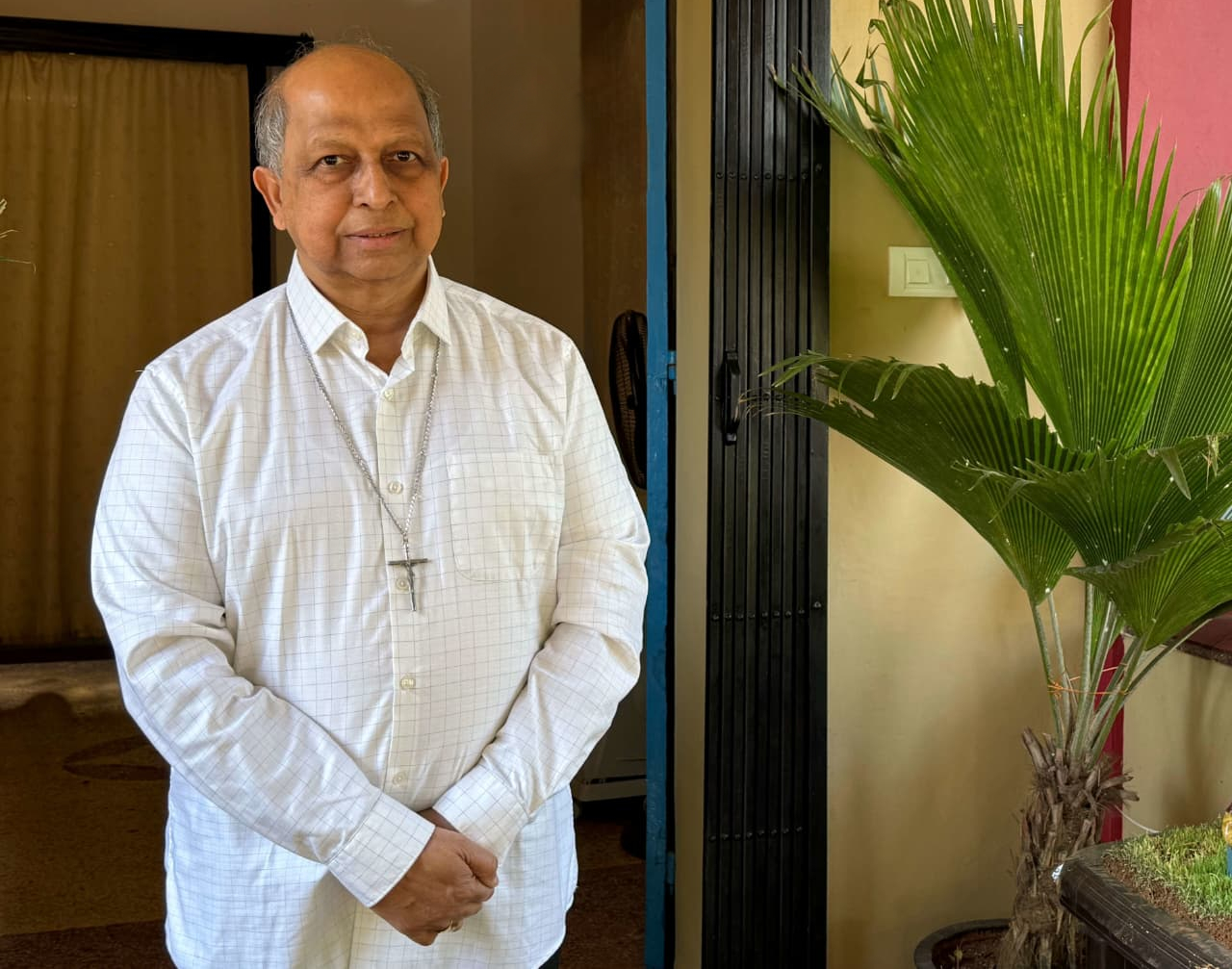
When a young seminarian left Goa to experience missionary life and serve the Church in North India nearly 50 years ago, little did he realise that he would go on to serve as bishop for 25 years, with the silver jubilee of his episcopacy on March 11, and also lead the politically significant Archdiocese of Delhi.
Archbishop of Delhi Anil Joseph Thomas Couto (71) has served as secretary general of the Conference of Catholic Bishops of India (CCBI) for eight years and is presently secretary general of the Catholic Bishops' Conference of India (CBCI).
Archbishop Couto, who is conversant in English, Konkani, Hindi, Punjabi, Italian, Portuguese, French and Latin, also happens to be the first cousin of Cardinal Joseph Coutts of Karachi.
GOAN IDENTITY, VOCATION
While his family hails from Aldona, Archbishop Couto was born and grew up in Pomburpa.
“I had a deep desire for priesthood since I was very young. My uncle, priest and scholar, Fr Antonio Couto, was a great influence in nurturing my vocation. I was also inspired by many priests hailing from Pomburpa. When Fr Antonio and many of these priests would visit Pomburpa on holidays, I would serve as altar boy at Mass,” recalled Archbishop Couto, while interacting with The Goan during his recent visit to Pomburpa.
“I also attribute my vocation to some nuns from the FMCK congregation who taught at our St Elizabeth's School in Pomburpa and took catechism classes.”
Archbishop Couto joined Saligao Seminary in 1967 and later proceeded to Rachol Seminary for three years of philosophy.
“I wanted more time to reflect on my vocation and sought a period of Regency. I was in Quepem for one year (1976-77) under the tutelage of Fr Edwin D’Souza (Swami Premananda Naik Salgaonkar), who founded the Boys' Town and Pope John XXIII School,” said Archbishop Couto.
MOVING FROM GOA TO DELHI
After completing a year in Quepem, Archbishop Couto joined the archdiocese of Delhi in 1977.
“I did not want to be based in Goa, as I wanted to experience missionary life and serve the Church in another part of India,” recalled Archbishop Couto.
“I was inclined to North India. I preferred Delhi, as we had Goan priests there. Adjusting to a new place, language and culture was not easy at all, but I gradually adapted by the grace of God.”
Archbishop Couto completed his theology at Vidya Jyoti Institute of Theology, Delhi, and was ordained priest by the Goan-origin Archbishop of Delhi Angelo Fernandes at Mother of God Church, Pomburpa, in 1981.
“After ordination, Archbishop Fernandes assigned me to a small parish for two months and then the Cathedral parish for two months. I was then sent to Varanasi from 1981 to 1982, to improve my proficiency in Hindi language,” said Archbishop Couto.
On his return from Varanasi, he was placed at St Joseph's Parish, Faridabad, for 5 months.
“I was then sent to Rohtak-Haryana for six years (1982-1988), where I had exposure to social work, ecumenism, and collaborating with different communities, completely different from my life in Goa,” he said.
In 1988, Archbishop Couto was posted at St Michael’s Parish, Prasad Nagar (Karol Bagh) in New Delhi as assistant parish priest and principal of St Michael's Junior School.
The next archbishop, Alan de Lastic, sent him as rector of ‘Pratiksha’ (study house for seminarians), where he completed his Masters in Theology in 1994.
FROM PRIEST TO BISHOP
Archbishop Couto was sent to Rome to pursue his Doctorate in Theology from 1994 to 1998.
“On my return, I was appointed Rector of ‘Vinay Gurukul’, the Preparatory Seminary of the Archdiocese at Gurugram. In 1999, Archbishop de Lastic appointed me episcopal vicar for one part of Delhi archdiocese,” said Archbishop Couto.
Pope John Paul II appointed him Auxiliary Bishop of Delhi archdiocese in 2001, and Pope Benedict XVI sent him as Bishop of Jalandhar (Punjab) in 2007.
“I served as bishop of Jalandhar diocese from 2007 to 2013, before Pope Benedict XVI appointed me Archbishop of Delhi, a position I continue to serve,” said Archbishop Couto, who heads Delhi archdiocese, comprising about 100,000 Roman Catholics across 71 parishes in Delhi and nine districts of Haryana.
CONNECT WITH POLITICAL LEADERS
Archbishop Couto admitted that serving as pastoral leader of an archdiocese in the politically influential place of Delhi has its own challenges and responsibilities.
“We have to maintain good relations with all sections of people who also come to meet us. Merely meeting with political leaders on occasions does not mean that we agree with what they have to say, but such meetings are essential to keep the connect. But we have to stand for our Catholic principles,” said Archbishop Couto.
Archbishop Couto said he manages these challenges and controversies with tact and, more importantly, prayer and trust in God.
“That is what is asked and expected of us when we are ordained bishops,” he says.
“Since Delhi is the national capital, we have to play a leadership role, and other church leaders look to us for guidance and direction. Besides, we also closely collaborate with other Christian denominations in safeguarding rights of Christian minorities, enshrined in our Constitution."
FUTURE PLANS
Commenting on his future plans, Archbishop Couto said he hopes to complete some pending projects before his tenure ends in 2029.
“I had launched an association of priests, ‘Oratory of St Joseph Vaz’, in honour of the great Goan saint. I wish to make this ‘Oratory of St Joseph Vaz’ in the Delhi archdiocese more stable and promote the place at Dharuhera (Haryana) as a pilgrimage centre, which would connect with people from all walks of life and faiths. I hope to establish 2-3 such pilgrim centres with a focus on ecological dimension of our Delhi archdiocese,” he added.


