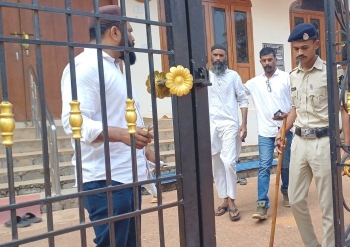
The essence of free thought is the cornerstone of a healthy society and this did have its own space in Goa. A large segment of this space was occupied by free thinkers like Francisco Luis Gomes, TB Cunha and Luis de Menezes Bragança (the Father of free thought in Portuguese Goa). Today, on July 10, we commemorate his death anniversary; a life cut short at the young age of sixty years in 1938. A little-known fact is that on this day there was a lathi charge by the Salazarist government around his grave in the Chandor cemetery, when a few nationalists had gathered to pay homage, in the heat of the post 18th June 1946 Movement. The man was no more but his ideas were still alive and a threat to the dictatorial regime.
The present generation of Goans associate Menezes Bragança (MB) with the institute that is named after him in Panjim or with his palatial ancestral house in Chandor (a heritage site of the UNESCO), but hardly anyone knows about his life, his ideas and his mission. Many may not even be in a position to identify his statue which is placed at the entrance of the Margao Municipal Garden or another that stands in Panjim.
The life span of MB (1878-1938) saw three discrete and dramatic political chapters in the history of Portugal: the Constitutional Monarchy, the Republic and Salazar’s Estado Novo. He responded to these changes in newspapers like O Nacionalista, O Commercio, O Heraldo, O Debate, O Commercio, O Debate, Pracasha, and Pradipa. O Debate was MB’s brainchild, which he conceived, edited and published from 3rd April 1911 to 16th Feb 1921. It aimed at awakening the Goan mind from ‘mental and political servitude’. He wrote on education, language, caste, tourism, the neutral school, communidades and the role of the Roman Catholic Church, all of which had to be retrieved from the dust of these old newspapers.
As MB wrote only in Portuguese, his ideas are little known within and outside Goa. His ideas were read only by the elite in the Portuguese – speaking world, so his progressive thought never filtered down from the classes to the masses. My generation of post-liberation Goans must therefore work to bring together this rich human heritage and bestow it on the next generation of both Goans and fellow-Indians, so that we can be proud of our shared history. By the time of his death in 1938, he had undoubtedly sowed the seeds of the dynamic nationalism that provided a strong ideology for Goa’s Freedom struggle that followed. Within six months after his death his ideas came to fructification with the formation of the Gomantak Praja Mandal in Bombay and his views were propagated through its tri-lingual fortnightly organ Gomantak.
The importance of free thought is the essence of the philosophy of MB. A free thinker is a person who does not accept traditional religious dogmas but prefers to base his views on logic and reason. In the speech delivered in the first session of the Government Council on 4th Jan 1928, he said, “I prize the freedom of thought. It is by thought that man raises himself from the beast". He further elaborated, “Governments are transitory. Regimes are ephemeral, only the idea is eternal. It is on this count that I protest against the censorship imposed on the press in India”.
After 1933, during Salazar’s period, every issue of all the newspapers, magazines and any printed matter including handbills or even wedding cards would carry the label visado pela censura ie ‘passed by the censor’. MB often wrote under the pseudonym, Mephistopheles and Lucifer. The Roman Church, Absolutism and Dictatorships did not allow the development of ideas according to MB and never encouraged free thought; in fact they used their dogma and force to suppress; it.
In O Debate (21-10-1915) and his book A educação e o ensino na India Portuguesa (Education and Instruction in Portuguese Goa) (MB, 1923:97). MB examined the State of the Konkani language down the ages. The conqueror always first took over territory, language and religion, as these three elements were considered important to constitute nationality. As territory was already conquered, the remaining two aspects had to be destroyed and replaced with the religion and language of the colonial masters (MB, 1923:97). The Konkani language was suppressed everywhere but it was the clergy who realised the importance of the mother-tongue in understanding the religious doctrines. MB advocated the teaching of primary education in Konkani, especially in the rural schools as it was the easiest language for a child to comprehend at the primary level.
The Pracasha propagated freedom of thought, expression and freedom from oppression. It championed the cause of religious freedom and supported the Shuddhi movement. He demanded the Indianisation of the Mitre and defended the Hindus who had been victims of religious discrimination at the hands of the colonial rulers. This newspaper was banned and suspended by a Government Ordinance in July 1937. After the ban, MB continued his writing in yet another newspaper Pradipa which was published in Bombay but also circulated in Goa. MB was deeply affected when the censorship board clamped down on the Pracasha. Thereafter his mental and physical health deteriorated and within a year he succumbed to a sudden and fatal heart attack.
MB in his newspapers had stressed the need to form a forum on which a group of professional Goans could discuss the issues that plagued Goa. The Republican government responded positively to this request and therefore this period witnessed the setting up of Provincial Congresses in Goa for the very first time. This contribution of MB has not been given due recognition in the annals of Goan history. Earlier Congresses, with the same name, were the Councils held by the Church to regulate ecclesiastical affairs vis a vis those of the State. These new Provincial Congresses formed a forum where young educated Goans discussed important issues relevant to the future of Goa eg agriculture, education, tourism, industry and even alcoholism. MB was the President of the Fourth Provincial Congress.
MB advocated non-belief in the caste system and even suggested measures to end it. He believed the church could go a long way in proscribing any reference to caste in daily life. He recommended that it could even brand the faithful who believed in it as having committed a mortal sin. MB critiqued that the Church and the State were silent on this system and in fact it received the imprimatur of both these institutions as a part of the colonial policy of divide and rule.
MB not only struggled for the freedom of thought and expression but also freedom from social, economic and political oppression. He will be remembered in the pages of Goa’s Freedom struggle as the person who tried to infuse in a decadent society new thinking based on rational thought and freedom from bigotry. His journalistic oeuvre influenced young minds but his ideology needs to be incorporated in studies on Indian nationalism.
(The writer is Author and Senior Faculty in History)