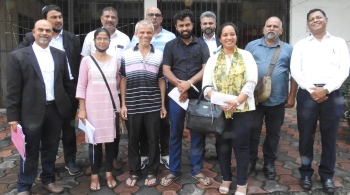
 Anti-coal activists facing trial in the Margao courts for their role in the historic Chandor midnight agitation against coal.
MARGAO
Five years on and the social activists leading the historic 2020 Chandor Midnight protest are still facing trial in the courts.
It is now exactly five years since thousands of protesters gathered at the Chandor railway crossing to oppose the double-tracking project on the intervening night of November 1“2, 2020. The leaders who spearheaded the historic and unprecedented midnight agitation against coal transportation are still facing trial in cases filed against them by the Goa Police and the Railway Protection Force (RPF).
While political figures”including MLAs and other leaders”managed to avoid police action, several social activists continue to face as many as three criminal cases pending before the Chief Judicial Magistrate (CJM), Margao. Two of these cases pertain to the Chandor midnight agitation, while the third relates to the Arossim protest.
Among the prominent political faces who had joined the anti-coal movement and participated in the candlelight march at Chandor that night were then Opposition Leader Digambar Kamat, Aleixo Sequeira, and Sankalp Amonkar”all of whom have since joined the ruling BJP.
Despite the passage of five years, the criminal cases before the CJM have made little progress, owing largely to repeated absences of the Public Prosecutor representing the Railway Police. Former CJM Carlo Santana de Silva had even reprimanded railway officials over the continued absence of prosecution representatives.
Meanwhile, the Maina-Curtorim Police, which had filed the chargesheet in the Chandor agitation case, has recently sought permission from the CJM to conduct further investigations”a move that is expected to delay the trial even further.
Activist Abhijit Prabhudesai criticised the government’s handling of the case, saying: “Where is the case in the Chandor agitation? The government has falsely implicated activists to silence them from opposing plans to turn Goa into a coal hub. When the Collector himself had ordered the closure of the road for five hours on the intervening night of November 1“2, how can citizens be accused of forming an unlawful assembly or restraining public movement?”