MAPUSA
Bicholim has emerged as State’s biggest centre in this year’s registered Ganesh idol trade, with the taluka accounting for the highest number of registrations as well as the largest number of idols listed for production or sale.
The registration data shows 466 applications covering 81,254 Ganesh idols across Goa. Bicholim tops the list with 94 registrations involving 16,604 idols, accounting for around one-fifth of the total registrations and idol numbers.
Bardez follows with 74 registrations covering 13,366 idols, while Ponda and Pernem have 70 and 67 registrations respectively, involving 9,688 and 8,250 idols.
Together, Bicholim, Bardez, Ponda and Pernem account for 305 registrations, or nearly two-thirds of all registrations in the State.
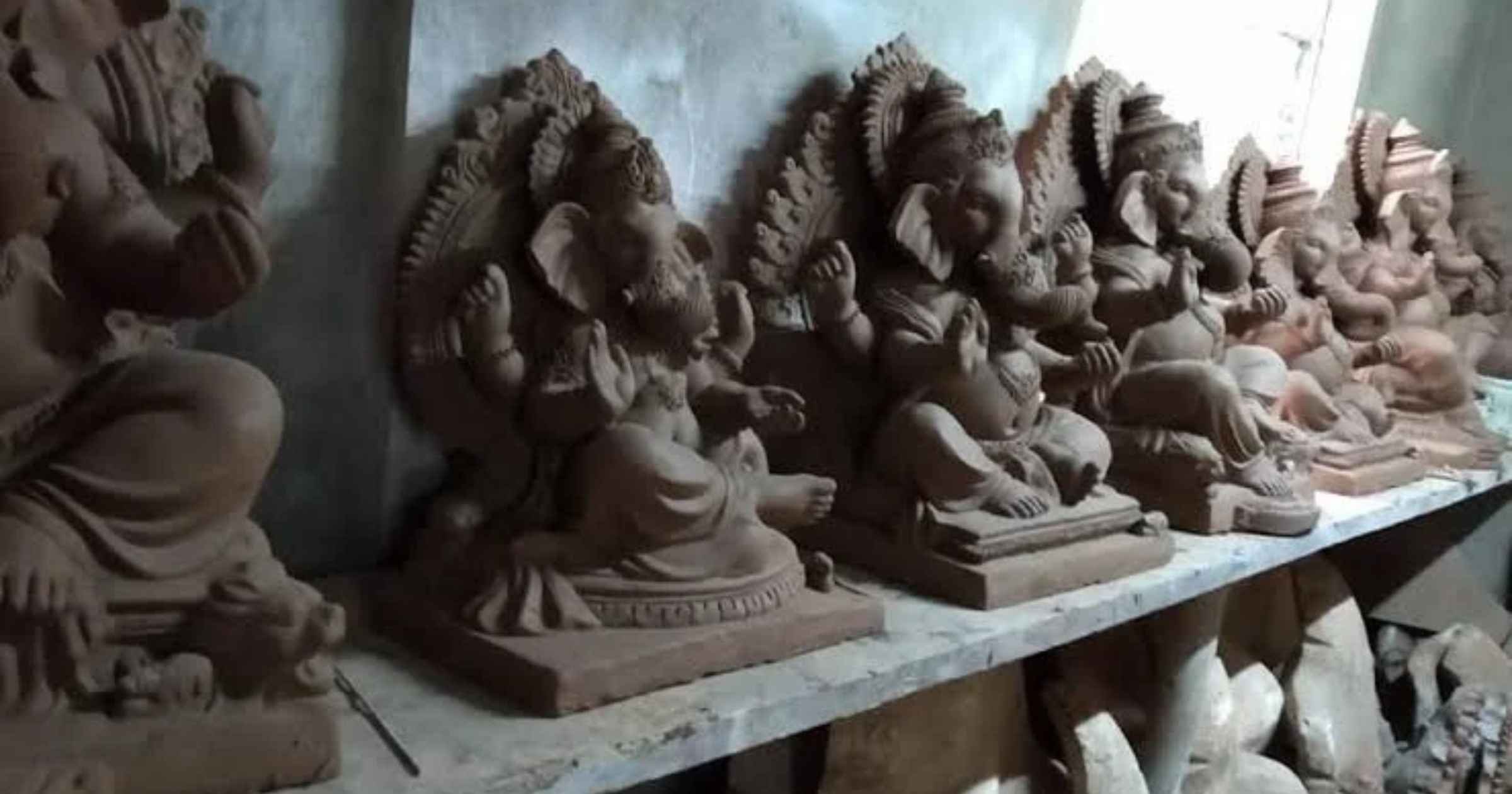
The figures also underline the continued importance of the traditional idol-making belt around Kumbharwada and Mayem in Bicholim. The registration records contain 44 entries specifically mentioning both Kumbharwada and Mayem, covering about 9,185 idols.
Several of these applications state that the idols are manufactured locally using chikat mati or clay, indicating that traditional production remains an important part of the trade.
The data, however, also shows that Goa’s Ganesh idol market extends well beyond local production.
A number of registrations are from sellers and distributors who source idols from outside the State, particularly Kolhapur.
At least 43 applications explicitly mention Kolhapur in their source or supply details, together accounting for around 5,565 idols.
The registration figures also throw up an interesting anomaly in Quepem.
While the taluka has only 22 registrations, it accounts for 13,155 idols. The unusually high figure is largely due to one registration listing 8,500 idols sourced from Kolhapur, highlighting the difference between the number of registered operators and the actual volume of idols handled by them.
The environmental composition of the registered idols presents another significant aspect. As many as 89 registrations have PoP marked as present, covering around 24,986 idols, or nearly 31 per cent of all idols listed.
At the same time, a sizeable number of applications specifically describe the idols as clay, chikat-mati, shadu-mati or eco-friendly, with several producers stating that the idols are made in their own chitrashalas.
The registration data thus paints a picture of a Ganesh idol economy that is simultaneously traditional and commercial.
Bicholim’s pottery and artisan clusters continue to play a prominent role, while larger distributors and sellers supplement local production with idols sourced from Maharashtra and Karnataka.
With Ganesh Chaturthi approaching, the figures also provide an indication of the scale of the idol trade in Goa and the growing relevance of the material used to make the idols, particularly as authorities and environmental groups continue to emphasise the need for clay and other eco-friendly alternatives to plaster of Paris.
81,254 idols, but not all are made in Goa
MAPUSA: While Goa has hundreds of registered idol makers, sellers and chitrashalas, the registration data also reveals that a part of the festival’s idol supply comes from outside the State.
At least 43 applications explicitly mention Kolhapur as a source or supplier, involving roughly 5,565 idols. Other applications also refer to suppliers from Karnataka and Maharashtra. Some Goa-based operators, in contrast, state that they manufacture the idols themselves using clay or chikat mati.
The interstate supply chain is significant enough to have featured in the State’s regulatory framework. This year’s registration system requires vendors to disclose the source, number of idols proposed to be procured and expected arrival date of imported idols.
Plaster of Paris hasn’t disappeared
from Goa’s Ganesh market
MAPUSA: Despite the emphasis on eco-friendly idols, 89 registrations in the list have PoP marked as present, involving about 24,986 idols – roughly 31 per cent of the total 81,254 idols listed.
The 2026 State rules permit idols made of chikanmati, clay or shadumati with up to 20 per cent PoP, provided they comply with the prescribed requirements.
The registration data therefore suggests that the transition towards completely clay-based idols is not yet complete, even as many applicants specifically describe their idols as clay, shadu-mati, chikat-mati or eco-friendly.