


PANAJI
The story of diabetes is, in many ways, the story of modern medicine. A century ago, a diagnosis often meant a death sentence. Today, however, millions of people live long and productive lives thanks to one breakthrough: insulin.
As the world observes World Diabetes Day on November 14, attention turns not only to the discovery that revolutionised diabetes treatment but also to the disease’s alarming rise across India, with Goa being no exception.
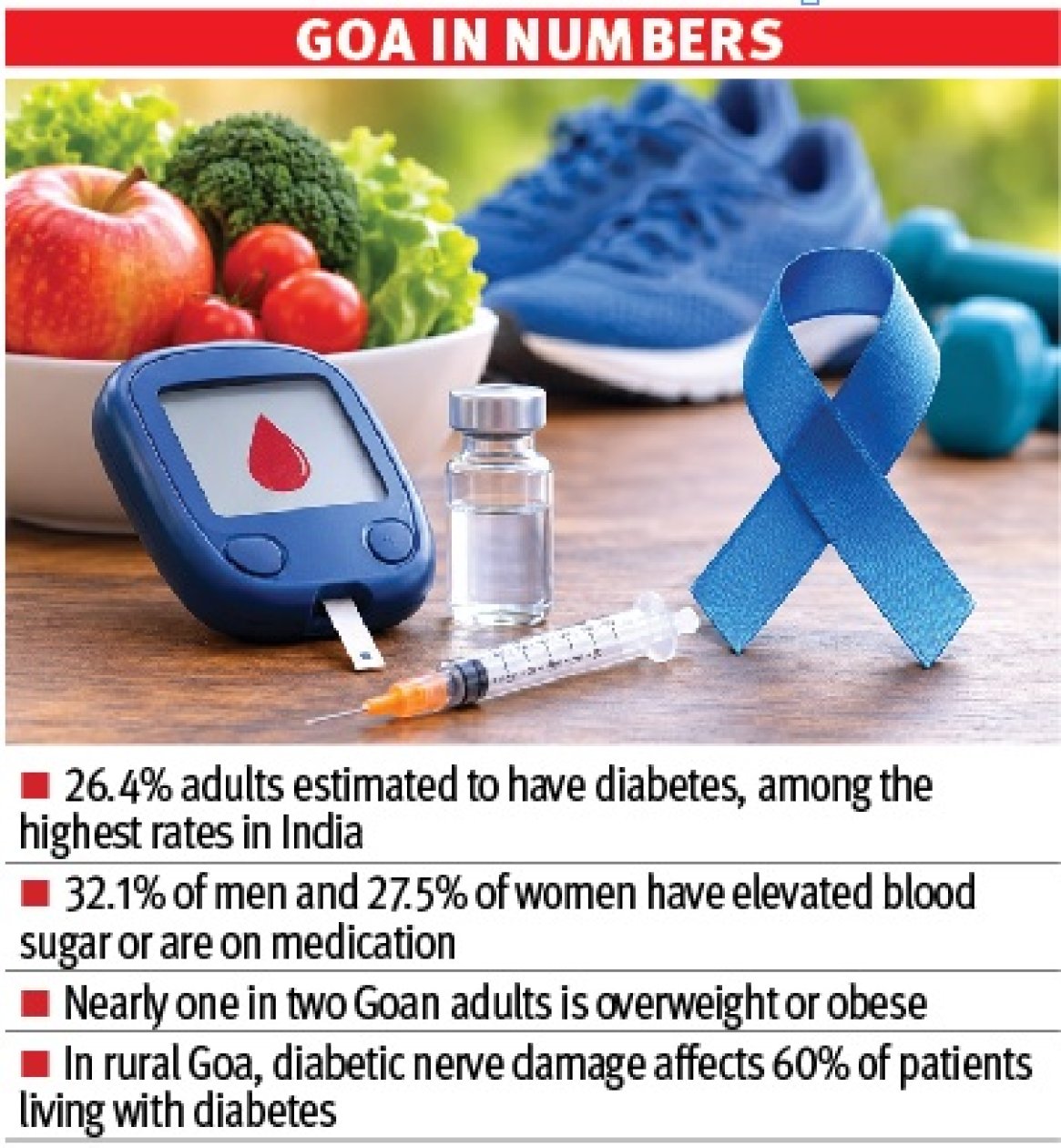
A study published in ‘The Lancet Diabetes & Endocrinology’ estimated that 26.4 per cent of adults in Goa are living with diabetes, placing the State among those with the highest prevalence rates in India.
Data from the National Family Health Survey (NFHS) paints an equally worrying picture, with nearly one-third of Goan men and more than one-fourth of women having elevated blood sugar levels or taking medication for diabetes. November 14 commemorates the birth anniversary of Sir Frederick Banting, who, along with medical student Charles Best and other colleagues at the University of Toronto, discovered insulin in 1921. The breakthrough changed the course of medical history.
The first person to receive insulin was Leonard Thompson, a 14-year-old boy who was wasting away due to Type 1 diabetes. The injections saved his life and paved the way for millions of others to receive treatment.
According to Dr Roque W Pinto, former Head of the Department of Pathology and professor at Goa Medical College, Type 2 diabetes is driven by a combination of genetic predisposition and lifestyle factors, accounting for nearly 90 to 95 per cent of all cases.
Type 1 diabetes, gestational diabetes and several less common forms also contribute to the growing disease burden, he added.
For many, diabetes remains an invisible companion, as in the case of Myron Fernandes, a 42-year-old IT professional who works mostly from home and was diagnosed during a routine health check-up. “I ignored fatigue and frequent thirst for months. However, following my diagnosis during a routine health check-up, dietary changes, regular exercise and medication have become part of my daily routine,” Myron said.
Another case is that of a retired teacher from Caranzalem who lost sensation in his feet after years of neglecting his condition and failing to keep his blood sugar levels under control.
“Early detection of a foot ulcer helped prevent amputation,” he said, adding that he considered himself fortunate. He urged middle-aged people, as well as younger individuals, to undergo regular health checks.
Dr Pinto warned that uncontrolled diabetes can damage almost every organ in the body and is a leading cause of kidney disease, blindness, nerve damage, heart attacks and strokes.
However, complications are not inevitable and can be prevented through healthy eating, regular physical activity, adequate sleep and stress management, he added.
Mapusa-based physician Dr Sandip Naik said routine monitoring of blood sugar and HbA1c levels, along with periodic eye, kidney and heart assessments, can help detect complications before they become serious.


