PANAJI
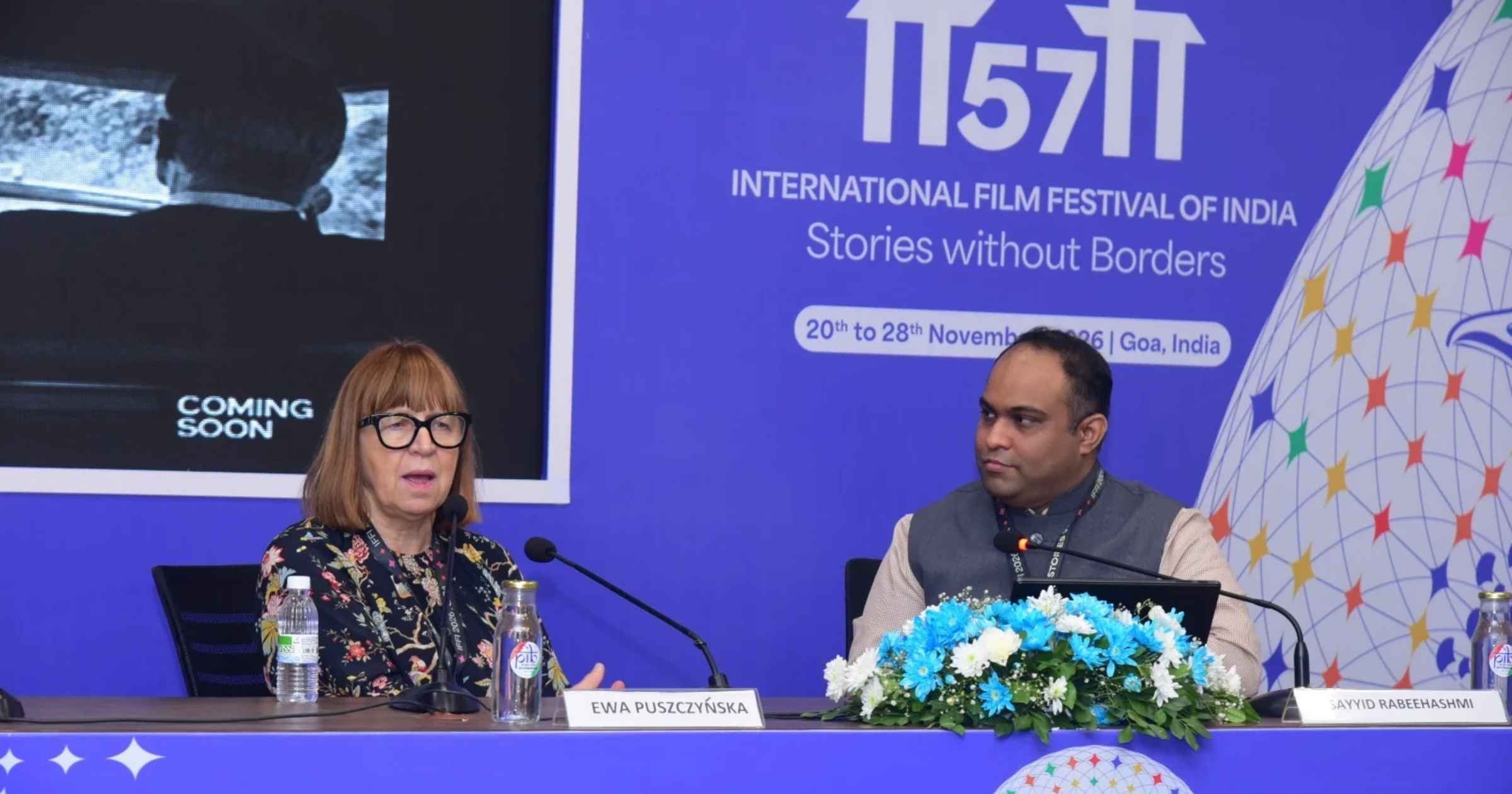
Acclaimed Polish film producer and the producer of Fatherland, the opening film of the 57th International Film Festival of India (IFFI), Ewa Puszczyńsk, said that films may not change the world overnight, but they can open minds, encourage dialogue and inspire people to reflect on the world around them
Addressing a press conference at IFFI, Puszczyńska highlighted the role of cinema in bringing people closer by encouraging conversations and fostering an understanding of diverse perspectives.
“We have to talk to people through our films. We have to open people's minds to other sides of life, to other sides of the world,” she said.
Reflecting on divisions in contemporary societies, she observed that no single narrative or agenda could claim to represent the only valid perspective. She noted that people increasingly tend to hold on to their own narratives rather than listen to one another.
“There is no one agenda, no one narration which is right. Talk to each other, let's find the common ground,” she said.
Describing Fatherland as a multi-layered story, Puszczyńska said the film explores themes that remain relevant today. Set against the backdrop of a divided Europe in 1949, it reflects the East-West divide and the divisions that continue to shape societies.
The film also raises questions about identity and belonging, particularly in a world marked by migration. “Where is your fatherland? Is it the country you live in, or is it the language you speak? Is it where your history comes from, or is it the country where you live?” she asked, explaining how the film examines the complex relationship between individuals and their homeland.
Through the story of celebrated German writer Thomas Mann and his family, Fatherland also explores the relationship between culture and society. Puszczyńska said literature and cultural figures can provide people with role models and inspiration.
The film further examines family relationships, including those between parents and children, siblings and artists. It also looks at the challenges faced by children of celebrated artists and the expectations placed on them to match their parents' achievements. At a broader level, it explores how major historical developments shape the everyday lives of individuals.
Explaining the film's visual treatment, Puszczyńska said Fatherland was shot in black and white and in a 4:3 aspect ratio, following the visual approach adopted in her earlier collaborations with director Paweł Pawlikowski, Ida and Cold War. The choice was intended to lend authenticity to the period depicted.
“We wanted the film to look authentic for the times we were talking about. Fatherland may be treated as the third film in the trilogy,” she said.
Speaking about the production, she said Fatherland is an international co-production involving Poland, Germany, Italy and France. Although the story is set in Germany, nearly 95 per cent of the film was shot in Poland, with largely Polish creative and technical teams.
Poland offered suitable locations to recreate Germany in 1949, including ruined and neglected streets, buildings and small towns, she said.
Puszczyńska also expressed interest in exploring a film based on the shared history of India and Poland, particularly the story of Polish children who found refuge in India during the Second World War.
Referring to her conversation with IFFI Festival Director Ashutosh Gowariker, who has already written a script on the subject, she expressed hope that discussions could continue and the possibility of taking the project forward could be explored.