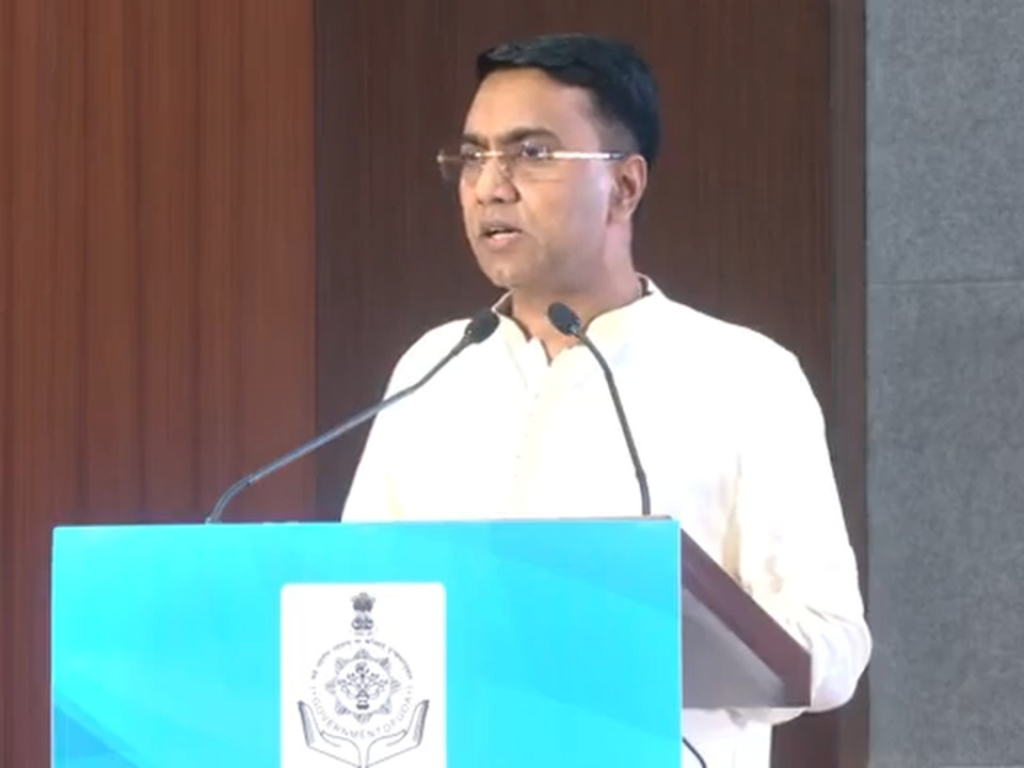
PANAJI: Chief Minister Pramod Sawant on Wednesday said students have every right to protest against injustice over the NEET controversy, but alleged that the language, slogans and placards displayed during recent protests had crossed acceptable limits and could disturb communal harmony.
Speaking at the inauguration of the Shiksha Samagam workshop on six years of the National Education Policy (NEP) 2020, organised on the occasion of Guru Purnima, Sawant said protests should remain focused on students' issues and not be used to promote unrelated agendas.
"It is definitely the students' right to protest against injustice. But the actions, the thoughts and the language used in those NEET protests cannot be of today's students," he said.
Questioning the placards displayed during the protests, Sawant said, "Ask for the resignation of the Education Minister over the NEET paper issue, that's fine. But who is Umar Khalid that they are asking for his release? Or displaying placards seeking the release of those arrested in the Delhi riots case. Who are these people? I feel we need to awaken the students; otherwise it will disturb our communal harmony."
The Chief Minister also alleged that people from outside Goa were attempting to influence student protests.
"If someone comes from outside and specifically shoots videos of the protests for a purpose, we need to make students aware of what is happening," he said.
Calling on teachers and education leaders to play a greater role in shaping students, Sawant said the NEP was not merely about academic reforms but about building responsible citizens.
"While implementing NEP 2020, we don't just need degrees; we need to shape cultured, nationalist students. Students who can build their careers, decide their future and are ready to dedicate themselves to the nation," he said.
Addressing school principals, headmasters, higher secondary and college administrators, Sawant said nearly 2.98 lakh students across Goa could be reached through educators, urging them to spread awareness on issues ranging from civic responsibility to environmental protection.
The Chief Minister also appealed to educational institutions to make every campus plastic-free and announced that Goa would launch a systematic e-waste management system from August 28, enabling scientific management of all categories of waste, including solid, biomedical, hazardous and electronic waste.
"If we take a positive initiative, every one of our campuses can become a plastic-free campus. By August 28, all waste in Goa will be treated in an organised manner. In the future, Goa will be one of the states with the best practices in waste management," he said.
Highlighting the state's progress in education, Sawant said Goa had emerged as a national leader in implementing the National Education Policy.
"The Central Education Ministry appreciates Goa's implementation of the NEP. The credit for this goes to all of you," he said, congratulating teachers, SCERT and the Education Department for driving the reforms.
He noted that the NEP was introduced after nearly 35 years of the previous education policy and said Goa had successfully implemented reforms from Shishu Vatika to higher education, with support from institutions such as IIT, NIT and BITS Pilani.
Sawant said the focus of the new policy was to encourage creativity, critical thinking, practical learning and career-oriented education from the school level itself rather than limiting learning to examinations and degrees.
Emphasising the role of technology, he said, "Technology cannot replace teachers; technology can upgrade teachers. If we use it effectively, our students will become innovators, researchers and true leaders of a developed India."
He also highlighted initiatives such as the Vidya Samiksha Kendra, adaptive learning, coding, robotics and PARAKH-based assessment reforms, saying Goa had been among the leading states in adopting these innovations.
The Chief Minister further said Goa had achieved 100 per cent literacy, crediting the Education Department and SCERT for the milestone, and pointed to the government's continued investment in educational infrastructure.
He said work would soon begin on shifting five professional colleges, including the pharmacy, architecture and music colleges, to a common university campus, describing it as a long-term investment that would create one of the state's most innovative higher education campuses for the next 50 years.